





How Mindfulness and Yoga Support Addiction Recovery: Benefits, Techniques & What to Expect
Mindfulness and yoga can support addiction recovery by helping individuals become more aware of their thoughts, emotions, and physical sensations. These practices may reduce stress, improve emotional regulation, increase self-awareness, and help people develop healthier responses to cravings and triggers. They work best when integrated with professional addiction treatment and evidence-based therapies.
Key Takeaways
- Mindfulness helps individuals recognize thoughts, emotions, and cravings without immediately reacting to them.
- Yoga combines movement, breathing, and meditation to support physical and emotional wellness.
- Both practices can reduce stress, improve self-awareness, and strengthen healthy coping skills.
- Mindfulness and yoga do not replace addiction treatment but can enhance a comprehensive recovery plan.
- Individuals seeking holistic addiction treatment in New Jersey may benefit from programs that integrate wellness practices with clinical care.
Mindfulness and Yoga for Recovery at a Glance
| Topic | Details |
| What is mindfulness? | A practice of paying attention to the present moment with awareness and acceptance |
| What is yoga? | A mind-body practice combining movement, breathing exercises, and meditation |
| How does it help recovery? | Supports stress management, emotional balance, and healthier responses to triggers |
| Does it replace rehab? | No. It complements evidence-based addiction treatment |
| Who can benefit? | Individuals recovering from alcohol, drugs, and co-occurring mental health concerns |
| Beginner friendly? | Yes. Yoga and mindfulness practices can be adapted to all experience levels |
Why Holistic Healing Matters During Addiction Recovery
Recovery involves more than stopping substance use. Addiction often affects a person’s physical health, emotional well-being, relationships, and ability to cope with daily stress.
A complete recovery plan addresses these challenges through multiple approaches, including therapy, medical support, behavioral treatments, and holistic wellness practices.
Holistic approaches such as mindfulness and yoga can complement comprehensive addiction treatment by helping individuals reconnect with themselves and develop healthier ways to manage stress.
For individuals looking for additional wellness-focused approaches, Woodmont also explores holistic addiction treatment approaches.
What Is Mindfulness in Addiction Recovery?
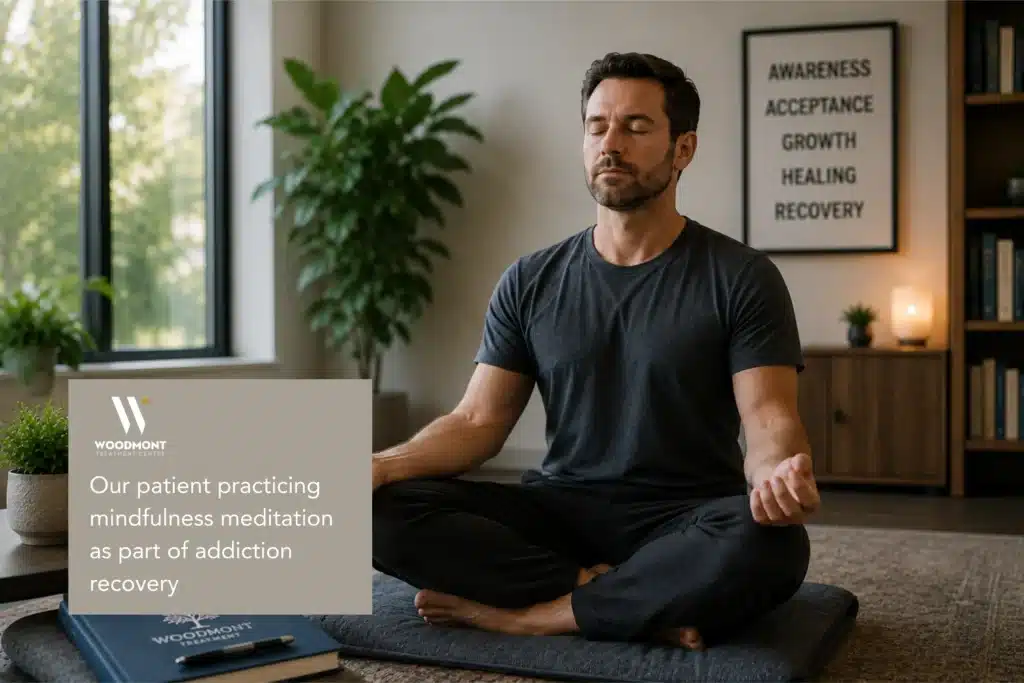
Mindfulness is the practice of intentionally focusing on the present moment without judgment. During recovery, mindfulness helps individuals become more aware of their thoughts, emotions, physical sensations, and urges.
Rather than automatically reacting to cravings or stressful situations, mindfulness encourages a pause between the feeling and the response.
This increased awareness can help individuals make healthier decisions and build greater control over their behaviors.
Common mindfulness techniques include:
- Guided meditation
- Deep breathing exercises
- Body scan practices
- Gratitude exercises
- Mindful walking
- Mindful journaling
How Mindfulness Helps Manage Cravings and Emotional Triggers
Cravings are a common part of the recovery process. Many individuals experience urges triggered by stress, anxiety, environments, or emotional challenges.
Mindfulness does not eliminate cravings instantly. Instead, it teaches individuals to observe cravings as temporary experiences without feeling controlled by them.
Benefits of mindfulness during recovery may include:
- Increased emotional awareness
- Reduced impulsive reactions
- Better stress management
- Improved focus and concentration
- Greater ability to tolerate difficult emotions
These skills can become valuable tools for maintaining long-term sobriety.
How Yoga Supports Addiction Recovery
Yoga is a practice that connects movement, breath control, and mindfulness. It helps individuals improve their awareness of the connection between their mind and body.
During addiction, many individuals become disconnected from their physical and emotional needs. Yoga encourages individuals to slow down, listen to their bodies, and develop healthier daily routines.
Benefits of Yoga During Recovery
1. Reduces Stress and Anxiety
Stress is one of the most common triggers for relapse. Yoga can promote relaxation through controlled breathing and gentle movement.
2. Improves Sleep Quality
Many individuals in early recovery experience sleep difficulties. Relaxation techniques practiced during yoga may help support healthier sleep habits.
3. Encourages Physical Wellness
Yoga improves flexibility, balance, strength, and body awareness, helping individuals rebuild a healthier relationship with their physical well-being.
4. Promotes Emotional Balance
Through mindful movement and breathing, yoga can help individuals create a greater sense of calm and emotional stability.

Can Mindfulness and Yoga Help Prevent Relapse?
Relapse prevention involves identifying triggers, managing stress, and developing healthier coping strategies.
Mindfulness and yoga may contribute to relapse prevention by helping individuals:
- Recognize emotional triggers earlier
- Reduce stress before it becomes overwhelming
- Respond thoughtfully instead of impulsively
- Create healthy daily routines
- Develop stronger mind-body awareness
However, these practices are most effective when combined with professional treatment, therapy, and ongoing recovery support.
Individuals requiring structured support may benefit from comprehensive addiction treatment programs.
What Happens During a Mindfulness or Yoga Session in Rehab?
Many people hesitate to try yoga or meditation because they believe they need experience or advanced physical ability.
In a treatment environment, mindfulness and yoga sessions are designed to be supportive, accessible, and appropriate for different comfort levels.
A session may include:
- Gentle stretching and yoga poses
- Guided breathing exercises
- Meditation techniques
- Relaxation exercises
- Reflection and self-awareness practices
There is no expectation to perform difficult poses or have previous experience.
Do You Need Previous Yoga or Meditation Experience?
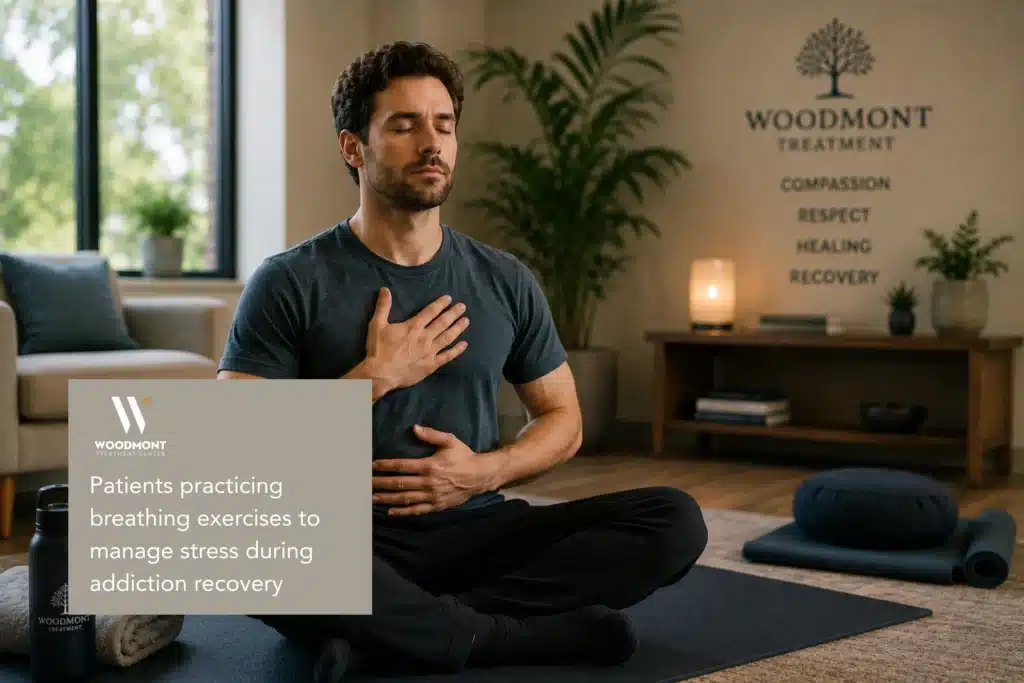
No. Beginners can participate in mindfulness and yoga practices.
In addiction recovery programs, exercises can be modified based on a person’s physical abilities, comfort level, and treatment goals.
The purpose is not achieving perfection but learning techniques that support emotional regulation, stress reduction, and overall wellness.
What Does Research Say About Mindfulness and Yoga in Addiction Recovery?
Research suggests mindfulness-based practices may help improve emotional regulation, reduce stress, and increase awareness of thoughts and behaviors associated with substance use.
Studies have also explored how yoga and mindfulness may support mental health by improving relaxation and reducing anxiety.
However, these practices are considered complementary therapies and should be part of a comprehensive treatment plan rather than a replacement for evidence-based addiction treatment.
Individuals experiencing both addiction and mental health challenges may require dual diagnosis treatment for co-occurring disorders.
Combining Mindfulness, Yoga, and Professional Addiction Treatment
Mindfulness and yoga can provide valuable tools for recovery, but lasting healing often requires professional support.
Treatment may include:
- Individual counseling
- Group therapy
- Behavioral therapies
- Family support
- Medical care when necessary
- Holistic wellness practices
Learning about the benefits of group therapy in addiction treatment can also help individuals understand how connection and shared experiences support healing.
Finding Mindfulness and Yoga-Based Addiction Treatment in New Jersey
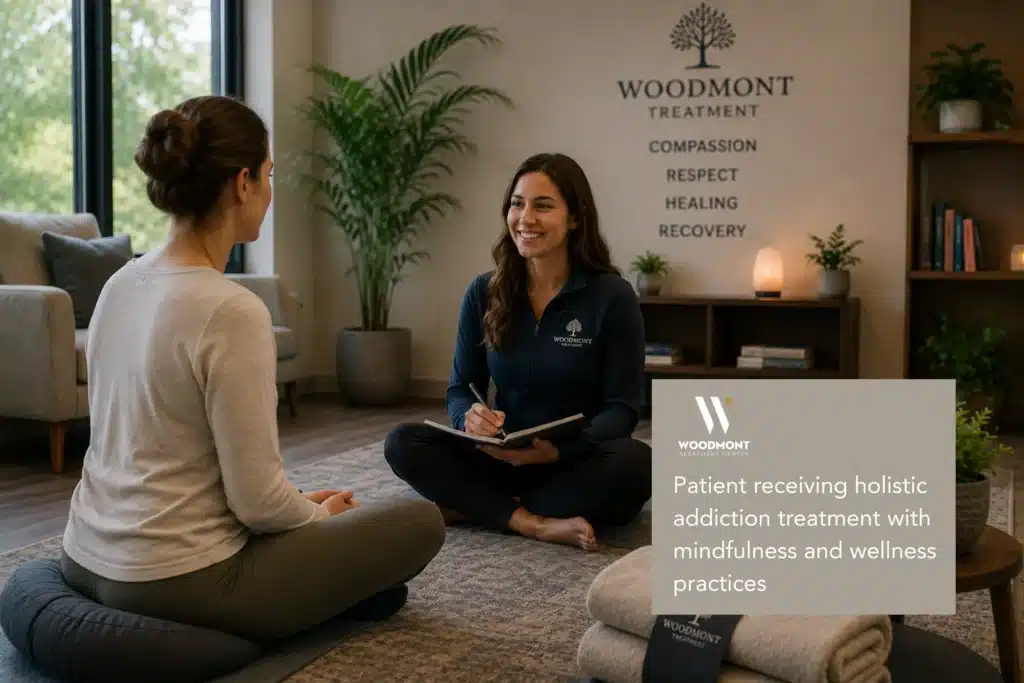
If you or a loved one is searching for holistic addiction treatment in New Jersey, it is important to choose a program that addresses both substance use and overall well-being.
At Woodmont Treatment, individuals receive compassionate, personalized care that combines evidence-based approaches with therapies designed to support the mind and body.
Whether someone is beginning recovery or continuing their healing journey, the right support can make a meaningful difference.
Begin Your Recovery Journey With Woodmont Treatment
Recovery is possible, and you do not have to navigate it alone.
Speak confidentially with the admissions team at Woodmont Treatment to learn more about available programs and determine the best next steps for your needs.
Call (866) 348-6434 to get started.
Verify your insurance benefits:
https://woodmonttreatment.com/verify-insurance/
Visit us:
293 Route 206
Newton, New Jersey
Email:
admissions@woodmontnj.com
Contact our admissions team:
https://woodmonttreatment.com/contact/
Frequently Asked Questions About Mindfulness and Yoga for Addiction Recovery
Does mindfulness help with addiction recovery?
Yes. Mindfulness can support addiction recovery by increasing awareness of cravings, improving emotional regulation, and helping individuals respond to stress in healthier ways.
Can yoga replace addiction treatment?
No. Yoga is a supportive wellness practice that complements professional addiction treatment but should not replace therapy, medical care, or structured recovery programs.
Do I need experience to practice yoga during rehab?
No. Yoga sessions in treatment settings are designed for all experience levels and can be modified according to individual needs and physical ability.
Can mindfulness reduce cravings?
Mindfulness may help individuals recognize cravings without immediately reacting to them, allowing them to make more intentional and healthy choices.
Can I verify my insurance before starting treatment?
Yes. Woodmont Treatment provides a confidential insurance verification process to help you understand your available treatment benefits.
Verify your insurance:
https://woodmonttreatment.com/verify-insurance/
How do I begin addiction treatment at Woodmont Treatment?
Getting started is simple. Call (866) 348-6434, email admissions@woodmontnj.com, or reach out through the contact page:
The admissions team can answer your questions and help you take the first step toward recovery.
Is mindfulness and yoga suitable for people with dual diagnosis disorders?
Yes, mindfulness and yoga may be beneficial for individuals experiencing both substance use and mental health challenges when incorporated into an individualized treatment plan. A professional assessment can determine the most appropriate level of care.