




When Alcohol Takes Over: Why Finding the Right Alcohol Addiction Rehab in NJ Matters
If you or someone you love is struggling with alcohol use disorder, you are not alone — and help is closer than you think.
Here’s a quick overview of alcohol addiction rehab options in New Jersey:
| Level of Care | Best For | Setting | Duration |
|---|---|---|---|
| Medical Detox | Physical dependence; withdrawal risk | Supervised facility | 3–7 days |
| Inpatient/Residential | Severe addiction; need for structure | Live-in facility | 28+ days |
| Partial Care (PHP) | Step-down from inpatient; daily support | Daytime program | 4–6 weeks |
| Intensive Outpatient (IOP) | Maintaining work/home life | 3–5 days/week | 6–12 weeks |
| Standard Outpatient (OP) | Early recovery; ongoing support | 1–2 days/week | Ongoing |
New Jersey has more than 339 substance use treatment facilities across the state — from the Jersey Shore to the hills of Sussex and Warren County. More than 295 of these offer outpatient services, 51 provide residential care, and over 10 offer 24-hour intensive inpatient care.
If you are a resident of Sussex or Warren County, Woodmont Treatment Center offers a peaceful, home-like sanctuary close to home. Contact Woodmont Treatment Center today to start your recovery journey in a supportive, non-hospital environment.
Yet despite this broad network, thousands of New Jersey residents never get the help they need. Alcohol addiction often starts quietly — a drink to unwind after work, a habit that slowly tightens its grip — until it feels impossible to break free alone.
The good news? Recovery is absolutely possible. With the right level of care, evidence-based therapy, and compassionate support, people rebuild their lives every day.
This guide walks you through everything you need to know: recognizing the signs of alcohol use disorder, understanding your treatment options, navigating costs and insurance, and finding a program that truly fits your life.
Recognizing the Signs of Alcohol Use Disorder
It is surprisingly easy for a drinking habit to slip from social relaxation into a clinical dependence. Because alcohol is deeply woven into our social fabric, identifying when a pattern has become harmful can be challenging. Many people find themselves asking: At what point does regular drinking cross the line into an alcohol use disorder (AUD)?
According to the Diagnostic and Statistical Manual of Mental Disorders (DSM-5), alcohol use disorder is classified as a chronic brain disease characterized by an impaired ability to stop or control alcohol use despite adverse social, occupational, or health consequences.
Common physical and behavioral signs that indicate it is time to seek professional support include:
- Physical Symptoms: Experiencing tremors (the “shakes”), nausea, sweating, or rapid heart rate when attempting to go a day without a drink; needing increasingly larger amounts of alcohol to achieve the same effect (tolerance).
- Behavioral Changes: Neglecting responsibilities at work, school, or home; spending a significant amount of time obtaining, using, or recovering from alcohol; abandoning hobbies or social gatherings to drink instead.
- Loss of Control: Repeatedly drinking more or for longer than originally intended; expressing a persistent desire to cut down but failing to do so.
- Continued Use Despite Harm: Drinking even when it exacerbates physical health problems (like liver complications) or mental health challenges (such as heightened anxiety or depression).
In our society, cultural normalization often masks these red flags. The “wine mom” culture or the expectation to drink heavily at professional networking events in Bergen County can make severe dependence look like normal behavior.
If you suspect that your relationship with alcohol has shifted, taking a self-assessment is a highly effective first step. Recognizing the need for change takes immense courage, but it is the foundation upon which your healing journey is built. For a comprehensive look at understanding this transition and discovering your options, explore our More info on finding the right path.
The Critical First Step: Medical Detox and Withdrawal Management
When a person with a severe physical dependence stops drinking abruptly, the brain and body experience a profound shock. Alcohol is a central nervous system depressant; it artificially boosts inhibitory neurotransmitters (like GABA) and suppresses excitatory ones (like glutamate). When alcohol is suddenly removed, the nervous system goes into a state of dangerous over-excitation.
This is why attempting to detox at home (“cold turkey”) can be incredibly dangerous and, in some cases, life-threatening.
[Abrupt Cessation of Alcohol]


[CNS Over-Excitation] (GABA drops, Glutamate surges)


[Mild/Moderate Symptoms] [Severe Complications]
- Anxiety & Tremors - Seizures
- Nausea & Insomnia - Delirium Tremens (DTs)
- Elevated Heart Rate - Extreme Confusion & Hallucinations
Our medical detox program provides 24/7 clinical supervision to safely manage physical withdrawal symptoms. We utilize evidence-based pharmacological protocols, which may include carefully managed medications like Librium, gabapentin, or baclofen, to minimize discomfort and eliminate risks.
Our focus is on delivering compassionate medical support in a comfortable, non-hospital setting. We believe that detox should not feel cold or clinical. By healing in a warm, home-like environment, our clients can rest, stabilize, and prepare their minds for the therapeutic work ahead. To learn more about how we keep you safe and comfortable, view our More info on detox programs and read our comprehensive Guide to New Jersey detox options.
Choosing the Right Alcohol Addiction Rehab NJ
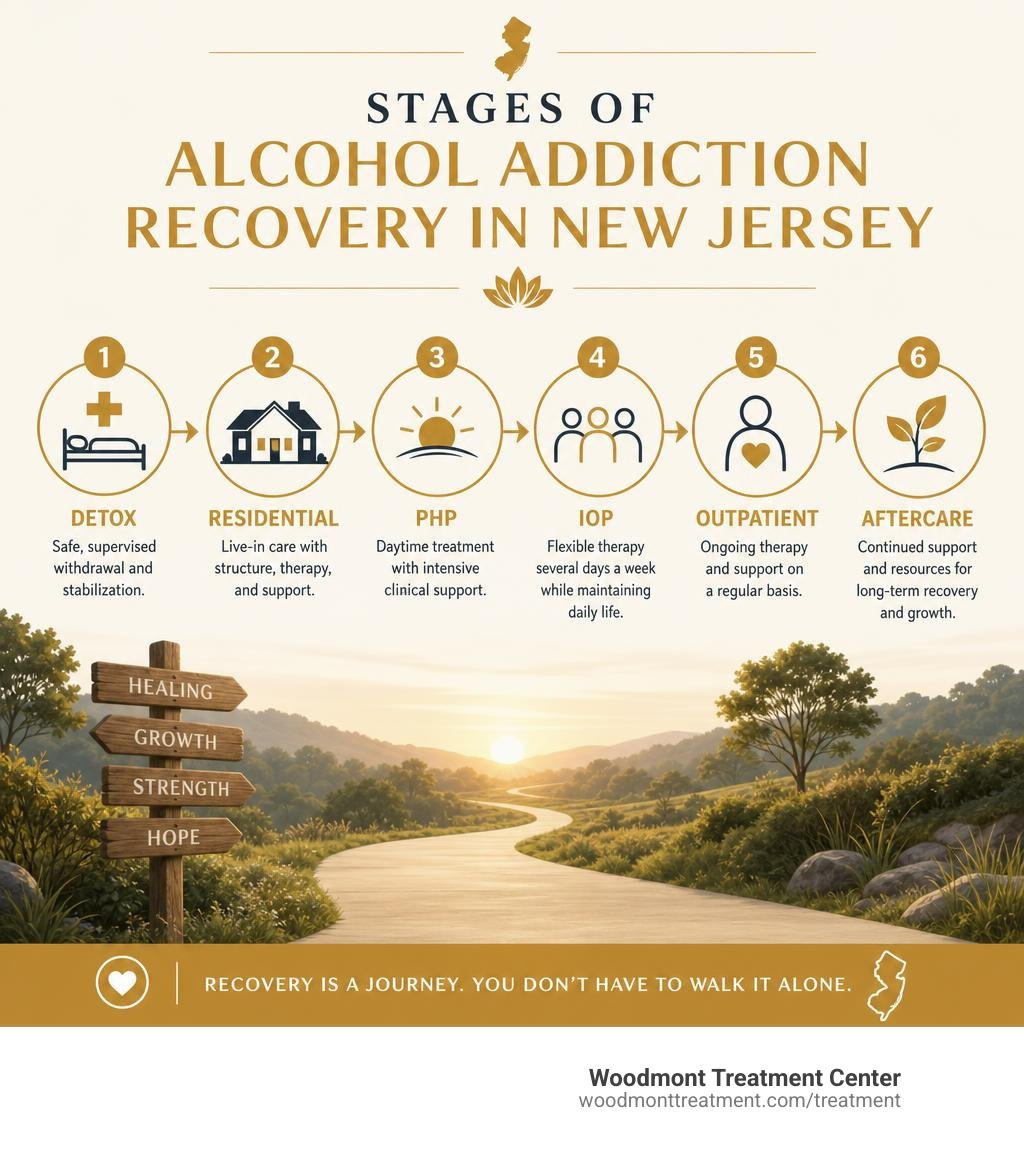
No two recovery journeys are identical. To achieve lasting sobriety, a treatment plan must be tailored to your unique physical, emotional, and social needs. In New Jersey, we offer a comprehensive continuum of care that allows clients to transition seamlessly between levels of support as they heal.
| Level of Care | Description | Typical Schedule | Ideal Candidate |
|---|---|---|---|
| Residential / Inpatient | Full-time immersion in a therapeutic community; 24-hour support. | 24/7 living onsite | Severe addiction, high relapse risk, or unstable living situation. |
| Partial Care (PHP) | Highly structured daytime clinical treatment while returning home or to sober living at night. | 5–6 days/week, 5–6 hours/day | Transitioning from inpatient or requiring intensive clinical care. |
| Intensive Outpatient (IOP) | Flexible counseling sessions designed around professional or family obligations. | 3–5 days/week, 3 hours/day | Moderate addiction; individuals maintaining careers or family roles. |
| Standard Outpatient (OP) | Ongoing weekly therapy and peer support groups to maintain long-term stability. | 1–2 days/week, 1–2 hours | Individuals in stable, long-term recovery needing accountability. |
For many, beginning with residential care offers the highest chance of long-term success. It removes you from the everyday stressors, triggers, and environments that contributed to active addiction, allowing you to focus entirely on your healing. To explore these options further, check out our More info on inpatient rehab.
What to Expect at an Inpatient Alcohol Addiction Rehab NJ
Entering inpatient treatment can feel intimidating, but understanding the daily rhythm can help ease your anxiety. Inpatient rehabilitation is designed to provide a highly structured, supportive, and restorative environment.
A typical day includes:
- Morning Reflection & Nutrition: Starting the day with a healthy, chef-prepared meal and a gentle mindfulness or reflection group.
- Individual Therapy: One-on-one sessions with a credentialed clinician to explore the root causes of addiction, address past trauma, and develop coping mechanisms.
- Therapeutic Group Sessions: Peer-led and clinician-guided groups focusing on relapse prevention, emotional regulation, and communication skills.
- Holistic Activities: Time dedicated to physical wellness, yoga, art therapy, or outdoor recreation.
- 12-Step or Alternative Support Meetings: Evening gatherings to build community and establish a foundation for peer accountability.
At our premier facilities in Sussex and Warren County, we emphasize compassionate support in a warm, home-like environment. We avoid clinical, sterile, or hospital-like setups, ensuring our clients feel safe, respected, and truly at home. To get a clearer picture of what your stay will look like, see our More info on inpatient expectations.
Are you or a loved one in Sussex or Warren County ready to take the first step? Contact Woodmont Treatment Center’s compassionate admissions team today to verify your insurance and find the perfect, non-hospital residential program for your needs.
How to Pay for Alcohol Addiction Rehab NJ
One of the most common barriers to seeking treatment is the worry over cost. However, because of the Affordable Care Act (ACA) and the Mental Health Parity and Addiction Equity Act, insurance providers are required to cover substance use disorder treatments at the same level they cover traditional physical medical conditions.
There are several ways to finance your recovery:
- Private Health Insurance: Most major PPO and POS health plans cover detox, residential, and outpatient care. We work closely with major insurance companies to maximize your benefits and minimize your out-of-pocket expenses.
- Medicaid and State-Funded Options: New Jersey has robust state programs. Of the rehab centers in the state, 230 accept Medicaid and 135 accept other state-funded health insurances.
- Self-Pay and Sliding Scales: For those without insurance, many facilities offer flexible payment plans or sliding-scale fees based on household income.
We believe that financial constraints should never stand in the way of life-saving care. Our admissions specialists are available to handle the insurance verification process for you, ensuring you understand your coverage before making any commitments. For a detailed breakdown of how insurance works in New Jersey, read our More info on insurance coverage or visit the New Jersey Division of Mental Health and Addiction Services for state-wide resource listings.
Evidence-Based Therapies and Holistic Healing

True recovery requires healing the mind, body, and spirit. At Woodmont Treatment Center, we combine evidence-based clinical therapies with holistic practices to provide a comprehensive, multi-dimensional healing experience.
Our clinical team utilizes proven therapeutic modalities, including:
- Cognitive Behavioral Therapy (CBT): Helping clients identify and restructure negative thought patterns and destructive behaviors surrounding alcohol.
- Dialectical Behavior Therapy (DBT): Teaching vital skills for emotional regulation, distress tolerance, and interpersonal effectiveness.
- Motivational Interviewing (MI): Cultivating internal motivation and helping clients overcome ambivalence about sobriety.
- Trauma-Informed Care: Safely addressing underlying trauma and PTSD, which frequently fuel addictive behaviors.
Alongside these clinical approaches, we integrate holistic healing methods to help clients reconnect with themselves. Practices like yoga and art therapy provide healthy outlets for self-expression and stress reduction. Furthermore, because prolonged alcohol use depletes the body of vital nutrients, we emphasize nutrition in recovery to help restore physical health, stabilize mood, and rebuild the immune system.
To learn more about how we blend these approaches, explore our More info on holistic treatments and our guide on More info on nutrition in recovery.
Addressing Dual Diagnosis and Co-occurring Mental Health Disorders
It is incredibly common for alcohol use disorder to coexist with mental health challenges. Whether someone drinks to self-medicate the symptoms of untreated anxiety, or chronic drinking triggers deep clinical depression, the two conditions are closely linked. This intersection is known as a dual diagnosis.
In New Jersey, approximately 232 rehab centers offer specialized programs for co-occurring mental health conditions. Treating only the addiction while ignoring the underlying mental health disorder is a primary cause of relapse.
We provide fully integrated care, addressing both conditions simultaneously. Our clinical and psychiatric team works collaboratively to treat:
- Major Depressive Disorder
- Generalized Anxiety Disorder (GAD)
- Post-Traumatic Stress Disorder (PTSD)
- Bipolar Disorder and Mood Instability
By treating the mind and the addiction as one interconnected system, we help clients build a resilient foundation for long-term recovery. For more information on our co-occurring disorders program, visit our More info on co-occurring conditions page, or learn about local resources via the Mental Health & Addiction Services in Bergen County.
Long-Term Recovery, Aftercare, and Family Support

Completing an inpatient program is a monumental achievement, but it is actually the beginning of a lifelong journey. The transition back into daily life presents unique challenges, which is why a robust aftercare plan is essential for preventing relapse.
Our aftercare programs are designed to provide ongoing support, accountability, and community. These include:
- Sober Living Houses: Structuring a gradual transition back into society within a safe, alcohol-free living environment.
- Alumni Programs: Keeping you connected to a supportive peer community through regular events, meetings, and volunteer opportunities.
- Relapse Prevention Planning: Working one-on-one with a therapist to map out personal triggers, coping mechanisms, and emergency support contacts.
We also believe that addiction is a family disease. Relationships are often strained during active addiction, and family members need their own space to heal. Through our family workshops and support groups, we help families rebuild trust, establish healthy boundaries, and learn how to support their loved one’s recovery productively.
Discover more about local sober living options in our guide on More info on sober living, and connect with local peer support networks through the Sussex County Recovery Community Center.
Frequently Asked Questions
Is medical detox necessary for alcohol withdrawal?
Yes, if a physical dependence is present, medical detox is highly recommended and often medically necessary. Alcohol withdrawal can cause severe, life-threatening complications like grand mal seizures and Delirium Tremens (DTs). Medically supervised detox ensures that withdrawal symptoms are managed safely, comfortably, and under professional clinical care.
Can I keep my job while attending rehab?
Absolutely. Under the Family and Medical Leave Act (FMLA) and the Americans with Disabilities Act (ADA), addiction is recognized as a protected medical condition. This means you may be eligible for job-protected unpaid leave to attend residential treatment. Alternatively, our flexible outpatient programs (PHP and IOP) are designed to help you maintain your career responsibilities while receiving high-quality clinical care.
How long does alcohol rehab typically last?
Because recovery is highly individualized, there is no single timeline. Residential programs typically require a minimum stay of 28 days, with options to extend treatment to 60, 90, or more days depending on your needs. A longer stay allows more time to address root causes, practice coping skills, and build a stronger foundation for long-term sobriety.
Conclusion
Overcoming alcohol addiction is a journey that requires time, patience, and professional support. You do not have to walk this path alone.
At Woodmont Treatment Center, we are dedicated to helping you reclaim your life. Located in the peaceful, natural landscapes of Sussex County and Warren County, our premier non-hospital facilities offer a quiet sanctuary where you can heal away from the noise and stress of daily life. We combine evidence-based clinical therapies, expert medical detox, and personalized holistic care to help you achieve lasting, meaningful recovery.
If you are a Sussex or Warren County resident ready to break free from alcohol addiction, Woodmont Treatment Center is here for you. Contact our local admissions team today at Woodmont Treatment Center to start your journey in a warm, home-like setting.
If you are ready to take the first step toward a healthier, brighter future, we are here to walk with you. Explore our specialized local programs by reading our More info on Sussex County rehab and our guide to More info on Warren County rehab. Reach out to our admissions team today to begin your healing journey.