





Objective
This blog explains why addiction can repeat in families. It also shows why the pattern can change. The goal is to help readers understand risk, reduce shame, and know when support may be needed.
Table Of Contents
- Why Addiction Becomes A Family Pattern
- Why Family History Matters
- How Children Learn Coping Habits
- Drug Rehabilitation Center Near Me And Early Help
- Detox Programs And Safe First Steps
- Alcohol Therapy And Family Healing
- How Families Can Break The Pattern
- FAQs
Key Takeaways
- Addiction can repeat because of genes, stress, trauma, and learned behavior.
- Family history can raise risk, but it does not decide anyone’s future.
- Children often copy how adults handle pain, pressure, and conflict.
- Silence can protect the addiction pattern, not the family.
- Treatment works better when it looks at the person, the home, and long-term support.
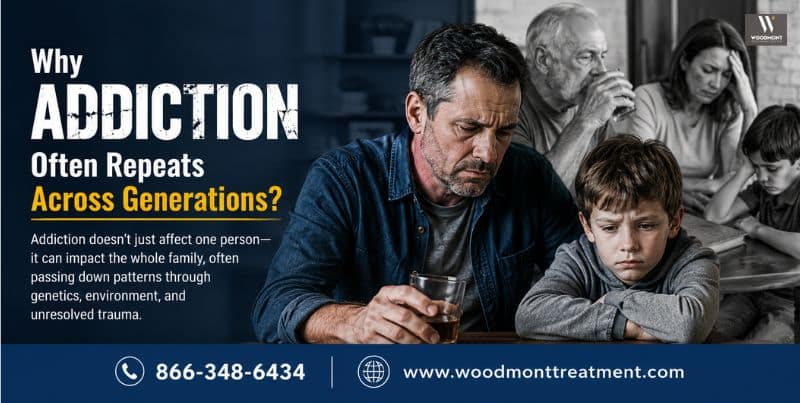
Why Addiction Becomes A Family Pattern?
Addiction is often treated like one person’s problem. In many homes, it becomes a family pattern.
It can affect sleep, money, trust, safety, and daily routines. It can also change how people speak to each other. Some families argue often. Some avoid the topic. Some protect the person because they are scared of making things worse.
A child growing up in that home may learn the pattern without knowing it. They may see alcohol or drugs used after stress, sadness, anger, or loss. Later in life, the same response may feel normal.
This does not mean every child in that home will develop addiction. It means the risk may be higher.
Why Family History Matters?
Family history matters for two reasons. One is biology. The other is the home environment.
Genes can affect how the brain responds to alcohol or drugs. They may also affect stress, mood, and impulse control. Research shows that genetics can play a real role in addiction risk. NIDA reports that genes and epigenetic factors may account for about 40% to 60% of a person’s risk of addiction. Still, genes do not decide the whole story. Home life, stress, trauma, early exposure, mental health, and support systems also matter.
Home life matters too. A person may grow up around heavy drinking, drug use, untreated stress, or unstable relationships. These experiences can shape what feels familiar.
Family history is not a sentence. It is a warning sign. It tells a person to pay closer attention, build healthier habits, and ask for help before the problem grows.
How Children Learn Coping Habits?
Children learn from what adults do every day.
If adults talk through problems, children learn that feelings can be handled safely. If adults drink, use drugs, shut down, or explode during stress, children may learn that pain should be escaped instead of discussed.
These lessons can stay with a person for years. A young adult may not realize they are repeating an old family pattern. They may only feel that substances help them sleep, relax, fit in, or avoid hard feelings.
That is why prevention starts at home. Families can help by naming feelings, keeping routines, setting limits, and showing better ways to handle stress.
Trauma can also keep the cycle alive. It may come from conflict, neglect, grief, bullying, unsafe housing, or living with fear. When pain is never addressed, it often shows up in other ways.

Drug Rehabilitation Center Near Me And Early Help
Many people search for a drug rehabilitation center near me after a painful moment. It may be a family fight, a health scare, a work issue, or another broken promise.
That search can feel heavy. It can also be the first honest step.
Early help matters because addiction usually becomes harder to manage when it stays hidden. Waiting for a bigger crisis can put health, relationships, and safety at greater risk.
When someone looks for a drug rehabilitation center near me, location should not be the only concern. Care should also match the person’s needs.
A family can ask:
- Is medical support available if withdrawal is risky?
- Are mental health concerns addressed?
- Is family education included?
- What happens after treatment ends?
- Is supervised detox available if needed?
A ‘drug rehabilitation center near me’ search should lead to clear answers, not more confusion. Woodmont Treatment offers care that includes detox support, residential treatment, and planning for continued recovery. Recovery is not only about stopping substance use. It is also about learning how to live without returning to the same pattern.
Detox Programs And Safe First Steps
Detox means the body is adjusting after alcohol or drug use stops. For some people, withdrawal can be hard or medically risky. That is why detox programs may be needed.
Detox programs are not the full treatment. They are the first step for some people. Their main role is to support the body through withdrawal.
After detox, deeper care is still needed. A person may need therapy, relapse prevention, family support, and help building daily routines.
Families should not see detox as the finish line. It is the door into care. The right support can help a person begin with more safety and less fear.
Alcohol Therapy And Family Healing
Alcohol problems can be hard to notice because drinking is common in many social settings.
A person may still go to work, care about family, and seem fine from the outside. But if drinking keeps causing harm, it needs attention. Alcohol use disorder is linked to difficulty stopping or controlling alcohol use even when it causes health, social, or work-related problems.
Alcohol therapy can help when drinking leads to arguments, missed responsibilities, broken trust, health concerns, unsafe choices, money problems, or mood changes.
This care gives a person space to understand why drinking became a pattern. It can help them notice triggers such as stress, grief, anger, boredom, or loneliness.
Families may need support, too. Addiction often changes how people speak to each other. One person may lie. Another may blame. Someone else may stay quiet to avoid conflict.
Healthy family support can improve treatment engagement for some people, especially when it includes clearer communication, safer boundaries, and professional guidance.
Alcohol therapy can help families slow down these reactions, speak more clearly, set safer boundaries, and support recovery without covering up the problem.
The aim is not to shame the person who drinks. The aim is to help the whole family stop repeating the same painful cycle.
How Families Can Break The Pattern?
A family does not break a generational addiction pattern in one talk. Change takes steady action.
The first step is honesty. Families need to stop pretending the problem is smaller than it is.
The next step is support. This may include therapy, medical care, peer support, or treatment. Some families may begin by searching for a drug rehabilitation center near them. Others may begin by speaking with a doctor or counselor.
Families can also make small changes at home:
- Speak about addiction without insults
- Stop covering up harmful behavior
- Set clear limits
- Keep stable routines
- Learn warning signs
- Ask for help early
These steps may sound simple, but they are not always easy. Still, they can protect the next generation.
FAQs
Why Does Addiction Repeat In Some Families?
Addiction can repeat because children grow up around the same stress, habits, and coping styles. Genetics can also raise risk. The pattern continues when no one talks about it or gets help.
Does Having An Addicted Parent Mean I Will Become Addicted?
No. It means you may have a higher risk. It does not decide your future. Awareness, support, healthy routines, and early care can lower that risk.
When Should Someone Look For Professional Addiction Help?
A person should look for help when substance use starts affecting health, safety, work, school, money, or relationships.
Are Detox Programs Enough For Addiction Recovery?
No. Detox programs help with the early physical stage of stopping substance use. Recovery usually needs more care after that, such as therapy, relapse prevention, and support for daily life.
How Does Alcohol Therapy Help A Family?
Alcohol therapy helps people talk about drinking with less blame. It can also help the family rebuild trust, set limits, and respond in healthier ways.
Can A Family Break A Generational Addiction Cycle?
Yes. A family can break the cycle by naming the problem, getting support, changing daily habits, and learning new ways to cope.
Conclusion
Addiction may repeat across generations, but it does not have to continue forever. Families can learn new patterns. They can replace silence with honest talk. They can replace shame with support. They can also choose care before another crisis happens.
We at Woodmont Treatment can be part of that next step for people who need structured help with addiction, detox, therapy, and recovery planning.
“If addiction has touched more than one generation in your family, do not wait for the pattern to repeat. Ask for help, learn what is driving it, and take one safe step forward.”