





Objective
Give patients and families a clear, accurate picture of heroin addiction treatment in New Jersey, including withdrawal symptoms, warning signs, and what the treatment process actually involves at Woodmont Treatment Center.
Key Takeaways
- Heroin withdrawal typically starts within 6 to 12 hours of last use and peaks around 48 to 72 hours
- Signs of heroin addiction show up physically, behaviorally, and psychologically, often before someone admits there’s a problem
- Medically supervised detox is the safest way to start heroin addiction treatment, especially given overdose risk after tolerance drops
- Inpatient and outpatient care serve different situations, and picking the wrong level of care slows recovery down
- Woodmont Treatment Center offers a confidential assessment and works with most major commercial insurance plans
A mother calls her son on a Tuesday. No answer. She called again Wednesday. Still nothing. By Friday she’s driven to his apartment and found three days of unopened mail piling up by the door.
This is usually how it starts, not with a dramatic confrontation but with small gaps that keep widening. A missed shift here. A canceled dinner there. Money that used to last until payday now runs out by the fifteenth.
Heroin rewires the timeline of a person’s life faster than most families expect. Understanding what’s happening, medically and behaviorally, is the first real step toward doing something about it. This guide walks through what heroin addiction looks like, what withdrawal actually involves, and how treatment at Woodmont Treatment Center in New Jersey works from that first phone call through aftercare.
If you’re already past the point of needing background information, call our admissions line at 1-866-348-6434 or verify your insurance right now. Both are confidential. Neither locks you into anything.
What Is Heroin Addiction, and Why Is It So Hard to Quit?
Heroin hijacks the brain’s dopamine system, and repeated use trains the body to expect the drug just to function at a baseline level. That’s the mechanical reason quitting on willpower alone rarely holds.
Here’s what actually happens inside the brain. Heroin floods opioid receptors with far more dopamine than the body produces on its own. After enough repetition, natural dopamine production drops. The person isn’t chasing a high anymore. They’re chasing a level of normal their brain no longer produces without the drug.
Families sometimes read this as a character problem, a lack of discipline, a choice made over and over against the people who love them. It’s not that simple. The brain treats withdrawal as a survival threat. That’s what drives the compulsive pattern, not a lack of caring about consequences.
What Are the Signs of Heroin Addiction?
Physical signs are the easiest to hide and the last ones families usually catch. Behavioral changes tend to surface first, well before anyone finds a needle or a baggie.
Physical Signs
- Pupils that stay constricted regardless of lighting
- Track marks or bruising along arms, often hidden under sleeves
- Fast, unexplained weight loss
- Nodding off mid-sentence during normal conversation
- Speech that sounds slowed down or slurred
Behavioral Signs
- Pulling away from people they used to talk to daily
- Missing shifts or classes with no real explanation
- Borrowing money that never gets paid back
- Long sleeves in July
- Cash or valuables going missing from the house
Psychological Signs
- Mood swings that don’t match the situation
- Getting defensive fast when asked simple questions about their day
- Dropping hobbies they used to care about
- Forgetting conversations that happened just days earlier
Here’s a scenario we hear constantly during intake calls. A father mentions his daughter stopped coming to Sunday dinner three months ago. She still texts, still says she’s fine, but she’s asked to borrow money twice this month and snapped at him when he asked where she’d been. None of that alone proves anything. Together, it’s a pattern most families already recognize but haven’t said out loud yet.
If two or three of these signs show up at once, that’s enough to act on. Waiting for undeniable proof usually just costs more time.
What Are Heroin Withdrawal Symptoms, and How Long Do They Last?
Withdrawal symptoms typically start 6 to 12 hours after the last dose and hit their worst point around 48 to 72 hours in. How long and how heavily someone has been using changes the exact timing.
Early Symptoms (6 to 12 Hours)
Cravings, anxiety, and muscle aches usually show up first, along with frequent yawning that has nothing to do with being tired.
Peak Symptoms (48 to 72 Hours)
Vomiting, diarrhea, stomach cramping, and a racing heart rate mark the hardest stretch of the process.
| Timeframe | Typical Symptoms |
| 6 to 12 hours | Anxiety, cravings, muscle aches, yawning |
| 12 to 48 hours | Sweating, chills, nausea, insomnia, agitation |
| 48 to 72 hours (peak) | Vomiting, diarrhea, abdominal cramps, elevated heart rate |
| Day 4 to 7 | Symptoms taper, though fatigue and mood swings can linger |
Heroin withdrawal usually isn’t fatal on its own, unlike alcohol or benzodiazepine withdrawal, which can trigger seizures. But that doesn’t make it safe to do alone. Dehydration from constant vomiting and diarrhea gets dangerous fast without medical support. And the real danger isn’t the withdrawal itself. It’s what happens after. Once someone’s tolerance drops, even a small return to their old dose can overdose them. That single fact is why medically supervised detox matters more than most people realize. If a family member’s issue is alcohol rather than heroin, our related piece on alcohol withdrawal warning signs covers a different, and in some ways more acutely dangerous, withdrawal process.
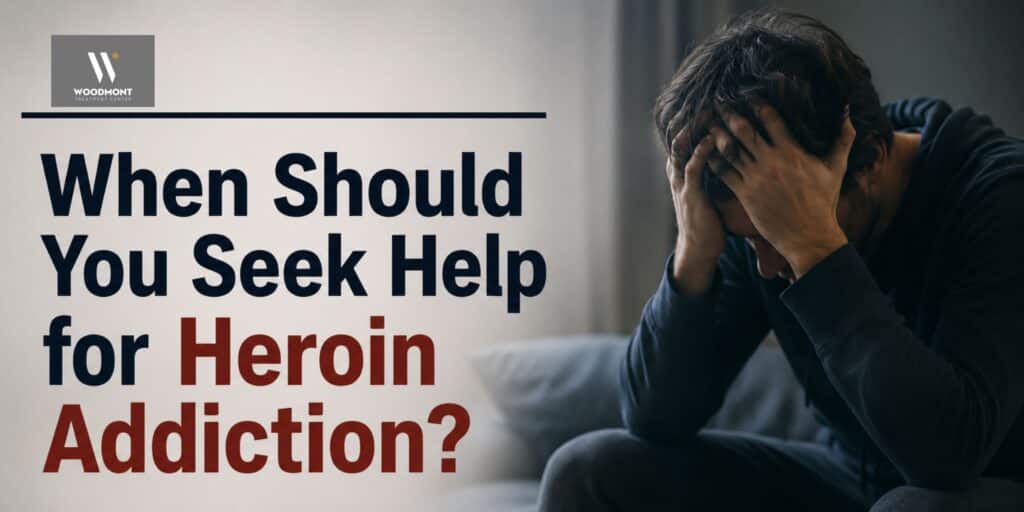
When Should You Seek Help for Heroin Addiction?
Call as soon as a pattern shows up, not after a crisis forces the decision. Waiting for rock bottom just adds risk on top of risk.
A few moments that should trigger a call the same day:
- A near-overdose, or an overdose reversed with naloxone
- Withdrawal symptoms bad enough to include repeated vomiting or visible dehydration
- A loved one saying, even once, that they want help
- Use that’s now costing someone their job, their housing, or custody of their kids
If you’re looking for heroin addiction treatment near you in New Jersey because one of those things just happened, that urgency is real and it’s justified. Call 1-866-348-6434 for a confidential assessment. We answer around the clock, and the call doesn’t obligate you to anything.
How Does Heroin Addiction Treatment Actually Work?
Treatment starts with medically supervised detox, then moves into the therapy work that addresses why the addiction took hold in the first place. Therapy without detox first rarely sticks, because the body’s still fighting withdrawal while someone’s supposed to be doing emotional work.
Here’s how that path actually plays out:
- Confidential assessment. A clinician goes through use history, medical background, and screens for any co-occurring mental health conditions
- Medical detox. Our heroin detox program manages withdrawal under 24-hour clinical supervision, the core piece of any legitimate heroin detox New Jersey program
- Residential inpatient treatment. Clients move into inpatient care, where individual therapy, group sessions, and trauma-informed programming run in parallel
- Aftercare planning. Before anyone leaves, clinicians build an aftercare plan covering outpatient therapy, relapse-prevention work, and ongoing alumni support
Cognitive behavioral therapy shows up throughout this process, and dual-diagnosis treatment gets added when depression, anxiety, or trauma are part of the picture. Detox length depends entirely on the person. What doesn’t vary is this: detox stabilizes the body. It doesn’t fix what led someone to use in the first place. That’s the work that comes after.
Inpatient vs. Outpatient: Which Fits Your Situation?
Inpatient care fits people with a long use history, an unstable home life, or a relapse already behind them. Outpatient care fits people with solid support at home and a shorter, less entrenched pattern of use.
| Factor | Inpatient Treatment | Outpatient Treatment |
| Living situation | Residential, on-campus | Client lives at home |
| Best for | Long-term use, prior relapse, unstable home life | Stable home environment, earlier-stage use |
| Structure | 24-hour clinical supervision | Scheduled sessions, several times a week |
| Withdrawal management | Medical detox included on-site | Requires prior detox completion |
| Typical next step | Steps down to outpatient after residential care | Can step up to inpatient if progress stalls |
Neither option wins by default. A lot of it comes down to whether outpatient care has already been tried and failed, and whether home is currently a place that supports recovery or undermines it. That’s exactly what the confidential assessment is for.
What Makes Woodmont’s Heroin Addiction Treatment Program Different?
Detox and residential treatment run as one continuous program here, not two separate services handed off between providers. That continuity is a big part of why outcomes hold better than a stripped-down detox-only stay.
The campus sits on more than 10 acres in Sussex County. Rooms are semi-private and en-suite, not shared dormitory space. Clients have access to a fitness center, outdoor recreation, and holistic programming like yoga and spa treatments running alongside the clinical work, because recovery that only addresses the addiction and ignores everything else tends not to last.
Our clinical team has decades of combined experience treating opioid addiction and dual-diagnosis cases. Clients come from Newton, Sussex County, Bergen County, and across Northern New Jersey, along with people traveling in from other parts of the state specifically for our residential heroin rehab program.
What Does Heroin Addiction Treatment Cost, and Is It Covered by Insurance?
Cost comes down to two things: what level of care you need, and what your insurance actually covers. Woodmont Treatment Center works with most major commercial insurance plans, and coverage can absorb a large share, sometimes nearly all, of the total cost.
| Insurance Type | Typically Accepted |
| Aetna | Yes |
| Anthem | Yes |
| Cigna | Yes |
| BCBS | Yes |
| Amerihealth | Yes |
| Medicaid/Medicare | Not accepted |
| Private Pay | Yes |
Our admissions team verifies your benefits after that first call and gives you a real number for any out-of-pocket cost before you commit to anything. No insurance? Ask about private-pay options during that same call.
How Do I Get a Loved One Into Treatment?
Call our admissions team before you say anything to your loved one. Skipping straight to a confrontation, especially one planned alone at midnight after finding something upsetting, rarely goes the way anyone hopes.
A few things that consistently help:
- Talk through the situation with an admissions counselor first, before approaching the person directly
- Stick to specific incidents rather than broad accusations
- Keep the conversation away from punishment or ultimatums
- Have treatment and insurance details ready, so there’s an actual next step if they say yes
Involvement doesn’t end at drop-off. Our admissions process includes support for family members the whole way through treatment, because recovery tends to hold up better when the people around the client actually understand what’s happening.
Start Heroin Addiction Treatment with Compassionate Support
Recovery starts with one confidential conversation. Our experienced clinical team provides personalized heroin addiction treatment, medically supervised detox, evidence-based therapies, and ongoing support to help you or your loved one build a healthier future. Verify your insurance today and take the first step toward lasting recovery.
Verify Your InsuranceFAQ
How long does heroin withdrawal actually last?
Symptoms usually peak around 48 to 72 hours, then ease off over the following week. Fatigue and mood swings can hang around a bit longer. Medically supervised detox makes that stretch far more bearable.
Is heroin withdrawal dangerous?
Rarely fatal by itself, but dehydration from vomiting and diarrhea can turn serious without medical support. The bigger threat is what happens after, since tolerance drops fast and relapse can lead straight to overdose.
When does withdrawal become a medical emergency?
Severe dehydration, vomiting that won’t stop, or any loss of consciousness needs immediate attention. If you’re not sure, call our admissions line or 911. Don’t wait to see if it passes.
Do you accept insurance for heroin addiction treatment?
Yes, most major commercial plans. We currently don’t accept Medicaid or Medicare. Call our admissions line and we’ll verify your exact benefits before you commit to anything.
Where is Woodmont Treatment Center located?
Our campus is in Sussex County, New Jersey, near Newton, on more than 10 acres. We treat clients from Bergen County and across Northern New Jersey, plus people traveling in from other parts of the state.
What’s the first step if I think a family member has a heroin problem?
Call our admissions team. You don’t need your loved one on the line for that first conversation. We’ll help you figure out how and when to approach them.
Can someone detox from heroin without going inpatient?
It’s possible, but medically supervised detox followed by residential care tends to produce far more stable results, especially with heroin, given how quickly overdose risk climbs early in recovery. We’ll walk through what fits during intake.
What happens after detox is finished?
Detox stabilizes the body. It’s not the finish line. From there, clients move into residential care, then an aftercare plan built around outpatient therapy and relapse-prevention support.
Do you treat co-occurring mental health conditions alongside addiction?
Yes. Depression, anxiety, and trauma show up constantly alongside heroin addiction. Our dual-diagnosis programming treats both at the same time, not one after the other.
How much does heroin addiction treatment cost without insurance?
It depends on the level of care. We offer private-pay options and can walk through actual numbers once we understand what your situation needs.
Take the First Step
Heroin addiction doesn’t resolve itself, and waiting for the right moment usually just adds risk without adding clarity. Every day someone keeps using is another day overdose stays on the table.
Woodmont Treatment Center offers a confidential assessment, works with most major commercial insurance plans, and covers the full arc of heroin addiction treatment, from medical detox through aftercare. We won’t promise a specific outcome, because recovery looks different for everyone. What we will promise is an experienced clinical team from the very first call.
Call 1-866-348-6434 or contact us to start a confidential conversation today.