




Is Residential Treatment in Sussex County Right for You?
Residential treatment in Sussex County is a structured, live-in recovery program where you receive 24/7 medical supervision, intensive therapy, and holistic support — all within your home region of New Jersey. At Woodmont Treatment Center, we view this level of care not as a clinical confinement, but as a sacred space for transformation. It is a time to step away from the noise of the world and focus entirely on the restoration of your mind, body, and spirit.
If you’re trying to figure out whether residential care is the right fit, here’s a quick answer:
You may need residential treatment if you:
- Are experiencing withdrawal symptoms that need medical supervision to ensure safety
- Have tried outpatient programs before without achieving the lasting results you desire
- Are dealing with both addiction and a mental health condition, such as anxiety or depression (dual diagnosis)
- Live in an environment where substances are easily accessible or where triggers are constant
- Need full-time structure and professional accountability to break the cycle of dependence
Sussex County is currently navigating a serious addiction crisis that touches every corner of our community. The county ranks in the top 5 in New Jersey for heroin treatment admissions, with 439 cases per every 100,000 residents. In 2019 alone, 44% of all local treatment admissions were linked to heroin misuse, and 35% were related to alcohol dependence. These statistics highlight a profound need for specialized, local intervention that understands the unique landscape of Northern New Jersey.
These aren’t just numbers. They represent real people — neighbors in Newton, parents in Sparta, and siblings in Andover — who need more than willpower to recover. Addiction is a complex disease that rewires the brain’s reward system, making it nearly impossible to “think” your way out of the problem without professional guidance.
Residential treatment exists because some battles can’t be fought alone, or part-time.
At Woodmont Treatment Center in Newton, NJ, we understand what Sussex County families are going through. Our program is built to meet you where you are — with personalized, evidence-based care in a warm, therapeutic environment that feels nothing like a hospital. We have replaced sterile hallways with serene, wooded views and clinical coldness with compassionate, expert care. This article walks you through five clear signs that residential treatment may be the right next step for you or someone you love.
Easy residential treatment sussex county word list:
The Importance of Residential Treatment Sussex County for Long-Term Recovery

When we talk about recovery in Northern New Jersey, we aren’t just talking about “quitting.” We are talking about a total lifestyle transformation. For many in our community, residential treatment sussex county is the only way to achieve the clinical stabilization required to make that change stick. The journey of recovery is rarely a straight line, and having a solid foundation is the most critical factor in preventing future relapses.
The local crisis is multifaceted. While Sussex County is known for its beautiful rolling hills, quiet townships, and tight-knit communities, it has not been immune to the opioid epidemic. Statistics from recent years show a staggering need for immediate intervention. With heroin treatment admissions reaching 439 per 100,000 residents, the demand for high-quality, local care has never been higher. This is why Woodmont Treatment Center has established itself as the premier facility in the region, offering a sanctuary for those who feel lost in the storm of addiction.
At Woodmont Treatment Center: Premier Residential Care, we believe that addiction is often a disease of isolation. To heal, a person needs to reconnect — first with themselves, and then with a supportive community. Residential care provides the safety and time necessary to address various treated conditions at their root, rather than just treating the surface-level symptoms of drug or alcohol use. We focus on the whole person, ensuring that physical health, emotional stability, and spiritual well-being are all addressed simultaneously.
The Impact of Substance Abuse in Northern New Jersey
The data reveals a sober reality for Sussex and Warren Counties. In 2019, 44% of all treatment center admissions in the county were directly linked to heroin misuse and dependence. This trend is often coupled with high-risk behaviors; approximately 36% of those admitted were intravenous drug users, which introduces additional health complications that require professional medical oversight. The presence of synthetic opioids like Fentanyl has only increased the stakes, making every instance of use a potential tragedy.
Alcohol remains a significant concern as well. About 35% of admissions were related to alcohol use and dependence, and a startling 58% of adults in Sussex County report binge drinking. When you combine these factors with the rise of prescription drug involvement, the risk of a fatal overdose becomes a daily reality for those struggling. In fact, historical data showed that in a single year, Narcan was administered dozens of times by local law enforcement to prevent tragedy. This is why residential treatment sussex county is more than just a service; it is a life-saving necessity that provides a buffer between the individual and the dangers of the street supply.
Why Localized Care Matters for Sussex Families
Choosing a center near Newton, Andover Township, or Sparta isn’t just about convenience — it’s about the “continuum of care.” When you choose a local facility, you remain close to your primary support network: your family. We know that family involvement is one of the strongest predictors of long-term success. Addiction is a family disease, and healing must happen for everyone involved.
By staying in the area, you can participate in family therapy sessions without the burden of long-distance travel. Furthermore, localized care allows for a smoother transition back into the community. You aren’t recovering in a vacuum; you are learning how to live sober in the very same region where you will continue your life. Woodmont’s Approach to Residential & Inpatient Care focuses on helping you identify local triggers and build a New Jersey-based support system that stays with you long after you leave our campus. We help you find the local meetings, the local sober activities, and the local peers who will walk with you on the road to long-term wellness.
Residential vs. Outpatient: Which Level of Care Do You Need?
Choosing between residential and outpatient care is one of the most important decisions you will make. It requires an honest assessment of your current stability and the level of risk you face. To help you visualize the differences, consider the levels of support provided by each:
| Feature | Residential Treatment | Partial Hospitalization (PHP) | Intensive Outpatient (IOP) |
|---|---|---|---|
| Supervision | 24/7 Clinical & Medical | Daytime (5-7 hours/day) | Part-time (9-15 hours/week) |
| Environment | On-site Living | Commute from Home | Commute from Home |
| Medical Detox | Integrated & Supervised | Generally not included | Not included |
| Best For | High-risk, Chronic Relapse | Step-down from Residential | Maintaining Work/School |
For many, 24-hour supervision is the “missing ingredient” in their previous recovery attempts. More info about inpatient rehab services highlights how this level of care provides a “therapeutic bubble.” It removes the daily stressors of bills, toxic relationships, and easy access to substances, allowing the brain to finally begin the healing process. Research consistently shows that stays of 30 to 90 days in a residential setting yield significantly higher success rates because they provide enough time for new, healthy habits to actually take root. The brain needs time to heal from the chemical changes caused by substance use, and residential care provides that necessary window of time.
The Structure of Residential Treatment Sussex County
A typical day in residential treatment sussex county is highly structured. This isn’t to be “strict,” but to help the brain relearn how to function without substances. When someone is in active addiction, their life is often chaotic and unpredictable. We replace that chaos with a predictable, nourishing routine that fosters a sense of safety and accomplishment.
Our residents engage in:
- Intensive Individual Therapy: Working one-on-one with a counselor to process trauma, identify triggers, and develop personalized coping strategies.
- Peer-Led Group Sessions: Realizing you are not alone and learning from others’ experiences in a safe, moderated environment.
- Holistic Wellness: Activities like yoga, meditation, and fitness to heal the body and regulate the nervous system.
- Nutritional Support: Gourmet meals designed to restore the nutrients depleted by substance use and improve overall cognitive function.
- Psychiatric Oversight: Ensuring that any co-occurring mental health issues are medically managed with the latest evidence-based protocols.
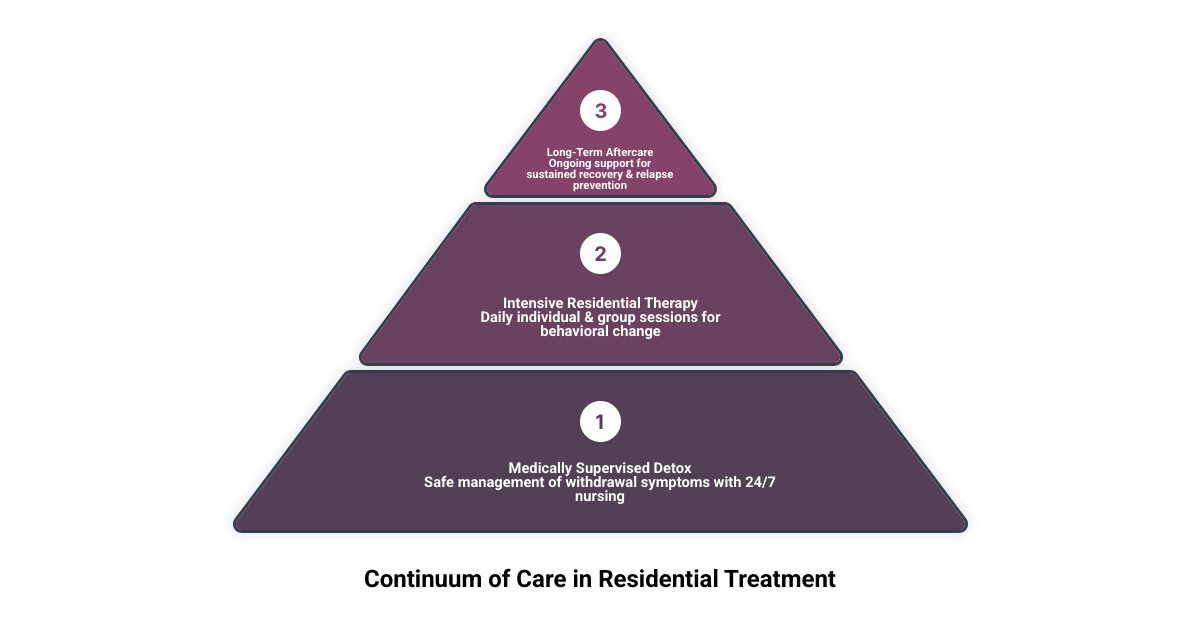
This immersive environment is often preceded by medically supervised detoxification, ensuring that the transition into therapy is physically safe and as comfortable as possible. By addressing the physical dependence first, we clear the way for the emotional and psychological work to begin.
When Outpatient Care is the Next Step
Residential treatment is rarely the end of the journey. For most, it is the foundation upon which a new life is built. As you gain strength and clinical stability, you may transition to Partial Hospitalization (PHP) or an Intensive Outpatient Program (IOP).
These “step-down” programs are vital. They allow you to practice your new coping skills in the real world while still spending several hours a day in a supportive, therapeutic environment. This gradual reintegration is the key to preventing relapse and ensuring that the progress made in residential care lasts a lifetime. It allows you to test your wings while the safety net is still firmly in place.
5 Signs Residential Treatment is the Right Choice

How do you know if it’s time to step up to a residential level of care? While everyone’s path is unique, there are five common indicators that residential treatment is the most appropriate and effective choice.
1. You Require Medically Supervised Detox
The first 72 hours of sobriety are often the most dangerous. Depending on the substance — particularly alcohol or benzodiazepines — withdrawal can be life-threatening. Alcohol withdrawal, for instance, can lead to delirium tremens (DTs) in about 5% of cases, which can be fatal if not treated by medical professionals. According to the Substance Abuse and Mental Health Services Administration (SAMHSA), medically managed withdrawal is the first step toward a successful recovery journey, providing the safety necessary to begin psychological work.
In a residential treatment sussex county setting, you have 24/7 access to nursing care. We use stabilization protocols to manage acute symptoms, ensuring you are safe and comfortable. Trying to “white knuckle” through detox at home is not only painful but unnecessarily risky. It often leads to immediate relapse simply because the physical discomfort becomes unbearable. Woodmont’s detox services provide the medical bridge you need to get from active use to active recovery safely. Our medical team monitors your vitals and manages your symptoms with compassion, ensuring that your body can begin to heal without the trauma of severe withdrawal.
2. Previous Outpatient Attempts Have Not Led to Sobriety
There is no shame in needing a higher level of care. Many of our residents have tried “standard” rehab or weekly therapy before. If you find yourself in a “revolving door” — staying sober for a few weeks only to relapse when life gets stressful — it’s a sign that you need a more intensive intervention.
Residential care allows you to move beyond the surface. Instead of just talking about your problems for an hour a week, you are living in a recovery-focused environment 24/7. This depth of immersion is often what is required to break the cycle of chronic relapse and build a foundation that can withstand the pressures of daily life.
3. You Are Managing a Dual Diagnosis
Addiction rarely exists in a vacuum. Often, it is a way to self-medicate for underlying issues like depression, anxiety, PTSD, or bipolar disorder. If you only treat the addiction but ignore the mental health condition, a relapse is almost inevitable because the original reason for using remains unaddressed. This intersection of mental health and substance use is known as a dual diagnosis, and it requires a specialized, integrated approach to treatment.
We specialize in dual diagnosis care, meaning we treat both disorders simultaneously. In a residential setting, we have the time and resources to conduct deep-dive psychiatric evaluations and provide integrated therapy. Addressing trauma and mental health is not a “side project” — it is a central pillar of the recovery process. Our clinical team works collaboratively to ensure that your medication, your therapy, and your wellness activities all support both your sobriety and your mental health. By healing the mind, we provide the strength necessary to maintain the body’s sobriety. This comprehensive approach is what sets Woodmont apart as the premier provider of residential treatment sussex county.
4. Your Current Environment Triggers Substance Use
Sometimes, the place where you live is the very thing keeping you sick. Whether it’s a household where others are using, a neighborhood full of triggers, or simply the isolation of living alone, your environment plays a massive role in your sobriety.
Moving into a residential facility provides a “geographic cure” that actually works. It isn’t about running away from your problems; it’s about giving yourself a clinical safe haven where substances simply aren’t accessible. Our 10+ acre campus in Newton serves as a tranquil oasis, allowing you to disconnect from toxic environments so you can reconnect with your health.
5. You Need a Highly Structured, Therapeutic Oasis
If your life has become unmanageable and you feel like you’ve lost control of your daily routine, the structure of a residential program can be your greatest asset. Here, you don’t have to worry about what to eat, how to get to an appointment, or who to call when you’re feeling a craving.
The peer community in a residential center provides a level of accountability that is impossible to replicate at home. You are surrounded by people who understand exactly what you are going through, supported by a staff that provides trauma-informed care in a warm, home-like setting. This structure builds the life skills and emotional regulation you’ll need for years to come.
Specialized Programs and Luxury Amenities at Woodmont Treatment Center

We believe that the environment in which you recover matters deeply. Recovery is hard work, and having a comfortable, serene place to do that work makes a world of difference. At Woodmont, we’ve moved away from the cold, clinical feel of traditional hospitals. We have intentionally designed our Newton campus to be the antithesis of a hospital. There are no fluorescent lights or sterile hallways; instead, you will find warm wood tones, soft lighting, and expansive views of the Sussex County landscape. We offer luxury residential amenities that promote holistic healing and allow you to focus entirely on your journey.
Our residents enjoy:
- Luxury En-Suite Rooms: Private or semi-private spaces that feel like home, providing a sanctuary for rest and reflection.
- Gourmet Meals: Prepared by on-site chefs using fresh, local ingredients to restore your physical health and provide comfort.
- Fitness Center: Because physical wellness is a key component of mental clarity and emotional regulation.
- Spa & Wellness Services: Helping you learn how to relax and self-soothe without substances through massage, meditation, and other therapeutic practices.
Specialized Programs for Residential Treatment Sussex County
Every addiction is different, which is why we offer tailored tracks for specific substances and populations. Whether you are dealing with opioid addiction, alcohol recovery, or a complex benzo tapering process, our medical team creates a plan specific to you. We also offer gender-specific healing tracks and programs for young adults and veterans, ensuring that you are surrounded by peers who share your life experiences and understand your unique challenges. This peer connection is a powerful catalyst for change.
Holistic and Evidence-Based Modalities
Our clinical team uses a “whole-person” approach. This means we combine traditional, evidence-based therapies like Cognitive Behavioral Therapy (CBT) and Dialectical Behavior Therapy (DBT) with innovative holistic methods. We believe that different people respond to different tools, so we provide a wide array of options.
We offer:
- Yoga and Mindfulness: To help regulate the nervous system and manage stress.
- Art and Music Therapy: For those who find it easier to express themselves creatively than through words.
- 12-Step Integration: For those who find strength in traditional fellowship and the power of the group.
- Alternative Peer Support: For those looking for a different path to connection, such as SMART Recovery or Refuge Recovery.
By offering a wide range of outpatient and residential support, we ensure that every resident finds the specific tools that resonate with them. Our goal is to provide you with a “toolbox” of skills that you can take with you when you leave our care.
Navigating Insurance and the Admission Process
One of the biggest hurdles to getting help is worrying about the cost. We want to make this process as stress-free as possible so that you can focus on what truly matters: your health. Our admissions team works with most major commercial insurance providers, including Aetna, BlueCross BlueShield, Cigna, UnitedHealthcare, and Magellan. We also accept NJ Medicaid for certain programs, ensuring that high-quality care is accessible to our Sussex County neighbors. We believe that financial concerns should never be a barrier to life-saving treatment.
Choosing the Right Residential Treatment Sussex County
When you are looking for a facility, it is important to look for Joint Commission accreditation. This is the “gold standard” in healthcare and ensures that the facility meets the highest safety and clinical standards. At Woodmont, we pride ourselves on our staff’s credentials and our commitment to getting you started on the right foot with a comprehensive aftercare plan from day one. We don’t just plan for your stay; we plan for your life after treatment.
Steps to Admission
The path to recovery starts with a single, confidential phone call. Here is what you can expect from our compassionate intake team:
- Confidential Assessment: A clinical intake specialist will talk with you about your history, your needs, and your goals for recovery.
- Insurance Verification: We handle the paperwork and let you know exactly what is covered, providing transparency and peace of mind.
- Clinical Evaluation: Our medical team reviews your case to ensure a safe transition and to begin crafting your personalized treatment plan.
- Logistics: We can assist with transportation to our Newton campus, making the journey to our facility as easy as possible.
- The First 24 Hours: You’ll be welcomed into a warm environment, introduced to your care team, and shown to your room to begin your transformation. We ensure that your first day is focused on comfort and orientation.
Frequently Asked Questions about Residential Treatment
What is the typical duration of a residential program in Sussex County?
While every plan is individualized, most residential stays last between 30 and 90 days. This duration is based on clinical research showing that the brain needs significant time away from substances to reset its pleasure and reward centers.
Does insurance cover the full cost of residential rehab at Woodmont?
Most major commercial plans cover a significant portion, if not all, of the cost of residential treatment. Our admissions team provides a free insurance verification to help you understand your specific benefits and any potential out-of-pocket costs.
Can my family visit me while I am in residential treatment?
Yes! We believe family involvement is crucial. While the initial detox phase may have some restrictions to allow for stabilization, we integrate family therapy and scheduled visitation into our long-term residential programs.
Conclusion
At Woodmont Treatment Center, we are more than just a facility; we are your partners in lifelong recovery. As the premier provider of residential treatment sussex county, we are dedicated to moving beyond the old hospital model. We offer a therapeutic environment where you are treated as a person, not a diagnosis. We understand that you are more than your addiction; you are a person with potential, dreams, and a future worth fighting for.
Through a combination of holistic wellness, evidence-based therapy, and 24/7 compassionate care, we help you build the “recovery capital” you need to reclaim your life. If you or a loved one is struggling, remember: you don’t have to do this alone. The sunrise over the New Jersey mountains isn’t just a beautiful view — it’s a symbol of the new beginning that is waiting for you here. We invite you to step into the light of a new day and begin the journey toward the life you were meant to live.
Learn more about our treatment philosophy and take the first step toward the life you were meant to live. Our team is standing by to help you navigate the path to wellness with dignity and respect.