






Objective
The objective of this blog is to explain how data helps treatment teams make better care plans. It also explains how data-driven decision-making, data-driven healthcare solutions, and healthcare analytics services can support safer, more personalized, and more effective patient care.
Key Takeaways
- Data helps care teams better understand each patient.
- Treatment plans can change faster when progress is tracked.
- Good data can help reduce guesswork in care.
- Patient outcomes improve when care is reviewed often.
- Data support early action when a patient is struggling.
- Human care still matters. Data only helps guide better choices.
Table Of Contents
- Why Data Matters In Treatment Planning
- What A Data-Driven Treatment Plan Means
- How Data-Driven Decision-Making in Healthcare Works
- How Data-Driven Healthcare Solutions Improve Care
- The Role Of Healthcare Analytics Services
- What Types Of Data Can Support Treatment
- Benefits For Patients And Families
- Common Concerns About Data In Care
- FAQs
Why Data Matters In Treatment Planning?
Every patient has a different story. Two people may have the same diagnosis, but their needs can be very different. Their health history, symptoms, family support, stress levels, and responses to care may differ.
This is why treatment should not be based on guesswork. A strong care plan should be guided by real information. At Wood Mont Treatment, the goal of treatment planning is to understand the person clearly before making care decisions.
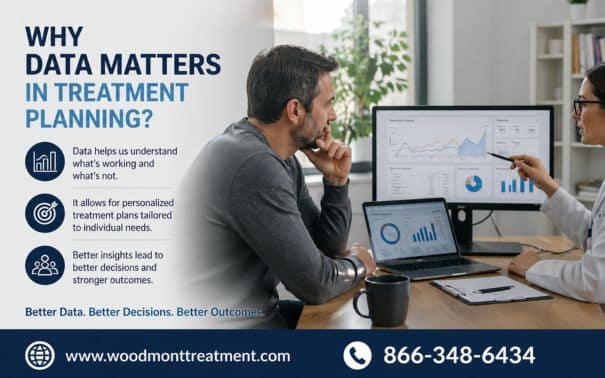
Data helps treatment teams see patterns. It can show what is improving, what is not improving, and what may need more attention. This makes care more focused and more useful.
What A Data-Driven Treatment Plan Means?
A data-driven treatment plan uses patient information to guide care. This does not mean the patient becomes a number. It means the care team uses clear facts along with human judgment.
This may include:
- Symptoms
- Medical history
- Mental health history
- Substance use history
- Sleep patterns
- Medication response
- Therapy progress
- Risk factors
- Family support
- Daily functioning
- Relapse warning signs
The care team reviews this information and adjusts the plan when needed. This helps avoid a “one-size-fits-all” approach.
How Data-Driven Decision-Making in Healthcare Works?
Data-driven decision-making in healthcare means using real patient information to make better choices. It helps providers ask the right questions.
For example:
- Is the patient improving?
- Are symptoms getting worse?
- Is the current therapy helping?
- Is medication causing side effects?
- Does the patient need more support?
- Are there warning signs of relapse?
- Is family involvement helping?
These questions help the care team respond faster. Instead of waiting until a problem becomes serious, data can help show early signs.
How Data-Driven Healthcare Solutions Improve Care?
Data-driven healthcare solutions help treatment teams organize and understand patient information. They can make it easier to track progress over time.
These solutions may help with:
- Care planning
- Progress tracking
- Risk screening
- Appointment follow-up
- Medication monitoring
- Outcome measurement
- Communication between care team members
When information is organized well, the care team can make clearer decisions. This can help patients receive the right level of care at the right time.
For example, if a patient’s sleep becomes poor, anxiety increases, and missed sessions become common, the team may notice a pattern. That pattern may show the patient needs extra support before things get worse.

The Role Of Healthcare Analytics Services
Healthcare analytics services help turn raw information into useful insights. Raw data alone is not enough. It must be reviewed in a way that supports care.
Analytics can help answer questions such as:
- Which treatments are helping most?
- Which patients may need more support?
- What factors affect recovery progress?
- Where are delays happening in care?
- Are patients meeting treatment goals?
- What outcomes are improving over time?
This information can help treatment teams improve care plans. It can also help programs understand what is working well and what needs to change.
Wood Mont Treatment can use this kind of thinking to support more informed care decisions while still keeping the patient’s personal needs at the center.
What Types Of Data Can Support Treatment?
Not all data is complex. Some of the most useful information is simple and practical.
| Type Of Data | Why It Matters |
| Symptoms | Shows whether a patient is improving |
| Sleep | Poor sleep can affect mood and recovery |
| Attendance | Missed sessions may show rising risk |
| Medication Response | Helps track benefits and side effects |
| Mood Changes | Shows emotional progress or setbacks |
| Family Support | Helps understand home stability |
| Cravings Or Triggers | Helps prevent relapse |
| Daily Functioning | Shows real-life improvement |
This information should be handled carefully and privately. Patients should know why information is collected and how it helps their care.
Transforming Patient Outcomes with Data-Based Care
Data-based care improves patient outcomes by using real insights to guide treatment decisions. It helps personalize care, track progress, and adjust plans for better results, leading to more effective recovery, higher success rates, and long-term health stability.
Get Started Now.
Benefits For Patients And Families
Data-driven care can help patients and families feel more informed. It can also make treatment feel less random.
1. More Personal Care
Data helps the team understand what the patient truly needs. A person with high anxiety may need a different plan than someone struggling more with depression, cravings, or trauma.
2. Faster Changes When Needed
If a plan is not working, the team can adjust it. This may include changing therapy focus, increasing support, reviewing medication, or adding family sessions.
3. Better Communication
When the care team tracks progress, conversations become clearer. Patients can see what has improved and what still needs work.
4. Early Warning Signs
Data can show small changes before a setback becomes larger. This helps the team act earlier.
5. Stronger Long-Term Planning
Treatment does not end after one good week. Progress must be steady. Data helps build a plan for continued care, relapse prevention, and ongoing support.
Common Concerns About Data In Care
Some patients may worry that data makes care feel cold or impersonal. That is understandable. Good treatment should never feel like a chart is more important than the person.
Data should support human care, not replace it.
Important Points To Remember
- Data helps guide decisions.
- Clinicians still listen to the patient.
- Privacy must be respected.
- Numbers do not tell the whole story.
- Personal experience still matters.
- The patient should be part of the care plan.
The best treatment plans combine facts, clinical skill, and honest conversation.
Final Thoughts
Data-driven treatment plans can improve patient outcomes by helping care teams make better decisions. They show what is working, what needs attention, and when a patient may need more support.
With data-driven decision-making in healthcare, treatment becomes more focused. With data-driven healthcare solutions, progress can be more clearly tracked. With healthcare analytics services, care teams can learn from patterns and improve planning.
The most important point is simple. Data should help people receive better care. It should not replace compassion, trust, or real human support.
Wood Mont Treatment can use a thoughtful, patient-centered approach where information supports care decisions while the person remains the focus.
CTA Quote: “Better treatment starts with better understanding. When care is guided by real information, patients can receive support that fits their needs.”
FAQs
1. What Is A Data-Driven Treatment Plan?
A data-driven treatment plan uses real patient information to guide care. This can include symptoms, progress, health history, treatment response, and daily challenges.
2. How Can Data Improve Patient Outcomes?
Data helps the care team see what is working and what needs to change. This makes it easier to adjust care before small problems become bigger.
3. What Does Data-Driven Decision-Making in Healthcare Mean?
Data-driven decision-making in healthcare means using clear facts, not guesswork, to make care decisions. It helps providers choose safer, more personalized treatment steps.
4. Are Data-Driven Healthcare Solutions Personal?
Yes. Good data-driven healthcare solutions are meant to make care more personal, not less human. They help the team better understand each patient.
5. What Do Healthcare Analytics Services Help With?
Healthcare analytics services help organize patient information and find useful patterns. This can support better planning, progress tracking, and early support.
6. Does Data Replace Human Care?
No. Data support human care. Doctors, therapists, and care teams still listen, guide, and make decisions based on the person’s full situation.