




Finding Affordable Rehab in New Jersey: What You Need to Know Right Now
Affordable rehab in New Jersey is more accessible than most people realize — and you have real options, regardless of your income or insurance situation.
Here is a quick look at your most important options:
| Option | Best For | Cost Range |
|---|---|---|
| Medicaid-covered rehab | Low-income or uninsured residents | $0 out-of-pocket |
| State-funded programs | Those without private insurance | Free to low-cost |
| Outpatient (IOP/PHP) | Working adults, mild-to-moderate addiction | Lower than residential |
| Private insurance | Those with employer or marketplace plans | Varies by plan |
| Sliding scale / payment plans | Those who can pay some but not full cost | Flexible |
| Residential with Medicaid | Moderate-to-severe addiction, low income | $0 or very low |
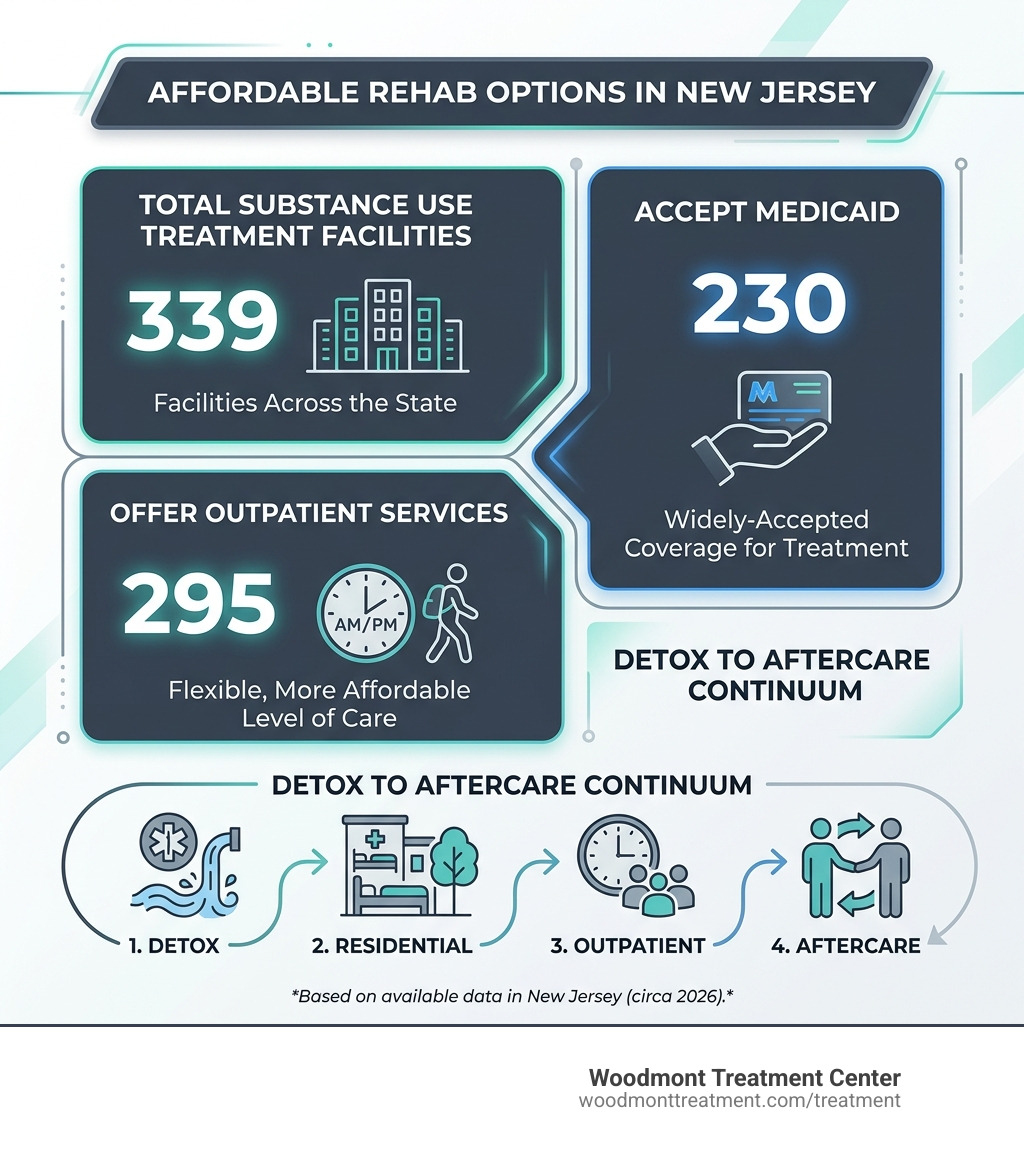
New Jersey has 339 substance use treatment facilities across the state. Of those, 230 accept Medicaid and 295 offer outpatient services — the most affordable level of care. Whether you need detox, residential care, or a flexible outpatient program, there is a path forward for you. For residents in Sussex and Warren County, Woodmont Treatment Center provides a premier, non-hospital setting for those seeking affordable, high-quality care.
The challenge is not whether affordable care exists. It is knowing where to look and understanding what your coverage actually pays for.
If you are a 35-year-old in New Jersey dealing with opioid dependence or alcohol use disorder — and you are worried about cost — you are not alone. Many people delay getting help simply because they assume they cannot afford it. That fear is understandable, but it often gets in the way of a decision that could change everything.
New Jersey was among the top 10 states accounting for over 64% of all U.S. admissions to substance use treatment in 2021. The need is real. And so are the resources.
This guide breaks down the best affordable rehab options in New Jersey — from Medicaid-covered programs to sliding scale outpatient care — so you can make a clear, confident decision.
Understanding the Cost of Addiction Treatment in the Garden State
When we talk about finding an affordable rehab in New Jersey, it is important to understand that “affordable” means different things depending on the level of care you require. In our experience as a professional counseling group, the cost of treatment is usually the number one barrier that prevents people from reaching out. As of April 2026, the landscape of addiction recovery in New Jersey has evolved to offer more financial pathways than ever before, but the price tag still varies significantly based on the intensity of the program.

Breaking Down the Levels of Care
The cost of rehab is generally tied to how much “time and space” you consume.
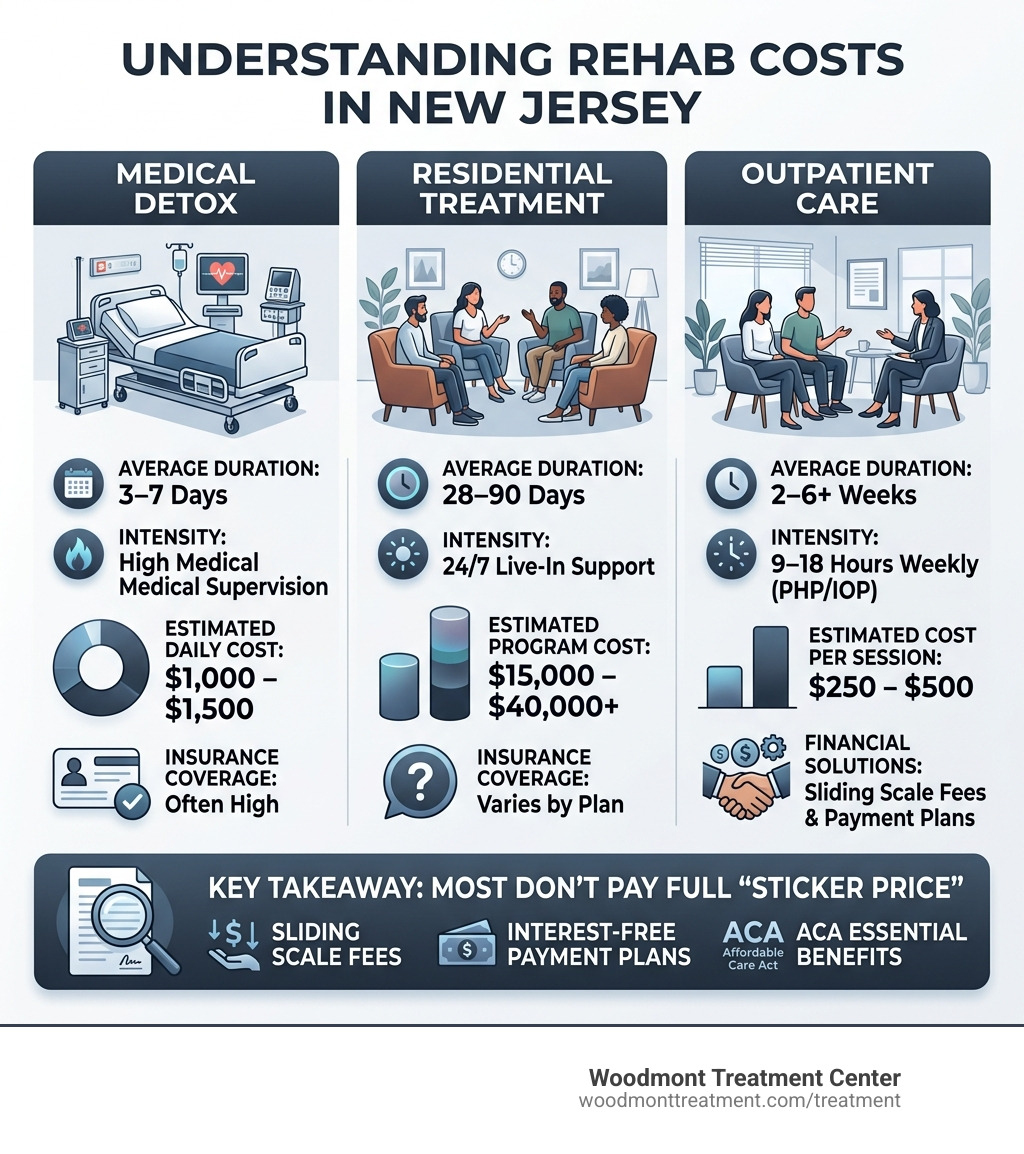
- Supervised Detox: This is the most intensive phase. Because it requires 24/7 clinical supervision to manage withdrawal symptoms safely in a comfortable, home-like environment, it often carries a higher daily cost. However, it is usually the shortest phase (3 to 7 days).
- Residential Treatment: This involves living at a facility. Costs cover housing, 24-hour support, meals, and multiple daily therapy sessions. While this is the most comprehensive option, it is also the most expensive out-of-pocket.
- Outpatient Programs (PHP and IOP): These are often the most affordable rehab New Jersey options. Since you live at home or in a sober living environment, you aren’t paying for room and board. You still receive high-quality clinical care, often for 9 to 18 hours a week.
| Level of Care | Average Duration | Estimated Cost (Out-of-Pocket) | Insurance Coverage |
|---|---|---|---|
| Supervised Detox | 3–7 Days | $1,000 – $1,500/day | Usually High |
| Residential Rehab | 28–90 Days | $15,000 – $40,000+ | Varies by Plan |
| PHP (Partial Hospitalization) | 2–6 Weeks | $350 – $700/day | High to Moderate |
| IOP (Intensive Outpatient) | 8–12 Weeks | $250 – $500/session | Very High |
Financial Barriers and Solutions
We know that seeing these numbers can be overwhelming. But please remember: very few people pay the full “sticker price.” Most facilities in Sussex and Warren County offer sliding scale fees—meaning they adjust the price based on what you can actually afford. Woodmont Treatment Center serves Sussex and Warren County with a focus on accessible, home-like environments rather than cold clinical settings.
Navigating Insurance and Medicaid for Affordable Rehab New Jersey
The most effective way to secure an affordable rehab in New Jersey is to leverage insurance. Under the Affordable Care Act (ACA), substance use disorder treatment is considered an “essential health benefit.” This means that most insurance plans are legally required to provide some level of coverage for addiction and mental health services.
Medicaid and Medicare
In New Jersey, Medicaid is a massive resource for affordable care. Out of the 339 facilities in the state, 230 of them accept Medicaid. This allows low-income individuals to access residential rehab, medically monitored withdrawal management, and outpatient services with little to no out-of-pocket cost. Medicare is also widely accepted, with 143 NJ facilities participating in the program.
Private PPO and HMO Plans
If you have private insurance through an employer or the marketplace, you likely have access to a wide network of providers. Many of the premier facilities in regions like Newton and Andover Township are “in-network” with major carriers like UnitedHealthcare, AmeriHealth, and Independence Blue Cross. Being in-network significantly reduces your out-of-pocket maximums.
To make this easier for you, we recommend using a benefit verification process before you commit to a program. This ensures you know exactly what your deductible is and what your plan will cover before you walk through the door.
The Admissions Journey
The admissions process usually begins with a confidential phone call. During this call, an admissions navigator will help you verify your benefits and determine if a facility meets your clinical and financial needs. This step is crucial for avoiding “surprise bills” later on.
Comprehensive Levels of Care for Every Budget
Affordability doesn’t mean you have to sacrifice quality. In New Jersey, we have a robust system that offers various levels of care designed to fit different budgets and life situations.

Supervised Detox and PHP
For those who need a high level of clinical oversight, Partial Hospitalization Programs (PHP) offer a middle ground. You receive intensive, all-day treatment in a therapeutic, non-hospital environment but return home or to a sober living house in the evening. This “bridges the gap” between expensive residential stays and standard outpatient care.
Intensive Outpatient Programs (IOP)
IOP is frequently cited as the most cost-effective long-term solution. It allows you to maintain your employment or school schedule while attending therapy in the evenings or mornings. Many programs in Sussex County offer flexible hybrid options, including telehealth, which reduces the cost of commuting and allows you to receive care from the comfort of your home. If you are looking for flexible care in Sussex County, Woodmont Treatment Center’s programs are designed to fit your life and budget.
Specialized Programs
We also see a growing number of affordable specialized programs in New Jersey:
- Veterans Programs: Specialized care for those who have served, often blending residential support with family therapy.
- Adolescent Support: Programs tailored for younger residents, focusing on education and life skills.
- Dual Diagnosis: Treating both addiction and co-occurring mental health issues (like depression or PTSD) simultaneously is the “gold standard” of care and prevents the costly cycle of chronic relapse.
Evaluating Quality and Accessibility in Local Treatment
When searching for affordable rehab New Jersey, the price is only one part of the equation. You also want to ensure the care is safe and effective.
Accreditation Matters
Look for facilities that are Joint Commission-accredited. This is a voluntary process where healthcare organizations are evaluated on rigorous performance standards for quality and safety. Another gold standard is CARF (Commission on Accreditation of Rehabilitation Facilities). These badges of honor tell you that the facility follows evidence-based practices and maintains high safety standards, regardless of its price point.
Local Resources in Sussex and Warren County
If you are looking for care in the Newton, Andover, or Bergen County areas, you have access to specific county-level resources. The New Jersey Department of Mental Health and Addiction Services (DMHAS) provides funding for residents who may not have insurance. For example, Warren County addiction services offer guidance on local programs that are state-funded or offer sliding scales.
Similarly, residents in Newton or Indover can find community-based support that supplements professional treatment, such as AA or NA meetings, which are always free.
Key Considerations for Identifying Affordable Rehab in New Jersey
Finding the right balance between cost and quality requires looking at several factors. Here are ten things to keep in mind:
- State-funded programs and grants: New Jersey offers specific grants for those who cannot afford treatment.
- Non-profit organizations: Non-profit facilities often prioritize accessibility and may accept Medicaid when for-profit centers do not.
- Medicaid and Medicare acceptance: Over 60% of NJ facilities accept these, making them a primary path for affordability.
- Sliding scale fee structures: Always ask if a facility can adjust its rates based on your income.
- Payment plans: Many centers offer monthly installments to make the cost manageable.
- Community-based support networks: Utilizing resources in Bergen County can help you find local, low-cost options.
- Relapse prevention focus: The most “affordable” rehab is the one that works the first time. Long-term care is more cost-efficient than multiple short-term stays.
- Varying levels of care: Choosing an IOP or PHP over residential care can save thousands of dollars while still providing excellent clinical support.
- Telehealth options: Virtual therapy reduces travel costs and time away from work.
- Alumni support: Facilities with strong aftercare programs help you maintain sobriety for free or low cost after your initial treatment ends.
How to Choose the Right Affordable Rehab New Jersey
We believe that the best rehab is the one that meets your individual needs. When comparing options in Sussex or Warren County, look for a facility that offers individualized treatment plans. A “one-size-fits-all” approach rarely works for addiction.
Consider the environment as well. A non-hospital, therapeutic setting—like the serene landscapes found in the New Jersey Highlands—can foster a sense of peace that clinical, hospital-style environments often lack. Woodmont Treatment Center is the leading choice for Sussex and Warren County residents looking for this exact type of healing environment. Family therapy integration is also a key factor; addiction affects the whole family, and healing together is often more sustainable than healing alone.
Frequently Asked Questions about NJ Rehab
Which rehab centers in New Jersey accept Medicaid?
There are 230 facilities in New Jersey that accept Medicaid. These include major non-profit organizations and integrated recovery centers that offer everything from withdrawal management to outpatient therapy. Medicaid typically covers the full cost of treatment for those who qualify, making it the most affordable pathway to recovery.
How can I find free or state-funded rehab in NJ?
You can access state-funded care through the NJ Department of Mental Health and Addiction Services (DMHAS) or the IME Addictions Access Center. These resources are designed specifically for low-income individuals or those without insurance. Many counties, such as Warren and Sussex, have dedicated addiction service programs to help residents find these free resources.
Does private insurance cover the full cost of residential treatment?
While most private insurance plans cover a significant portion of residential treatment, it is rare for them to cover 100% of the cost. You may still be responsible for deductibles or co-pays. However, many “in-network” facilities work closely with insurance companies to minimize these out-of-pocket expenses. It is always best to perform a coverage check before enrolling.
Conclusion: A Path to Healing in the Garden State
Recovery is a journey, and the first step shouldn’t be blocked by a price tag. In New Jersey, we are fortunate to have a wealth of resources—from state-funded programs to premier facilities that accept a wide range of insurance plans. As we look toward the remainder of 2026, the focus in the addiction recovery field is shifting more toward accessibility and holistic, personalized care.
At Woodmont Treatment Center, we understand that you are looking for a place that feels safe, warm, and professional—not clinical or cold. We pride ourselves on being a premier facility in Sussex and Warren County, offering a non-hospital setting where you can focus entirely on your wellness. By providing a full continuum of care, including detox, residential, and outpatient services, we help our clients build a foundation for sustainable sobriety.
If you are ready to take that turning point, affordable options are within reach. Whether you are in Newton, Andover, or anywhere else in the Garden State, help is available. You deserve a life free from the weight of addiction, and we are here to help you find it.