




What Is Inpatient Substance Rehab – and Could It Save Your Life?
Inpatient substance rehab is a comprehensive, live-in treatment program where individuals struggling with addiction receive 24/7 professional care, structured clinical therapy, and deep peer support in a safe, supervised environment. This level of care is designed to be a sanctuary, completely removed from the stressors, triggers, and environmental cues of daily life that often fuel the cycle of substance use.
Choosing the right path for recovery is a monumental decision. At Woodmont Treatment Center, we provide a premier recovery experience for residents of Sussex and Warren County. We believe recovery isn’t just about achieving sobriety – it’s about rebuilding your life from the ground up in a warm, therapeutic environment that is the complete opposite of a sterile hospital.
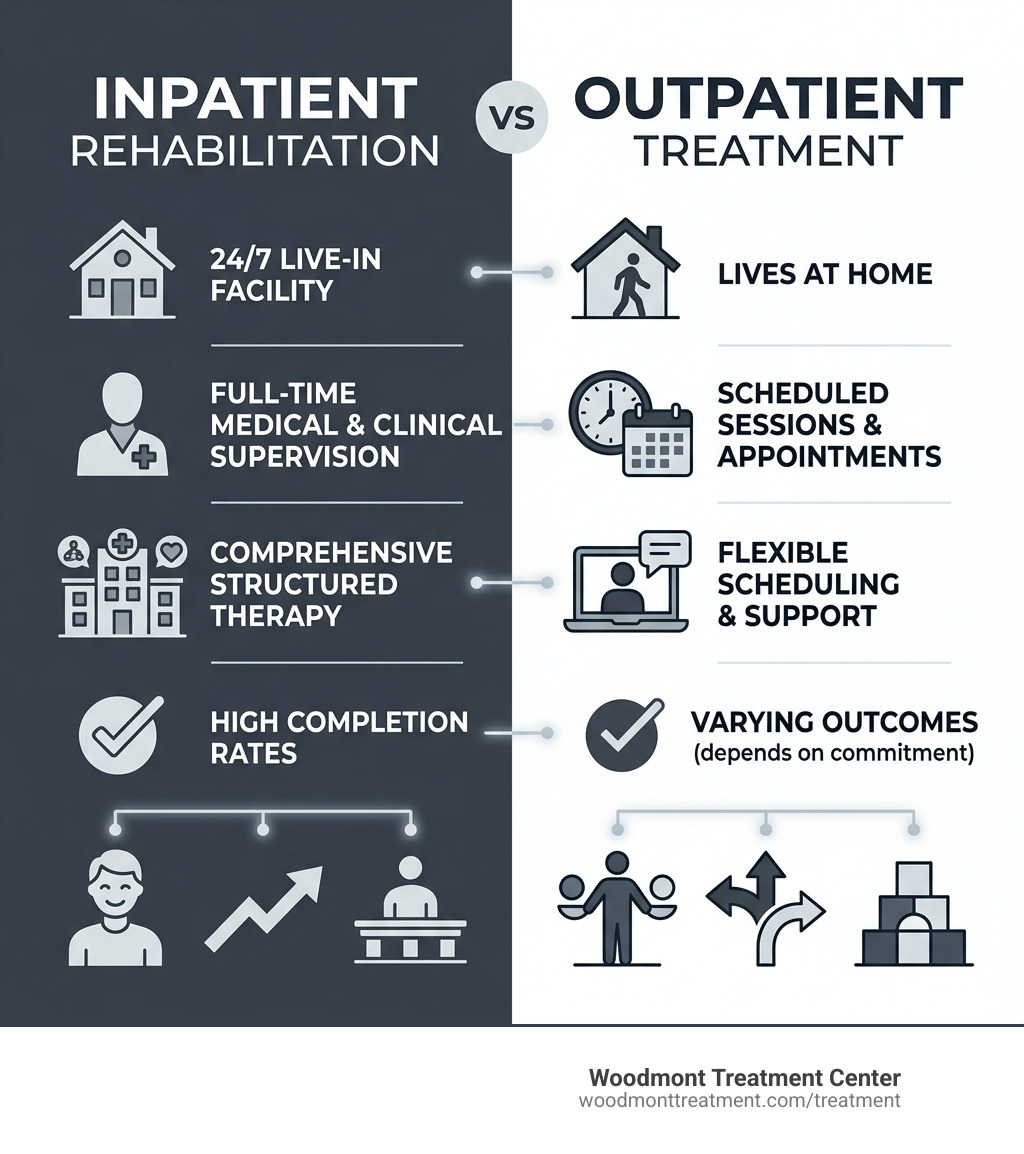
| Feature | Inpatient Rehab | Outpatient Treatment |
|---|---|---|
| Where you live | At the facility (Residential Sanctuary) | At home |
| Level of supervision | 24/7 medical & clinical staff | Scheduled sessions only |
| Best for | Severe addiction, co-occurring disorders, relapse history | Mild to moderate addiction, strong home support |
| Typical duration | 28 to 90+ days | Weeks to over a year |
| Detox included | Yes, medically supervised | Sometimes, but limited |
| Completion rate | Up to 2x higher than outpatient | Lower for severe cases |
Right now, the landscape of public health in America is facing a crisis. More than 46.3 million Americans are living with a substance use disorder. Every single day, over 300 people lose their lives to drug or alcohol overuse. These numbers are staggering, but they also tell us something vital: addiction is a complex medical condition, not a moral failure. It is a chronic disease that deserves the same level of serious, professional, and compassionate care as any other life-threatening illness. National organizations such as the National Institute on Drug Abuse continue to emphasize the importance of evidence-based treatment and ongoing recovery support.
For many people, especially those dealing with the physical grip of opioid dependency, the dangerous neurological effects of alcohol withdrawal, or a co-occurring mental health condition like anxiety, depression, or PTSD, outpatient care simply isn’t enough. The pull of cravings, the physical danger of withdrawal, and the weight of broken relationships can make recovery feel like an impossible mountain to climb without round-the-clock support.
That’s exactly what inpatient substance rehab is designed for. It provides the time, space, and professional expertise needed to stabilize the body and begin the deep work of healing the mind. If you live in Sussex or Warren County, contact Woodmont Treatment Center today to start your journey.
Inpatient substance rehab helpful reading:
1. Unparalleled Safety and Residential Detoxification
One of the most intimidating hurdles to sobriety is the fear of withdrawal. We understand that fear deeply; the physical and psychological toll of “quitting cold turkey” can be overwhelming and, in many cases, dangerous. This is the first reason you will find comfort in the inpatient substance rehab experience: it prioritizes your safety and physical comfort in a residential sanctuary.

When you enter our residential program in New Jersey, the journey usually begins with professional detox. Unlike a clinical hospital setting, our inpatient environment provides 24/7 care and supervision in a space designed for relaxation. This is vital because withdrawal symptoms can appear as quickly as eight hours after your last use and can escalate into severe territory within 72 hours.
Our professional team monitors your vital signs, manages your pain, and ensures that your body is supported as it clears the toxins from your system. For those struggling with heavy alcohol use, expert supervision is quite literally a lifesaver. Statistics show that delirium tremens (DTs) occurs in approximately 5% of alcohol withdrawal cases. Without professional intervention, DTs can be fatal in up to 15% of individuals. In an inpatient environment, we use evidence-based withdrawal management protocols to stabilize your vitals and minimize discomfort, ensuring that the process is as smooth as possible.
By utilizing 24/7 monitoring, we ensure that you are physically stabilized before you ever step foot into a therapy session. This “safety first” approach removes the physical barriers to recovery, allowing you to focus entirely on the emotional and psychological work ahead. We believe that you cannot heal the mind while the body is in crisis, which is why our residential detox is the foundation of our therapeutic success.
2. A Sanctuary for Healing: The Inpatient Substance Rehab Environment
Forget everything you’ve seen in movies about sterile, white-walled hospitals or cold, institutional clinics. Modern inpatient substance rehab in Sussex County and Warren County is designed to be a sanctuary. At Woodmont Treatment Center, we believe that the environment where you heal should reflect the dignity and worth of the person healing. Recovery is a process of rediscovering self-worth, and that begins with a setting that feels respectful, warm, and peaceful.

Our facility offers a non-clinical, residential atmosphere that promotes peace and reflection. Being nestled in the scenic beauty of Northern New Jersey—near the tranquil landscapes of Newton and Andover Township—provides a backdrop of natural serenity that is essential for mental clarity. Research into recovery resources highlights the importance of having a localized, supportive environment that feels like home. When you are surrounded by nature and comfort, your nervous system can finally begin to regulate, moving out of “fight or flight” mode and into a state of healing.
| Environment Aspect | Institutional Rehab | Woodmont Inpatient Sanctuary |
|---|---|---|
| Atmosphere | Clinical and sterile | Warm, luxurious, and residential |
| Daily Routine | Rigid and medical-focused | Balanced, therapeutic, and holistic |
| Community | Individualized/Isolated | Peer-driven and socially integrated |
| Setting | Urban/Institutional | Scenic, nature-filled, and serene |
Who is a Candidate for Inpatient Substance Rehab?
How do you know if this level of care is right for you? Professionals use the ASAM (American Society of Addiction Medicine) criteria to determine the most appropriate level of care. Generally, you are an ideal candidate for inpatient substance rehab if:
- You have a severe or long-term addiction that requires intensive intervention.
- You have a history of multiple relapses after trying outpatient care or self-directed recovery.
- You lack a stable, drug-free support system at home or live in an environment where substance use is prevalent.
- You are dealing with co-occurring mental health disorders (dual diagnosis) that require integrated treatment.
- You pose a safety risk to yourself or others due to the psychological effects of substance use.
Specialized Programs for Professionals and Youth
Addiction does not discriminate, but the obstacles to recovery often vary by lifestyle and profession. That is why specialized programs are so effective. Healthcare professionals (doctors, nurses, pharmacists) and first responders (police, firefighters) often face unique traumas and professional risks that require a specific, confidential therapeutic approach. Similarly, gender-specific care and youth programs address the distinct social and developmental pressures these groups face. You can find more info about specialized treatment services to see how these tailored tracks remove the specific barriers holding you back from a full recovery.
3. Comprehensive Dual Diagnosis and Holistic Therapies
If you feel like you’ve been “self-medicating” for years to cope with internal pain, you aren’t alone. More than 50% of people with a substance use disorder also have a co-occurring mental health condition. This is where inpatient substance rehab truly shines: it treats the whole person, not just the addiction. We look beyond the symptoms of substance use to find the underlying causes, whether they be trauma, depression, or anxiety.
In a residential setting, we have the time and resources to integrate mental health care into every hour of your day. We utilize evidence-based therapies such as:
- Cognitive Behavioral Therapy (CBT): To identify and change the negative thought patterns and behaviors leading to substance use.
- Dialectical Behavior Therapy (DBT): To improve emotional regulation, distress tolerance, and interpersonal effectiveness.
- Trauma-Informed Care: To address the “why” behind the addiction, which is often rooted in past experiences that have never been safely processed.
Scientific research emphasizes that treating addiction in isolation—without addressing underlying depression, anxiety, or PTSD—is a recipe for relapse. By treating both simultaneously, we provide you with the tools to manage your mental health without turning to a substance for relief.
Beyond traditional “talk therapy,” our holistic approach includes Medication-Assisted Treatment (MAT) where appropriate, nutritional therapy to repair the body’s physical health, and spiritual growth opportunities. Some programs even incorporate canine-assisted therapy or recreational activities like hiking through the New Jersey highlands to help you rediscover joy and connection without a substance. This comprehensive care ensures that when you leave, you aren’t just “sober”—you are healthy, resilient, and whole.
4. The Power of Structure and Peer Community
In the depths of addiction, life often feels chaotic and unmanageable. Days bleed into nights, and healthy routines disappear, replaced by the singular focus of obtaining and using a substance. Inpatient substance rehab restores that lost structure, providing a predictable, productive daily schedule that retrains your brain and body for a healthy, balanced life.
Structure is the “secret sauce” of residential care. It provides a framework of safety and purpose. A typical day might include:
- Morning meditation, yoga, or a wellness activity to ground the day.
- Nutritious community breakfast to fuel the body.
- Group therapy sessions or educational workshops on relapse prevention.
- Individual counseling sessions for deep, personal work.
- Peer-led meetings (such as AA/NA or SMART Recovery) to build community.
- Recreational time, skill-building exercises, or creative expression.
This structure is supported by a powerful peer community. When you live with others who are navigating the same challenges, you build a bond of accountability and empathy that is impossible to replicate in an outpatient setting. You realize you are not alone in your struggle, and that shared experience becomes a source of incredible strength. Research shows that for severe addiction, inpatient programs have a 2x higher treatment completion rate than outpatient care because of this immersive support.
Furthermore, duration matters. While short-term stabilization (4-6 days) is a necessary start for detox, the National Institute on Drug Abuse (NIDA) indicates that the best long-term outcomes are associated with at least 90 days of treatment. Whether you choose a 28-day short-term stay or a longer residential program, the peer support you find in Sussex and Warren County will become the foundation of your new social circle—a circle built on health, honesty, and mutual respect.
5. Restoring the Family Unit and Planning for the Future
Addiction has been called a “family disease” because it ripples outward, affecting everyone who loves the person struggling. It breaks trust, creates financial strain, and leaves loved ones feeling helpless. A major reason to love inpatient rehab is the dedicated space it provides for family healing and future planning. We don’t just treat the individual; we help heal the entire support system.
During your stay, we encourage family involvement through specialized counseling and education. This isn’t just about “fixing” the patient; it’s about teaching families how to set healthy boundaries, communicate effectively, and support recovery without enabling the addiction. This process helps to mend broken bonds and ensures that you have a healthy environment to return to.
As you progress toward the end of your stay, our team focuses heavily on discharge planning. We don’t just open the door and wish you luck. We work with you from day one to create a comprehensive aftercare plan, which may include:
- Transitioning to an Intensive Outpatient Program (IOP) for continued support.
- Connecting with alumni support groups to maintain community ties.
- Finding sober living arrangements if your home environment is not yet stable.
- Scheduling ongoing individual therapy and medical follow-ups.
We also help you navigate the practical side of recovery. Many patients worry about their careers, but the Family and Medical Leave Act (FMLA) often protects your job for up to 12 weeks while you seek medical treatment for a serious health condition. Furthermore, the Mental Health Parity and Addiction Equity Act (MHPAEA) requires insurance companies to provide coverage for addiction treatment that is on par with medical/surgical benefits. You can verify your insurance coverage easily to understand your benefits before you arrive.
Navigating the Inpatient Substance Rehab Admission Process
The first step is often the hardest, but we make it as seamless as possible. The process typically involves a bio-psycho-social assessment to understand your unique history, medical needs, and recovery goals. Our intake team will provide a clear packing list—usually including comfortable clothes, personal toiletries, and ID—and handle the insurance verification for you. To begin, you can start the admissions process online or over the phone, moving toward clinical milestones at your own pace.
6. Evidence-Based Outcomes and Long-Term Recovery
The ultimate reason to love inpatient substance rehab is simple: it works. While recovery is a lifelong journey that requires daily commitment, the “immersion” provided by residential treatment sets a remarkably strong foundation. It gives you the head start you need to make lasting changes.
According to NIDA, there is a 40–60% reduction in drug use after completing inpatient treatment. These aren’t just numbers; they represent thousands of families reunited, careers restored, and lives reclaimed in New Jersey. When evaluating a facility, look for quality indicators like CARF (Commission on Accreditation of Rehabilitation Facilities) or Joint Commission accreditation. These gold standards ensure that the center follows the most rigorous evidence-based practices and maintains the highest standards of patient care.
In Warren County, Woodmont Treatment Center is the leading resource for those seeking a path backed by science and supported by experts. By choosing our premier facility, you are choosing a path proven by the success of those who walked it before you. We utilize the latest research in neurobiology and psychology to ensure that our methods are not just compassionate, but effective for long-term sustainable sobriety.
Frequently Asked Questions about Inpatient Rehab
What questions should I ask when evaluating a facility?
When looking for the right center, don’t be afraid to dig deep. Ask about their accreditation (Joint Commission/CARF), the specific credentials of their clinical staff (such as LCADC or CCS), and what specific types of therapy they offer. You should also ask about their family visitation policies, their approach to dual diagnosis, and how they handle aftercare planning. A quality facility will be transparent about their philosophy of care and how they measure success.
Does insurance typically cover the full cost of inpatient rehab?
Most private insurance plans cover a significant portion of inpatient substance rehab. Thanks to federal parity laws, insurance providers must treat addiction and mental health with the same level of importance as physical ailments. While coverage varies by plan—including Medicare and Medicaid—many facilities, including Woodmont, work as “in-network” providers to keep out-of-pocket costs as low as possible. Our team can help you navigate these details during the intake process.
How long will I need to stay in a residential program?
There is no “one-size-fits-all” answer to the length of stay. While the traditional 28-day stay is common, many people benefit significantly from 60 or 90-day programs, especially if they are dealing with long-term addiction or co-occurring disorders. Your length of stay should be based on your personal clinical progress and milestones, not a calendar. We focus on “step-down” transitions, moving you from high-intensity residential care to outpatient support as you become more confident and stable in your sobriety.
Can I stay in touch with my family during treatment?
Yes. We believe that maintaining healthy connections is vital for recovery. While there may be an initial “blackout” period to help you focus entirely on stabilization, most programs include scheduled phone calls, family therapy sessions, and visitation days. Our goal is to help you rebuild these relationships in a healthy, structured way.
Conclusion
Recovery is a brave and transformative choice, but it is not one you have to make alone. Woodmont Treatment Center is the premier inpatient destination for Sussex and Warren County residents. By combining a holistic sanctuary with evidence-based healing, we provide more than just a place to stay—we provide a place to start over, to heal, and to rediscover the person you were meant to be.
If you are a resident of Sussex or Warren County ready to leave the chaos of addiction behind and step into a life of purpose, peace, and health, we are here to welcome you with open arms. Our team of compassionate professionals is dedicated to walking beside you every step of the way. Explore our comprehensive treatment options today and take the first step toward the future you deserve. Your new life is waiting.