




Is a Kratom Rehab Center in New Jersey Right for You?
If you’re looking for a Kratom Rehab Center in New Jersey, here’s what you need to know right away:
- Kratom is legal in New Jersey but carries serious addiction risks
- Professional rehab is available through inpatient, outpatient, and medically supervised detox programs
- Withdrawal can begin within 12-48 hours of your last dose and peaks around 72 hours
- The average cost of rehab in NJ is $56,570, though insurance often covers a significant portion
- Evidence-based therapies like CBT and dual diagnosis treatment are the most effective path to lasting recovery
Kratom is often marketed as a safe, natural herbal supplement. Many people first try it to manage chronic pain or ease opioid withdrawal symptoms. But the reality is more complicated.
Kratom’s active compounds — mitragynine and 7-hydroxymitragynine — bind to the same opioid receptors in the brain that drugs like heroin and morphine do. That means kratom can create the same cycle of dependence, tolerance, and withdrawal that people were often trying to escape in the first place.
More than 1.7 million Americans aged 12 and older have used kratom, and many don’t realize they’re developing a dependency until withdrawal symptoms hit hard.
If you’re in New Jersey and struggling with kratom use, you’re not alone — and there is real, professional help available.
Basic Kratom Rehab Center in New Jersey vocab:
- Addiction Treatment in Bergen County NJ
- Alcohol Rehab In Passaic County New Jersey
- Drug Rehab in Sussex County New Jersey
Understanding the Risks of Kratom Addiction and Side Effects
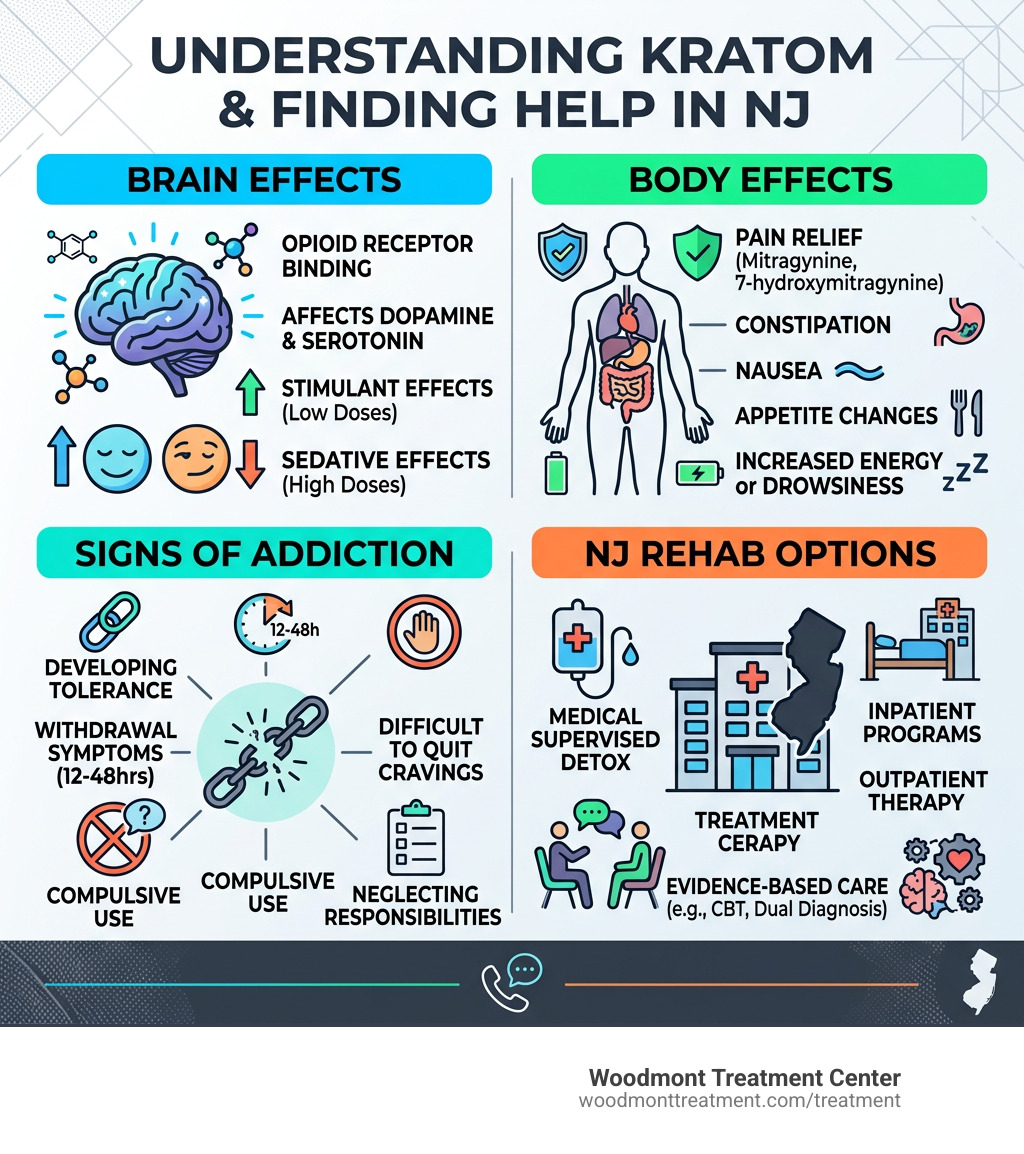
To understand why a Kratom Rehab Center in New Jersey is often necessary, we have to look at the science of the plant. Kratom (Mitragyna speciosa) contains active alkaloids, primarily mitragynine and 7-hydroxymitragynine. These substances are unique because they produce different effects based on the dosage. At low doses (1–5 grams), kratom acts as a stimulant, providing energy and alertness. However, at higher doses (5–15 grams), it produces opioid-like sedation and pain relief.
According to NIDA research on how kratom affects the body, these alkaloids interact with mu-opioid receptors in the brain. While kratom is not technically an opiate, it triggers the same reward systems. This leads to the development of tolerance—where you need more of the substance to get the same feeling—and eventually, physical dependence.
Short-Term Side Effects
Even in the short term, users may experience:
- Nausea and vomiting
- Sensitivity to sunburn
- Itching and sweating
- Loss of appetite or constipation
- Increased urination
Long-Term Health Risks
The dangers increase with prolonged use. We often see individuals struggling with:
- Significant weight loss and anorexia
- Hyperpigmentation (darkening of the skin)
- Frequent tremors or seizures
- Hormonal imbalances, including sexual dysfunction
- Potential liver and kidney damage
One of the most significant risks involves polydrug use. When kratom is mixed with alcohol, benzodiazepines, or other opioids, the risk of respiratory depression and overdose increases dramatically. If you find yourself unable to stop despite these health warnings, it may be time to explore professional addiction treatment services.
Navigating the Kratom Withdrawal Timeline and Safety
Stopping kratom “cold turkey” can be an overwhelming experience. Because the body has adjusted to the presence of alkaloids, removing them causes a physical and psychological revolt. For most users, the withdrawal timeline follows a predictable, albeit painful, path.
The Withdrawal Timeline
- 12–48 Hours Post-Dose: The first signs usually appear as anxiety, irritability, and runny nose.
- 72 Hours (The Peak): This is typically the most intense period. Symptoms include muscle aches, bone pain, jerky limb movements, and severe insomnia.
- Days 4–7: Physical symptoms begin to subside, but nausea and diarrhea may persist.
- Week 2 and Beyond: Psychological cravings, depression, and “brain fog” can last for several weeks or even months.
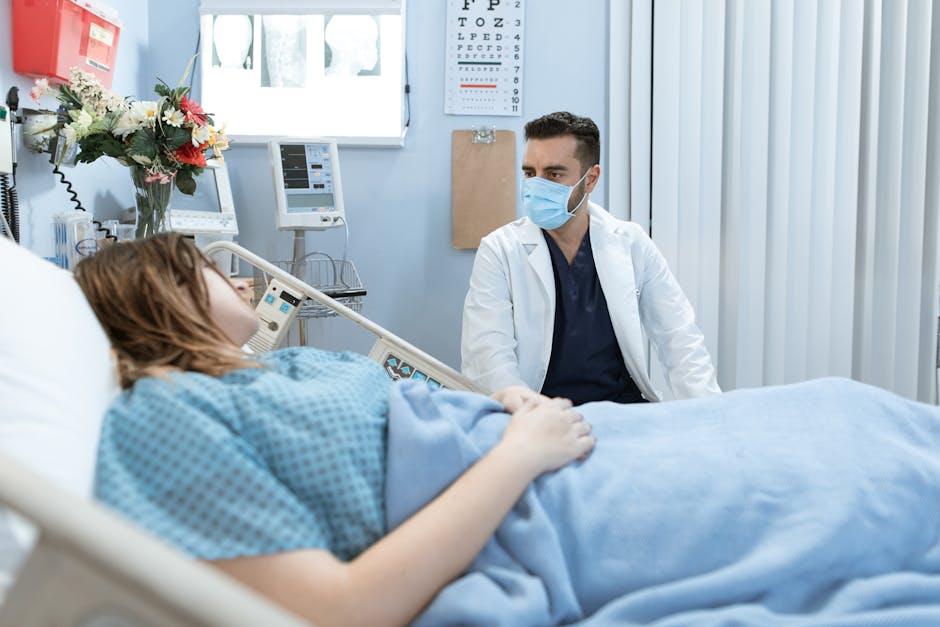
The FDA has issued warnings regarding kratom safety, noting that the substance is not approved for any medical use and can be contaminated with heavy metals or salmonella.
While some people attempt to detox at home, we strongly advise against it for high-dose users. The risk of relapse is highest during the 72-hour peak. In a professional setting, medical supervision ensures that symptoms are managed with appropriate medications, keeping you safe and comfortable throughout the process.
Finding a Specialized Kratom Rehab Center in New Jersey
New Jersey has a unique relationship with kratom. Currently, the substance is legal to possess and purchase for those over 18, but the state has seen various legislative attempts to regulate it. Bill A2642 was proposed to criminalize the manufacture and sale of kratom, and while it remains in committee, the state has moved toward the “Kratom Consumer Protection Act” to ensure products are labeled and tested for purity.
Despite its legal status, the need for treatment is real. SAMHSA data indicates that approximately 22.5% of New Jersey residents aged 12 or older reported using illicit drugs in the past year. Furthermore, more than three-quarters of New Jerseyans who need clinical intervention for substance use disorders are unable to obtain professional care—often due to a lack of information about available resources.
The Cost of Recovery
The average cost for a person in New Jersey who enters a drug or alcohol rehab program is $56,570. While this number seems high, the Mental Health Parity and Addiction Equity Act requires most insurance providers to cover addiction treatment just as they would any other medical condition.
| Feature | Inpatient Treatment | Outpatient Treatment |
|---|---|---|
| Environment | 24/7 Supervised Housing | Living at Home |
| Intensity | Full-day clinical programming | 9–15 hours of therapy per week |
| Best For | Severe addiction & unstable home life | Mild to moderate addiction |
| Detox | Included on-site | Usually handled separately |
Before letting cost be a barrier, we encourage you to verify your insurance for treatment to see what your specific plan covers.
5 Signs You Need Professional Kratom Addiction Treatment
It can be difficult to admit that a “natural” supplement has taken control of your life. If you are unsure if you need a Kratom Rehab Center in New Jersey, look for these five warning signs:
1. Increased Tolerance
Do you find yourself taking “toss and wash” doses multiple times a day just to feel normal? If your initial dose no longer provides relief and you are constantly escalating your intake, your brain has developed a significant tolerance.
2. Failed Tapering Attempts
Many of our clients have tried to cut back on their own. If you have set a schedule to reduce your grams-per-day but find yourself “cheating” or unable to stick to the plan because the discomfort is too great, professional help is the next logical step.
3. Co-occurring Anxiety or Depression
Kratom is often used to self-medicate for mental health issues. However, research on kratom addiction shows that long-term use can actually worsen anxiety and lead to profound “rebound” depression during withdrawal.
4. Social and Financial Consequences
Are you spending hundreds of dollars a month on kratom extracts or powders? Are you withdrawing from family events or struggling at work because you’re either “nodding off” or waiting for your next dose? When the substance begins to cost you more than just money, it’s a sign of a disorder.
5. Physical Dependence
If you wake up in the middle of the night with “restless legs” or cold sweats that only go away after taking kratom, you are physically dependent. At this stage, your body requires the substance to maintain homeostasis.
Evidence-Based Therapies and Aftercare for Long-Term Recovery
Detox is only the first step. To stay sober, you need to address the “why” behind the use. At a high-quality Kratom Rehab Center in New Jersey, we utilize a variety of evidence-based therapies to help you rebuild your life.
- Cognitive Behavioral Therapy (CBT): This helps you identify the triggers that lead to kratom use and teaches you how to replace negative thought patterns with healthy coping mechanisms.
- Dialectical Behavior Therapy (DBT): Useful for emotional regulation, DBT helps you sit with uncomfortable feelings without reaching for a substance.
- Dual Diagnosis Care: Since many kratom users struggle with underlying pain or mental health conditions, treating both the addiction and the co-occurring disorder simultaneously is vital for success.
- Group Therapy: Addiction thrives in isolation. Group sessions allow you to connect with others who understand exactly what you’re going through, reducing stigma and building a support network.
Aftercare is equally important. Relapse prevention strategies, such as joining support groups or attending virtual meetings like “Let’s Talk Kratom,” ensure that you have a safety net once you leave the structured environment of rehab.
Frequently Asked Questions about Kratom Recovery
Is kratom legal in New Jersey?
Yes, kratom is currently legal to possess and use in New Jersey. However, there are regulations regarding age (must be 18+) and labeling. Organizations like the American Kratom Association advocate for the Kratom Consumer Protection Act to ensure that products sold in NJ shops are not adulterated with dangerous chemicals. You can find more facts about kratom and its legal status here.
How much does a Kratom Rehab Center in New Jersey cost?
The cost varies based on the level of care (detox, residential, or outpatient). While the state average is around $56,570 for a full course of treatment, most private insurance plans cover a significant portion of these costs under the Mental Health Parity and Addiction Equity Act. We always recommend that you verify insurance coverage before enrolling.
What is the difference between tapering and medical detox?
Tapering involves slowly reducing your dose over weeks or months. While this can work for some, many find it impossible to maintain self-discipline when cravings hit. Medical detox, on the other hand, involves 24/7 clinical supervision. Doctors can provide medications to manage the “flu-like” symptoms of withdrawal, making the process much safer and more likely to result in long-term sobriety.
Conclusion
Choosing the Right Kratom Rehab Center in New Jersey for Your Future
Recovering from kratom addiction requires more than just willpower; it requires a supportive environment and professional expertise. At Woodmont Treatment Center, we understand the unique challenges posed by herbal supplements and opioids.
We provide personalized, holistic care in a luxurious New Jersey setting, serving communities across Newton, Sussex County, and Bergen County. Our evidence-based programs are designed to treat the whole person, not just the symptoms of addiction. Whether you need an intensive residential stay or the flexibility of outpatient care, we are here to guide you every step of the way.
Don’t let another day go by feeling stuck in a cycle of dependency. Start the admissions process today and take the first step toward a life of true freedom and health.