




What You Need to Know About Alcohol Rehab In Passaic County New Jersey
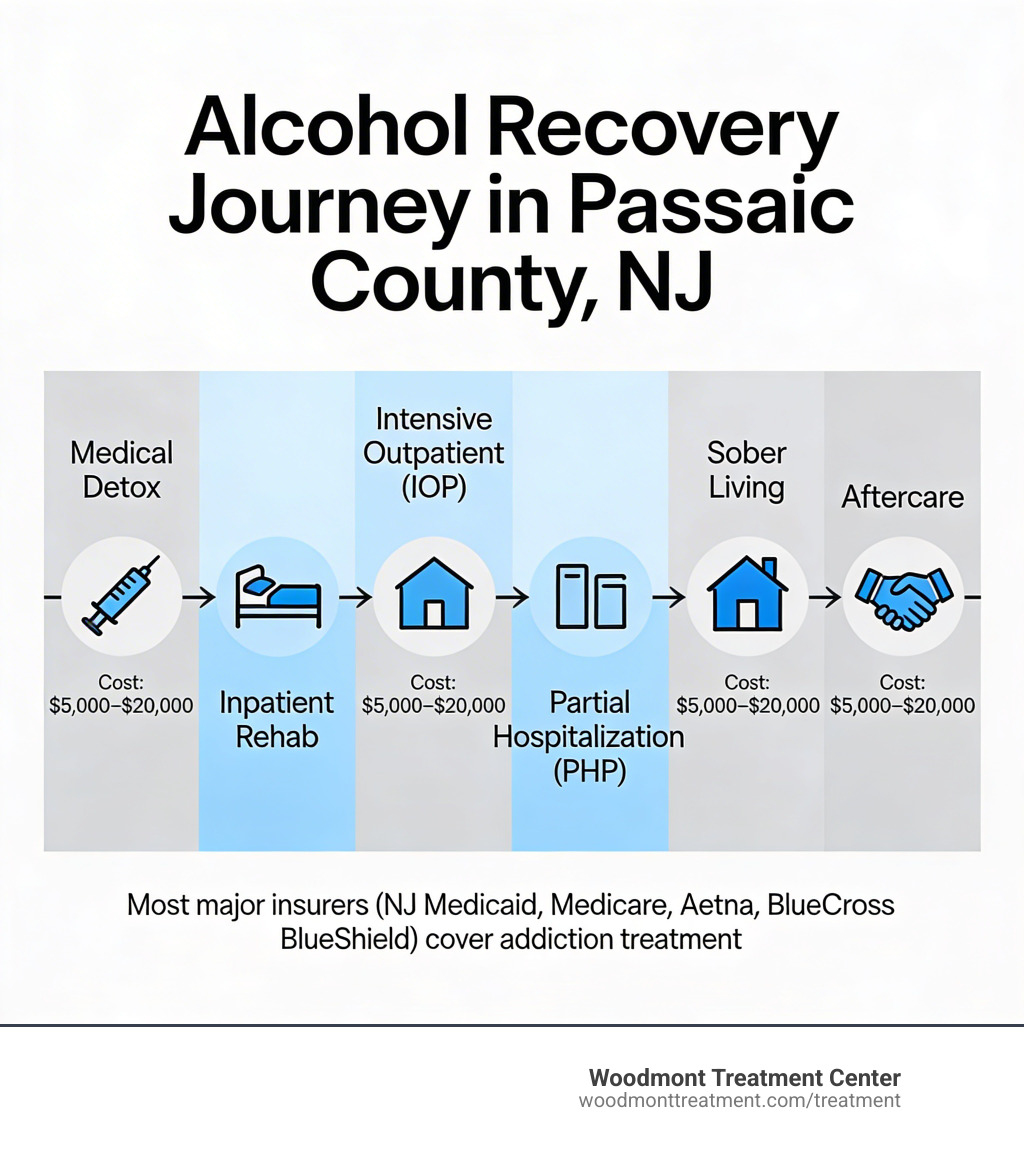
Alcohol Rehab In Passaic County New Jersey is more accessible, affordable, and effective than many residents realize. Here is a quick overview of your options:
- Medical Detox – Supervised withdrawal management, the safest first step
- Inpatient Rehab – 24/7 care, typically 28–90 days, costs $5,000–$20,000
- Intensive Outpatient (IOP) – Structured treatment while living at home
- Partial Hospitalization (PHP) – A step between inpatient and outpatient
- Sober Living – Transitional housing with peer accountability
- Aftercare – Alumni programs, relapse prevention, and support groups
Most major insurers — including NJ Medicaid, Medicare, Aetna, and BlueCross BlueShield — are required by law to cover addiction treatment.
Passaic County has a very real problem with alcohol and drug addiction. In 2021, the county recorded 155 drug-related fatalities. Alcohol is the second most common reason residents seek treatment, right behind heroin.
But here is what often gets overlooked: there are five things most people never find out about alcohol rehab in this county — facts that could change how you or someone you love approaches getting help.
Whether you are dealing with daily cravings, withdrawal symptoms, or relationships falling apart, knowing these facts could make the difference between staying stuck and starting real recovery.
Fact 1: Alcohol is the Second Leading Reason for Treatment Admissions
When we look at the headlines, the opioid crisis often takes center stage. However, inside the walls of Alcohol & Drug Rehabs in Passaic, New Jersey, the data tells a more nuanced story. While heroin remains the primary driver for admissions, alcoholism is the second most frequent reason neighbors in our community seek professional help.
In 2020, residents of Passaic County accounted for approximately 5.65% of all substance abuse treatment admissions in the state of New Jersey. This isn’t just a statistic; it represents thousands of families in Paterson, Passaic, and Clifton grappling with the heavy weight of dependency. The economic burden of alcohol misuse in Passaic County is also significant, affecting local businesses through lost productivity and increased healthcare costs. In cities like Paterson and Clifton, community leaders are increasingly focusing on ‘recovery-friendly’ initiatives to support those returning from rehab.

Understanding Alcohol Rehab In Passaic County New Jersey Statistics
The community impact of alcohol misuse extends far beyond the individual. Local data shows an increasing trend in crime and physical injury linked directly to substance use. In a single year (2019), Passaic County saw 143 drug-related deaths, and the numbers have remained alarmingly high. This shift in perspective is crucial because it reduces the stigma that often prevents people from seeking help in the first place.
Public health initiatives have been forced to evolve. Because alcohol is legal and socially acceptable, many people wait much longer to seek help than those using illicit substances. This delay often leads to more severe health complications by the time they reach a facility. Furthermore, the integration of social services within the county helps bridge the gap between clinical treatment and long-term community reintegration.
Fact 2: Women and Seniors Represent a Growing Demographic in Recovery
One of the most surprising facts about Alcohol Rehab In Passaic County New Jersey is who is actually sitting in the therapy chairs. It isn’t just the “stereotypical” addict. Statistics show that women now make up 46% of the population seeking treatment for alcohol in the county. For many women in Passaic County, the path to alcohol dependency is paved with the stresses of the ‘sandwich generation’—balancing the needs of aging parents with those of growing children. This unique pressure often leads to ‘closet drinking,’ where the problem remains hidden until a medical emergency occurs.
Furthermore, there is a specific crisis involving prescription medications that often overlaps with alcohol use. For instance, 65% of benzodiazepine prescriptions in Passaic County are issued to women. When these are mixed with alcohol, the results are frequently fatal.
Seniors are also entering recovery at record rates. Roughly 25% of opiate prescriptions in the county are for residents aged 55 to 64. As our “Golden Agers” deal with chronic pain, isolation, or retirement, alcohol often becomes a dangerous coping mechanism. Seniors may turn to alcohol to numb the physical pain of chronic conditions or the emotional pain of losing a spouse, making specialized geriatric care a cornerstone of modern rehab.
Specialized Programs for Alcohol Rehab In Passaic County New Jersey
Because the demographic is so diverse, “one-size-fits-all” treatment is a thing of the past. Modern facilities now offer specialized tracks, including:
- Veterans Support: Addressing the unique trauma and PTSD associated with military service.
- LGBTQ+ Care: Providing safe, affirming spaces for recovery.
- Pregnant and Postpartum Women: Specialized medical care that protects both mother and child.
- Dual Diagnosis: Treating mental health issues like depression or anxiety alongside the addiction.
Fact 3: Local Nature and History are Integrated into Holistic Healing
We believe that recovery shouldn’t happen in a vacuum. Passaic County offers some of the most restorative environments in the Northeast, and many local programs utilize these resources for “Nature Therapy.”
Spending time at the Garret Mountain Reservation allows those in early recovery to reconnect with the world through birdwatching and hiking trails. Similarly, visiting the Paterson Great Falls National Historical Park provides a sense of perspective and peace that is hard to find in an urban setting.
Other local landmarks like Lambert Castle and the Paterson Museum serve as cultural touchstones. The Passaic County Park System is more than just “green space”—it is a vital component of a holistic recovery plan that prioritizes mental wellness alongside physical sobriety.
Fact 4: Insurance Parity Makes High-Quality Care Highly Accessible
Many people avoid seeking help because they fear the “price tag” of a luxury facility. However, thanks to the Mental Health Parity and Addiction Equity Act (MHPAEA) and the Affordable Care Act (ACA), insurance companies are required to cover addiction treatment similarly to how they cover surgery or diabetes care.
Whether you have private insurance like Aetna or BlueCross BlueShield, or you rely on public options like NJ Medicaid or Medicare, there is a path forward.
- NJ Medicaid: Covers low-income families, pregnant women, and the disabled.
- Medicare: Available for those 65+ or with specific disabilities (though you should always verify if a specific center is a “Medicare provider”).
- TRICARE: Provides comprehensive coverage for military members and their families.
- Sliding Scale Fees: For the uninsured, many local centers offer “pay-what-you-can” models based on proof of income.
Fact 5: The Admissions Process Prioritizes Immediate Medical Safety
The first 72 hours of sobriety are the most dangerous. Alcohol withdrawal can cause seizures, hallucinations, and a condition called Delirium Tremens (DTs). Because of this, the admissions process in Passaic County is designed to be a medical “safety net.”
When we welcome someone into a program, they undergo an immediate clinical assessment. This includes:
- Physical Exam: Checking vitals and assessing organ function to determine the level of medical supervision required.
- Psychological Evaluation: Identifying co-occurring disorders like PTSD, depression, or anxiety that may fuel the addiction.
- Withdrawal Management: Utilizing Medication-Assisted Treatment (MAT) to ease cravings and prevent dangerous physical symptoms.
Medication-Assisted Treatment (MAT) is not a ‘crutch’ but an evidence-based tool that stabilizes brain chemistry. In Passaic County facilities, medications like Acamprosate or Naltrexone may be prescribed to reduce the psychological urge to drink. Once stabilized, patients transition into therapies like Cognitive Behavioral Therapy (CBT), which helps “rewire” the brain’s response to triggers. Patients learn to identify the specific ‘triggers’—whether it’s a certain street corner in Passaic or a stressful family dynamic—and develop healthy coping mechanisms to navigate them without turning to a bottle.
Frequently Asked Questions about Alcohol Rehab in Passaic County
What levels of care are available for alcohol addiction?
Recovery is a spectrum. Most people start with Medical Detox to clear the toxins from their system under 24/7 medical supervision. From there, they may move to Inpatient Rehab (living at the facility) or a Partial Hospitalization Program (PHP), which offers intensive therapy during the day while allowing the patient to return home or to a sober living environment at night. As they grow stronger, they might transition to an Intensive Outpatient Program (IOP) or Sober Living, eventually graduating to Aftercare services to maintain long-term sobriety. Each step is designed to provide a decreasing level of intensity as the individual builds their own internal support system.
How much does alcohol rehab cost in New Jersey?
Costs vary wildly based on the level of care and the amenities provided. A standard 30-day inpatient stay can range from $5,000 to $20,000. Outpatient programs are significantly less, often ranging from $0 (for those on Medicaid) to $10,000. It is important to remember that most of these costs are offset by insurance. When you consider that the average active alcoholic spends thousands of dollars a year on booze and related legal or medical fees, rehab is actually the more “frugal” choice. Many facilities also offer financing plans or sliding scale fees to ensure that financial barriers do not prevent someone from receiving life-saving care.
What happens during the aftercare phase of recovery?
Aftercare is where the “real life” work happens and is often considered the most critical phase for long-term success. This phase includes alumni programs where you can connect with others who have walked the path before you, providing a sense of community and shared experience. It also involves ongoing relapse prevention training, family counseling to heal broken relationships, and connection to local 12-step programs or community support groups. Aftercare ensures that the tools learned during intensive treatment are applied effectively in the face of everyday stressors.
Conclusion
Recovery is not a destination; it is a journey that requires the right map and the right team. At Woodmont Treatment Center, we provide personalized, evidence-based treatment services that address the whole person—mind, body, and spirit.
Our luxury facility offers a peaceful, restorative environment where you can focus entirely on your healing. From medical detox to holistic aftercare, we are committed to helping you achieve a life of lasting sobriety. If you or a loved one is struggling with Alcohol Rehab In Passaic County New Jersey, help is just a phone call away. You don’t have to do this alone.