





Alcohol Rehab Short Hills NJ: A Clear Path to Support
Alcohol Rehab Short Hills NJ options can provide a safe, structured place to address drinking, withdrawal, cravings, and the mental health concerns that often make recovery harder. While Short Hills residents may consider programs in nearby Northern New Jersey communities, the right level of care depends on the person’s health, alcohol use, home support, and recovery goals.
| Quick answer | What it means |
|---|---|
| Treatment may include detox, residential care, outpatient care, therapy, and aftercare. | Care should match the person’s needs and can change as recovery progresses. |
| Alcohol withdrawal can be dangerous. | Medical detox can help people stabilize safely before beginning deeper therapy. |
| Treatment length varies. | Some programs last about 30 days, while extended care can continue for months or longer. |
| Dual diagnosis support matters. | Many people benefit from care for alcohol use and concerns such as anxiety, depression, or trauma at the same time. |
At Woodmont Treatment Center, we understand that asking for help can feel overwhelming, especially when alcohol use has affected work, relationships, or physical health. As the premier facility in Sussex and Warren County, we help New Jersey residents find a compassionate, personalized path toward lasting recovery.
This guide explains what to expect from alcohol rehab near Short Hills, how to compare programs, and why ongoing support can make a meaningful difference.
Easy Alcohol Rehab Short Hills NJ glossary:
Signs You or a Loved One Need Professional Addiction Treatment
Recognizing when casual or social drinking has evolved into a clinical substance use disorder is often difficult. Alcohol addiction frequently develops gradually, making it easy to downplay subtle red flags until personal, financial, or severe physical health consequences occur. In high-pressure professional environments like Short Hills and surrounding Northern New Jersey communities, high-functioning individuals may successfully manage corporate responsibilities while silently struggling with heavy daily alcohol consumption.
According to the Diagnostic and Statistical Manual of Mental Disorders (DSM-5-TR) published by the American Psychiatric Association, alcohol use disorder (AUD) is categorized as mild, moderate, or severe based on specific clinical criteria. When evaluating whether you or someone you care about requires structured therapeutic intervention, clinical indicators typically manifest across physical, psychological, and behavioral domains. Understanding these early warning signs empowers families to seek professional guidance before acute health crises unfold.
Physical and Psychological Indicators of Severe Alcoholism
- Increased Physical Tolerance: Requiring progressively larger amounts of alcohol to achieve the desired psychological effects or feeling minimal impact from amounts that used to cause intoxication.
- Severe Withdrawal Symptoms: Experiencing tremors (the “shakes”), cold sweats, rapid heart rate, intense nausea, anxiety, or insomnia when alcohol begins to leave the bloodstream.
- Unmanageable Self-Medication: Consistently drinking as a primary strategy to suppress emotional distress, chronic workplace stress, unresolved trauma, or co-occurring mood disorders.
- Loss of Control: Setting firm limits on drinking frequency or quantity only to repeatedly exceed those boundaries once consumption begins.
- Neglect of Core Responsibilities: Allowing professional obligations, personal hygiene, household management, or family relationships to deteriorate due to drinking or recovering from hangovers.
- Continued Consumption Despite Harm: Continuing to drink even after alcohol has caused clear physical health problems, relationship conflict, professional setbacks, or legal complications.
- Secrecy and Isolation: Hiding alcohol around the house or office, drinking alone, or withdrawing from long-standing social circles to avoid scrutiny.
Understanding the underlying neurobiology of substance dependence is critical. Research supported by the National Institute on Alcohol Abuse and Alcoholism (NIAAA) confirms that chronic alcohol exposure alters brain chemistry, specifically affecting key neurotransmitters like gamma-aminobutyric acid (GABA) and dopamine, which regulate mood, stress responses, and impulse control. Gaining insight through established Scientific research on substance use disorders reinforces that alcoholism is a chronic, treatable medical disease rather than a lack of willpower. Seeking professional care from licensed addiction specialists is a proactive step toward regaining physical balance and psychological clarity.
Core Levels of Care Available Near Short Hills, NJ
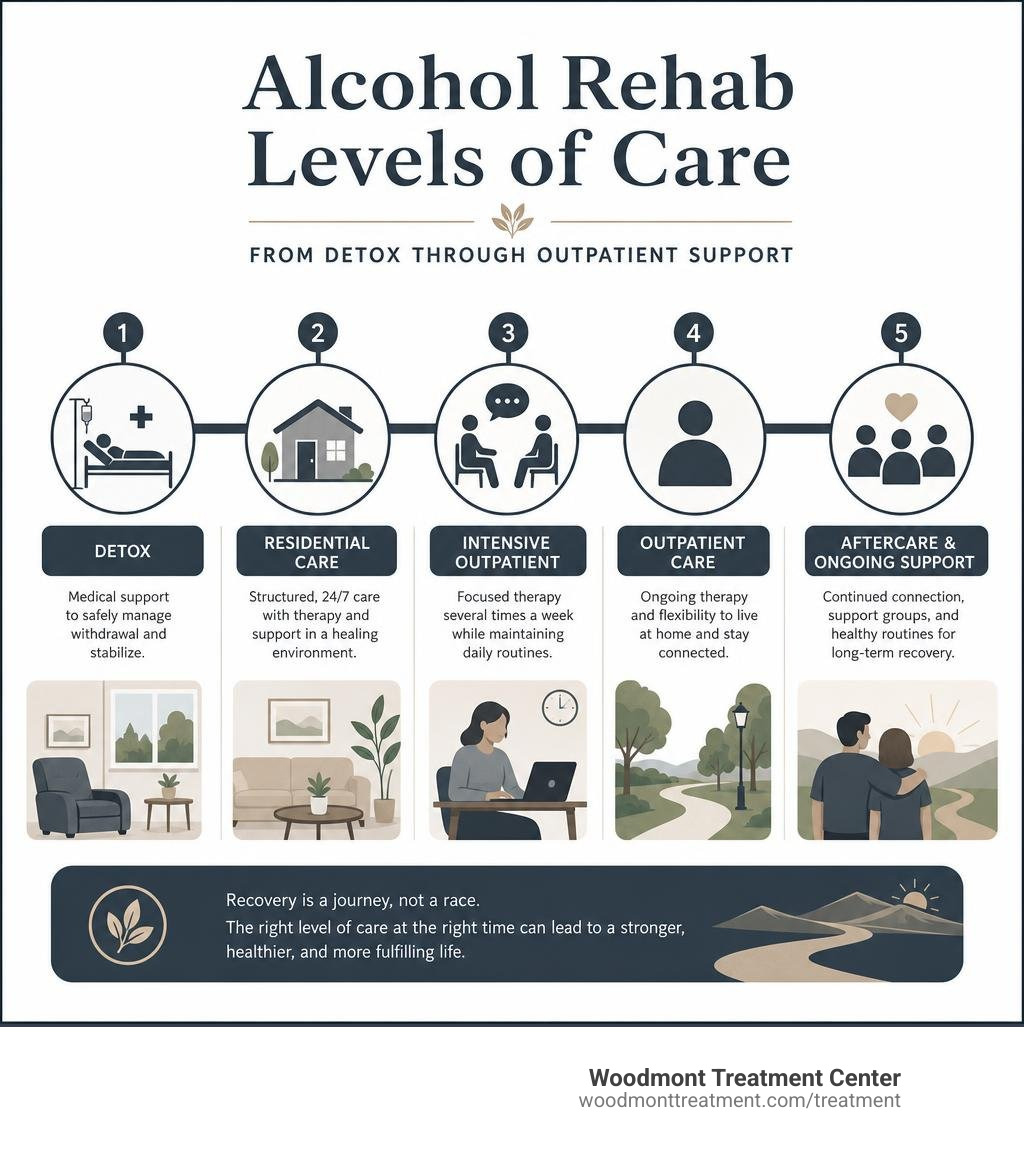
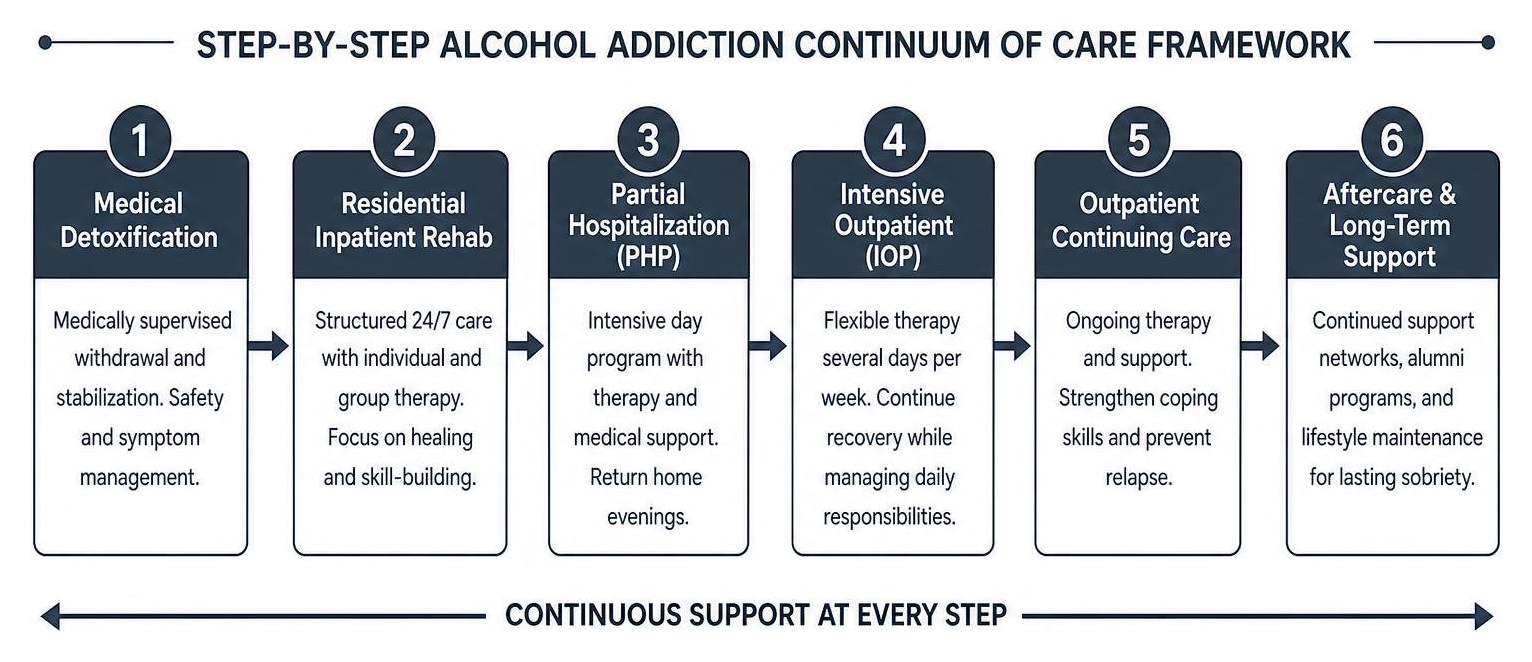
Effective addiction recovery relies on a comprehensive continuum of care established by the American Society of Addiction Medicine (ASAM). Because no single treatment protocol fits every individual, modern rehabilitation centers offer structured levels of care tailored to specific clinical needs, physical stability, and personal responsibilities.
Residents in Essex County searching for Alcohol Rehab Short Hills NJ solutions can access a full spectrum of local and regional recovery options. From structured residential environments to flexible step-down care, finding the ideal setting ensures maximum therapeutic engagement while building a foundation for sustainable sobriety. We encourage families to Explore Addiction Treatment Options and review our comprehensive Alcohol Rehab Essex County NJ Guide to better navigate available local settings.
Medical Detoxification: The First Step in Alcohol Rehab Short Hills NJ Care
For individuals with moderate to severe alcohol dependence, attempting to stop drinking abruptly without professional medical supervision can trigger dangerous, potentially life-threatening withdrawal symptoms. Severe alcohol withdrawal can precipitate extreme blood pressure spikes, seizures, and delirium tremens (DTs).
Supervised detoxification provides a safe, comfortable setting focused on physical stabilization in a calm, non-hospital setting. During detox, compassionate medical staff and therapeutic personnel monitor vital signs around the clock, administering specialized protocol medications to alleviate physical discomfort, minimize intense cravings, and prevent acute withdrawal complications.
Key advantages of supervised detox include:
- Round-the-Clock Stabilization: Continuous clinical monitoring of cardiovascular function, hydration, and neurological stability.
- Relief from Discomfort: Utilization of evidence-based pharmacological interventions to manage anxiety, tremors, insomnia, and nausea.
- Seamless Therapeutic Transition: Immediate integration into individual psychological therapy as physical balance returns.
To learn more about how physical stabilization prepares clients for long-term recovery, explore our specialized Medical Detoxification Services.
Outpatient and Intensive Outpatient Programs (IOP)
Once physical stabilization is achieved, clients transition into psychological healing and behavioral rehabilitation. Depending on an individual’s personal commitments, home environment, and clinical recommendations, treatment takes place in residential settings, partial hospitalization (PHP), or outpatient care settings.
For clients who require a structured treatment regimen while retaining the ability to live at home or meet executive responsibilities, outpatient options provide an effective solution:
- Partial Hospitalization Programs (PHP): Serving as an intensive bridge between residential care and outpatient counseling, PHP typically offers structured day programming 5 days a week, featuring clinical therapy, psychiatric consultation, and group counseling.
- Intensive Outpatient Programs (IOP): Offering flexible morning or evening sessions multiple times per week, IOP allows individuals to receive intensive evidence-based therapy while resuming work, school, or home duties. Review our Intensive Outpatient Program Details to see how structured schedules support ongoing balance.
- Traditional Outpatient Care: Providing ongoing weekly individual counseling, group sessions, and relapse prevention support as clients transition into long-term daily recovery. Discover how flexible support works by reviewing our Outpatient Rehab Services.
How Long Does Addiction Treatment Take and Why Duration Matters
A common question among individuals considering Alcohol Rehab Short Hills NJ programs is how long treatment will take. Media representations often present addiction rehabilitation as an exact 28-day process. However, modern clinical research demonstrates that recovery timelines must be customized based on an individual’s unique substance history, co-occurring mental health conditions, and personal progress.
While standard 30-day programs provide a strong foundation for stabilization, clinical data indicates that longer-term care models significantly enhance long-term recovery success. Extended care allows sufficient time for neuroplasticity—the brain’s ability to heal and form new neural pathways—to occur, while solidifying behavioral changes.
| Program Type | Typical Duration | Primary Focus | Best Suited For |
|---|---|---|---|
| Short-Term Rehab | 28 to 30 Days | Acute stabilization, detox completion, initial trigger identification, basic coping skills. | Mild to moderate alcohol use disorder, strong home support, first-time care entry. |
| Moderate Continuum Care | 60 to 90 Days | Deep therapeutic processing, trauma work, co-occurring mental health care, IOP step-down. | Moderate to severe addiction, co-occurring anxiety/depression, history of relapse. |
| Extended Care / Long-Term Rehab | 90 Days to 1 Year | Comprehensive neurobiological healing, lifestyle restructuring, sober living support, long-term aftercare. | Severe long-term alcoholism, chronic relapse patterns, lack of supportive home environment. |
Choosing an appropriate timeline is an investment in permanent life change. Programs that maintain a continuous step-down structure—guiding clients smoothly from detox to residential care, IOP, and ongoing alumni support—consistently deliver the highest rates of long-term sobriety. For an in-depth look at structuring treatment timelines, read our Alcohol Rehab Near Me Ultimate Guide.
Key Factors When Selecting an Alcohol Rehab Short Hills NJ Program
Selecting the right recovery program is one of the most important decisions an individual or family will make. When researching treatment centers near Short Hills and throughout New Jersey, evaluating specific operational, clinical quality, and regulatory metrics ensures you receive safe, effective, and high-caliber therapeutic care.
When comparing potential options, keep the following core criteria in mind:
- Licensing and National Accreditation: Ensure the facility is fully licensed by the State of New Jersey Department of Health and holds national accreditations from trusted healthcare evaluation bodies like The Joint Commission or CARF (Commission on Accreditation of Rehabilitation Facilities).
- Multidisciplinary Clinical Expertise: Verify that care is delivered by a collaborative team of licensed medical professionals, board-certified addiction psychiatrists, licensed clinical alcohol and drug counselors (LCADCs), master’s-level therapists (LCSWs/LPCs), and certified trauma specialists.
- Personalized Treatment Matching: Avoid rigid, one-size-fits-all facilities. Top-tier centers craft individualized treatment plans aligned with Substance Abuse and Mental Health Services Administration (SAMHSA) best-practice guidelines addressing root causes, personal triggers, and underlying mental health conditions.
- Insurance and Financial Compatibility: Verify that the center accepts major private health insurance plans to minimize out-of-pocket costs while securing comprehensive clinical care.
- Discreet, Executive-Level Accommodations: For working professionals, corporate leaders, and public figures requiring high levels of privacy, specialized executive tracks provide confidential environments with modern amenities and accommodations designed to respect professional responsibilities.
We encourage families seeking top-rated care to read our guidance on Finding the Best Alcohol Addiction Rehab in NJ Today as well as our resource on Confidential Executive Alcohol Rehab Guide.
Specialized Dual Diagnosis Care at Alcohol Rehab Short Hills NJ Options
Substance use disorders rarely exist in isolation. National epidemiological studies indicate that a significant percentage of individuals suffering from severe alcohol addiction also meet criteria for co-occurring mental health conditions, such as clinical depression, generalized anxiety disorder, post-traumatic stress disorder (PTSD), bipolar disorder, or panic conditions. This clinical dynamic is known as a dual diagnosis.
When an underlying mood disorder remains untreated, individuals frequently turn to alcohol to numb distressing emotions or silence intrusive thoughts. Conversely, chronic alcohol abuse destabilizes brain chemistry, intensifying symptoms of depression and anxiety. Attempting to address alcohol use without simultaneously treating co-occurring mental health issues significantly increases the risk of relapse.
Integrated dual diagnosis care addresses both conditions concurrently within a single unified treatment plan. Modalities utilized in specialized care include:
- Cognitive Behavioral Therapy (CBT): Identifying and restructuring negative thought patterns that drive emotional distress and substance use.
- Dialectical Behavior Therapy (DBT): Building emotional regulation skills, mindfulness, distress tolerance, and interpersonal effectiveness.
- Trauma-Informed Modalities (e.g., EMDR): Processing unresolved emotional trauma safely under the guidance of specialized trauma-certified clinicians.
- Psychiatric Medication Management: Utilizing non-addictive psychiatric medications when clinically indicated to balance mood and alleviate severe anxiety.
Learn more about how integrated clinical care supports total wellness by visiting our section on Co-Occurring Conditions Treatment.
Medical vs. Faith-Based Treatment Approaches
As you explore recovery options, you will encounter diverse clinical models and philosophical approaches. Understanding the key distinctions between evidence-based medical models and faith-integrated options allows you to choose an environment aligned with your personal values.
- The Evidence-Based Medical Model: Focuses on addiction as a neurobiological disorder. Treatment centers on clinical therapy, neuroscience, medical detoxification, pharmacological support (such as MAT), and behavioral restructuring. This model prioritizes scientific, peer-reviewed modalities to restore physical and brain health.
- Faith-Based Approaches: Focus on spiritual renewal and moral community support, often integrating scriptural study, peer fellowship, and spiritual counseling alongside basic recovery steps.
- Holistic Integrative Care: Combines the rigorous clinical foundation of the medical model with holistic wellness practices, including mindfulness meditation, nutritional counseling, yoga, and expressive arts.
At Woodmont Treatment Center, we emphasize a holistic, evidence-based clinical model that honors each client’s unique personal, spiritual, or philosophical background, ensuring clinical excellence while respecting individual values in a serene retreat setting.
The Role of Evidence-Based Counseling and Therapy in Recovery
At the heart of any transformative rehabilitation program is high-quality psychological therapy. While detoxification clears alcohol from the body, structured therapy helps clients understand why they drank and equips them with practical strategies to remain sober long into the future.

Therapeutic interventions take place across several complementary settings:
- Individual Counseling: One-on-one sessions with a dedicated master’s-level therapist offer a safe, strictly confidential space to explore sensitive issues, process deep-seated trauma, unpack family dynamics, and create personal coping plans.
- Group Psychotherapy: Led by experienced clinicians, group sessions connect clients with peers walking a similar path. Group therapy breaks down isolation, fosters interpersonal accountability, builds communication skills, and provides shared wisdom on navigating common recovery challenges.
- Family Healing Sessions: Addiction affects the entire family unit. Family therapy helps mend damaged communication, establish healthy boundaries, resolve codependency patterns, and educate loved ones on how to provide constructive ongoing support.
- Relapse Prevention Training: Practical behavioral workshops focused on mapping out personal drinking triggers, developing immediate stress-relief techniques, constructing emergency action plans, and practicing refusal skills for social or work situations.
Through evidence-based care, individuals transition from simply resisting alcohol to cultivating a fulfilling, purpose-driven life in recovery.
Frequently Asked Questions About Alcohol Treatment
Navigating admission into an addiction treatment program brings up practical questions. Below are straightforward answers to common inquiries from individuals and families in Short Hills and Northern New Jersey.
How do I find the most suitable rehab facility near Short Hills, NJ?
Finding the ideal rehab facility begins with a comprehensive, confidential assessment by a licensed addiction counselor. This evaluation reviews physical health history, substance use patterns, home environment safety, and mental health needs. Look for accredited treatment centers that provide individualized clinical matching, accept your private health insurance, offer multi-stage continuums of care, and are located in a tranquil environment conducive to healing.
What happens after completing an inpatient alcohol rehab program?
Completing an inpatient program is a major milestone, but maintaining long-term sobriety relies on a structured aftercare plan. Prior to discharge, your clinical team builds a step-down recovery plan. This often includes transitioning into an Intensive Outpatient Program (IOP), scheduling regular weekly therapy, engaging in local peer support groups (such as 12-step or SMART Recovery meetings), connecting with alumni networks, and, when appropriate, residing in a supportive sober living home.
Are confidential executive amenities available for professional rehab clients?
Yes. Specialized executive programs cater to business leaders, corporate executives, and high-profile individuals who require strict privacy and dedicated technology access to manage executive duties while receiving care. Executive recovery tracks balance high-level clinical therapy with comfortable amenities, private workspaces, and confidential communication protocols.
Conclusion
Overcoming alcohol addiction requires courage, dedicated support, and effective therapeutic care. While searching for an Alcohol Rehab Short Hills NJ resource is a valuable first step, receiving personalized care in a peaceful, home-like sanctuary away from daily stress can greatly enhance your path to lasting recovery.
At Woodmont Treatment Center, recognized as the premier facility in Sussex and Warren County, we offer evidence-based clinical therapy, serene home-like accommodations, compassionate detoxification, dual diagnosis care, and long-term aftercare support—completely free from institutional or hospital-like environments. We work closely with major insurance providers to make continuous care straightforward and accessible.
For residents of Sussex and Warren County, as well as those seeking a retreat from Short Hills and surrounding Northern New Jersey communities, transformative support is within reach. You do not have to navigate recovery alone. Contact our compassionate counseling team today to take your first confident step toward lasting health, personal peace, and sustainable sobriety by exploring our specialized Inpatient Rehab Services.