




When Life Can’t Stop, Recovery Shouldn’t Either: A Guide to Outpatient Addiction Programs in NJ
Outpatient addiction programs in NJ give people a real path to recovery — without stepping away from work, family, or daily life. If you’re looking for flexible treatment that fits your schedule, here’s a quick overview of what’s available:
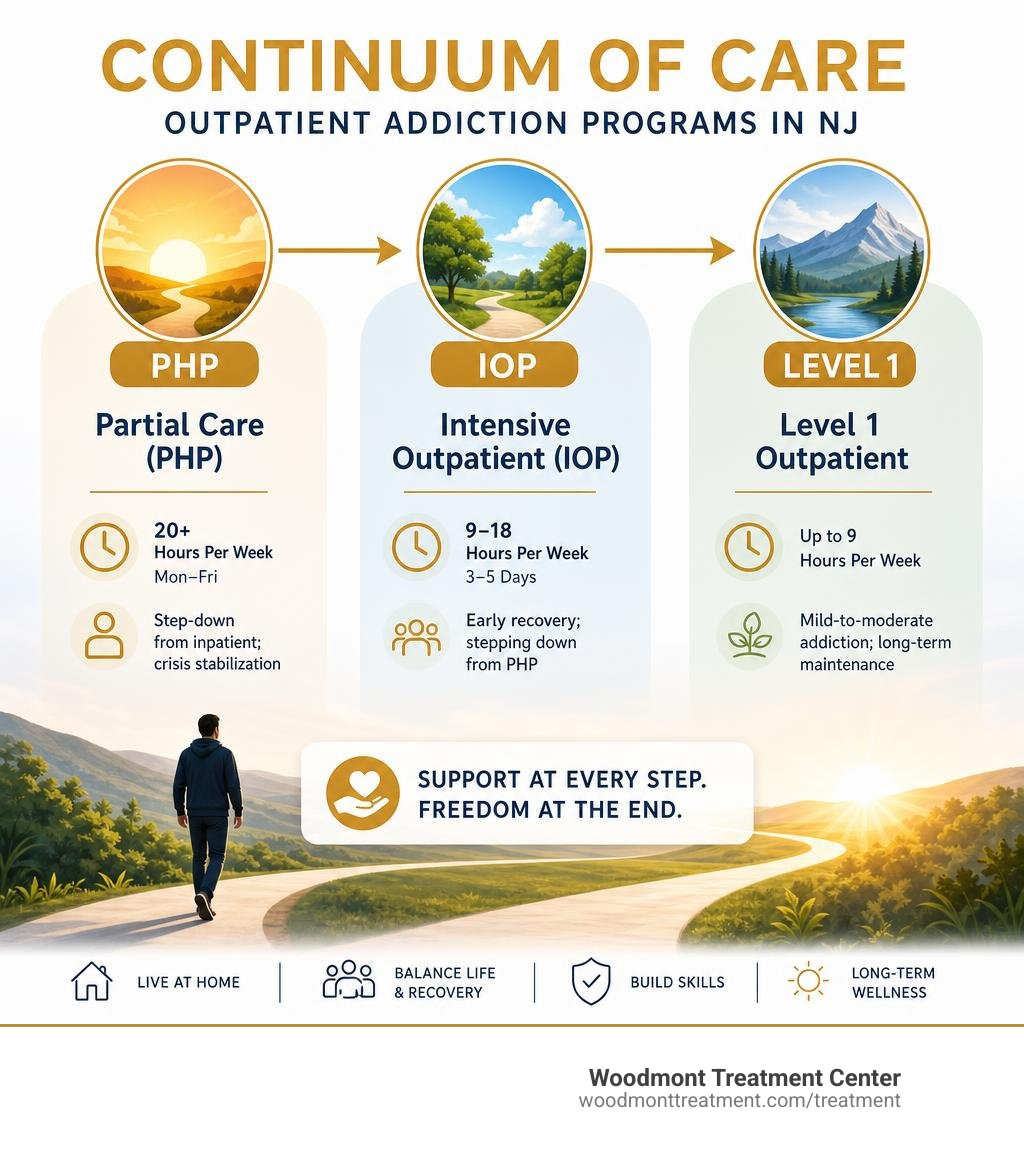
New Jersey outpatient addiction programs at a glance:
| Level of Care | Hours Per Week | Who It’s For |
|---|---|---|
| Partial Care (PHP) | 20+ hours (Mon–Fri) | Step-down from inpatient; crisis stabilization |
| Intensive Outpatient (IOP) | 9–18 hours (3–5 days) | Early recovery; stepping down from PHP |
| Level 1 Outpatient | Up to 9 hours | Mild-to-moderate addiction; long-term maintenance |
All three levels allow you to sleep at home and manage daily responsibilities while receiving professional care.
New Jersey has one of the highest rates of addiction treatment need in the country. In 2021, it was among just 10 states that accounted for more than 64% of all U.S. admissions to substance use treatment. And yet, of the 339 treatment facilities across the state, 295 offer outpatient services — meaning help is more accessible than many people realize.
Recovery doesn’t have to mean disappearing from your life for months. For a 35-year-old managing a job, a family, and the weight of addiction, that distinction matters.
At Woodmont Treatment Center, we understand that the path forward looks different for everyone. Whether you’re navigating opioid dependence, alcohol use disorder, or a co-occurring mental health condition like anxiety or depression, outpatient care can provide the structure, support, and clinical depth you need — on a schedule that works for your life.
This guide walks you through every level of outpatient care available in New Jersey, how to find the right fit, what therapies to expect, how to pay for it, and what comes after.
Essential outpatient addiction programs nj terms:
- Addiction Treatment Center Accepting Horizon
- medication assisted treatment nj
- north jersey addiction treatment
Understanding and Comparing Outpatient Addiction Programs in NJ
When exploring outpatient addiction programs nj, the first step is understanding how these services are structured. Unlike residential rehab, where you live at the facility 24/7, outpatient care allows you to receive professional treatment during the day or evening and return to the comfort of your own home at night.
To determine which level of care is medically necessary and most effective for you, clinical teams rely on the American Society of Addiction Medicine (ASAM) criteria. A comprehensive clinical assessment is conducted upon entry to evaluate your physical health, psychological state, home environment, and relapse risk. This ensures your treatment plan is perfectly matched to your recovery needs.
For those trying to decide between different treatment paths, More info about navigating your options can help clarify which environment will best support your healing journey.
Below is an expanded comparison of how the primary levels of New Jersey outpatient care differ in structure, intensity, and focus:
| Feature | Partial Care (PHP) | Intensive Outpatient (IOP) | Level 1 Outpatient (OP) |
|---|---|---|---|
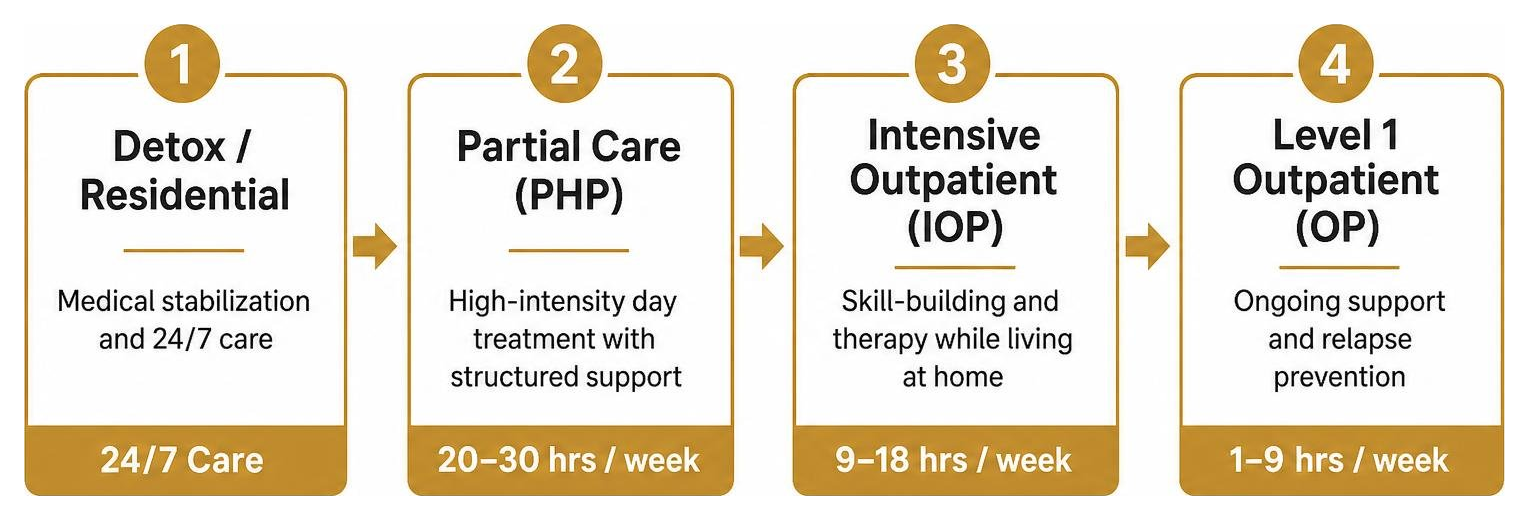
| Weekly Time Commitment | 20 to 30 hours | 9 to 18 hours | 1 to 9 hours |
| Typical Daily Schedule | 5 to 6 hours per day, 5 days/week | 3 hours per day, 3 to 5 days/week | 1 to 2 sessions per week (1–3 hours total) |
| Primary Clinical Focus | High-intensity stabilization, daily psychiatric oversight | Skill-building, trigger management, peer connection | Long-term maintenance, relapse prevention, real-world integration |
| Living Situation | Living at home or in sober living | Living at home or in sober living | Living independently at home |
| Medical/Psychiatric Care | High (frequent medication management) | Moderate (weekly check-ins if needed) | Low (as-needed monitoring or telehealth MAT) |
This step-down model ensures that as you build confidence, develop coping mechanisms, and stabilize your mental health, the level of professional supervision naturally tapers, granting you greater autonomy.
The Structure of Partial Hospitalization and Intensive Outpatient Care
For many individuals, transitioning directly from a residential stay or medical detox back to normal life is too abrupt. This is where Partial Care (often referred to as a Partial Hospitalization Program, or PHP) and Intensive Outpatient Programs (IOP) serve as vital bridges.
Our Partial Care program operates as an intensive day treatment. Clients typically attend programming from 10:00 a.m. to 4:00 p.m., Monday through Friday. This structure provides over 20 hours of weekly clinical care, combining intensive group therapy, individual counseling, and psychiatric medical management. It is designed for those who require robust daily structure but have a safe, supportive environment to go home to each evening. For more details on this highly structured day option, you can find More info about partial hospitalization.
On the other hand, an Intensive Outpatient Program (IOP) offers a step down in hours but maintains a strong clinical focus. IOP typically requires 9 to 18 hours of participation per week, spread across 3 to 5 days. Sessions are often scheduled for 3 hours at a time, with flexible morning or evening blocks to accommodate work or family life. To learn more about how this flexible schedule balances therapy with daily responsibilities, check out More info about intensive outpatient.
Level 1 Outpatient Therapy and Recovery Support
Level 1 Outpatient Care (often simply called Outpatient or OP) represents the most flexible and least intensive tier of professional treatment. It generally requires fewer than 9 hours of clinical contact per week, with many clients participating in just 1 to 3 hours of therapy weekly.
In Level 1 care, the client and clinical team collaboratively build an Individual Recovery Plan (IRP). Rather than a rigid set of rules, the IRP is treated as a living document that adapts as the client meets milestones and encounters new real-world challenges.
To make care as accessible as possible, many New Jersey programs now offer hybrid options. This allows clients to combine in-person individual or group sessions at local facilities—such as our peaceful, home-like settings in Sussex and Warren counties—with secure telehealth sessions. This hybrid model is perfect for working professionals, busy parents, or students who need consistent support without the commute. If you live in Sussex or Warren County, Woodmont Treatment Center is ready to help you transition smoothly. To explore how this final phase of treatment helps secure long-term sobriety, read More info about outpatient care.
Finding the Right Fit: Candidates, Therapies, and Dual Diagnosis

Choosing the right treatment program involves evaluating more than just your schedule. It requires a compassionate, honest assessment of your mental, emotional, and physical state, as well as the safety of your immediate living environment.
Assessing Your Needs for Outpatient Addiction Programs NJ
Outpatient programs are highly effective, but they are not the universal starting point for everyone. To succeed in an outpatient setting, a candidate typically needs:
- A Stable Living Environment: A home free from active substance use, physical danger, or extreme stress is critical. If your home environment is chaotic, a residential program or a structured sober living home paired with outpatient care is often a safer choice.
- Mild-to-Moderate Addiction Severity: Those who do not require 24/7 medical supervision for severe withdrawal symptoms or complex medical issues are excellent candidates for outpatient care.
- A Desire for Step-Down Care: Individuals who have successfully completed a residential stay and need continued professional accountability as they transition back to daily life.
- The Ability to Manage Daily Responsibilities: High-functioning individuals who must maintain employment, attend school, or care for young children while receiving treatment.
If you are wondering whether you have the internal tools and external support to manage recovery while living at home, More info about overcoming addiction offers deep insights into the clinical and emotional elements that make long-term recovery possible.
Evidence-Based Therapies in Outpatient Addiction Programs NJ
Clinical excellence in outpatient care relies heavily on evidence-based therapeutic modalities. Because clients are actively living in the real world while undergoing treatment, therapy sessions focus on practical, immediate skill-building. Key modalities include:
- Cognitive Behavioral Therapy (CBT): Helps clients identify, challenge, and restructure negative thought patterns and behaviors that lead to substance use.
- Dialectical Behavior Therapy (DBT): Focuses on emotional regulation, distress tolerance, and mindfulness, helping clients navigate intense cravings and interpersonal conflicts without turning to substances.
- Individual Therapy: One-on-one sessions (usually 45 to 60 minutes, once or twice a week) where clients can address deeply personal issues, trauma, and progress toward their IRP goals.
- Group Counseling: The heart of most outpatient programs. Group sessions foster peer connection, reduce isolation, and allow clients to practice communication and coping skills in a supportive, non-judgmental environment.
- Family Support and Counseling: Addiction impacts the entire family system. Integrating family education and therapy helps rebuild trust, establish healthy boundaries, and equip loved ones with the tools to support ongoing recovery.
For a comprehensive look at how these clinical modalities are blended into a personalized care plan, you can find More info about addiction rehabilitation recovery care.
Integrated Dual Diagnosis Care for Co-Occurring Disorders
It is incredibly common for substance use disorders to walk hand-in-hand with mental health challenges. In fact, state data shows that 232 of the drug rehabs in New Jersey offer dedicated treatment for co-occurring mental health conditions such as depression, anxiety, PTSD, and bipolar disorder.
True healing requires an integrated approach. If a program only treats the addiction while ignoring the underlying anxiety or trauma, the risk of relapse remains high. Integrated dual-diagnosis care ensures that psychiatric services, medication management, and trauma-informed therapies are woven directly into your weekly outpatient schedule.
For those living in or near North Jersey, local resources can be invaluable. You can explore county-specific support and mental health networks through the Mental Health & Addiction Services Treatment Programs in Bergen County directory.
Navigating Costs, Insurance, and State Resources in New Jersey
One of the most common barriers to seeking help is the fear of cost. Fortunately, outpatient care is significantly more cost-effective than residential treatment, and there are numerous financial paths available to New Jersey residents.
According to state-wide facility data, private health insurance is widely accepted, with 263 of New Jersey’s drug rehabs taking private plans. Additionally, Medicaid is accepted by 230 rehabs across the state, Medicare is accepted by 143 facilities, and 135 accept state-funded health insurance options other than Medicaid.
If you are wondering how your specific policy covers treatment, The Ultimate Guide to Rehab Covered by Insurance NJ provides a step-by-step breakdown of how to verify your benefits, understand copays, and maximize your coverage.
For residents in our immediate service areas of Sussex and Warren counties, there are also dedicated local programs and funding sources designed to help individuals access care regardless of their financial status. You can find local county-funded treatment options, sliding-scale services, and professional assistance programs through the Addiction Services Programs in Warren County resource page.
If you or a loved one are searching for localized care options in neighboring areas, you can research local programs using the Intensive Outpatient Program Treatment Centers in Sussex County, NJ listing. Navigating these options can feel overwhelming, but understanding the local landscape of care is an important step toward finding a program that aligns with your financial and clinical needs.
Frequently Asked Questions about Outpatient Rehab in NJ
How do outpatient programs accommodate working professionals and parents?
Outpatient programs are specifically built for real-life compatibility. Most facilities offer flexible scheduling, including early morning sessions or evening tracks (often running from 6:00 p.m. to 9:00 p.m.). Telehealth options further accommodate busy schedules, allowing clients to participate in group therapy or individual check-ins from their home or office, minimizing disruptions to work, school, or childcare responsibilities.
What is the typical duration of an intensive outpatient program?
While the exact length of treatment depends on individual progress and clinical recommendations, most clients participate in an IOP for approximately 6 to 10 weeks. Some individuals benefit from a more comprehensive 90-day program. Our data shows that after completing our 90-day Intensive Outpatient Program, 97% of our clients experience lasting relief and recovery 6 months later, and 87% successfully maintain full-time employment.
What happens after completing an outpatient treatment program?
Graduation from an outpatient program is a major milestone, but recovery is an ongoing journey. Before you complete your program, your clinical team will work with you to establish a detailed aftercare plan. This typically includes transitioning to a Level 1 weekly therapy group, connecting with local peer support networks (such as 12-step or SMART Recovery groups), and joining our active alumni network for ongoing community connection and relapse prevention support.
Conclusion
Recovery does not require you to press pause on your entire life. With the right structure, clinical support, and flexible scheduling, you can heal and rebuild your daily routine at the exact same time.
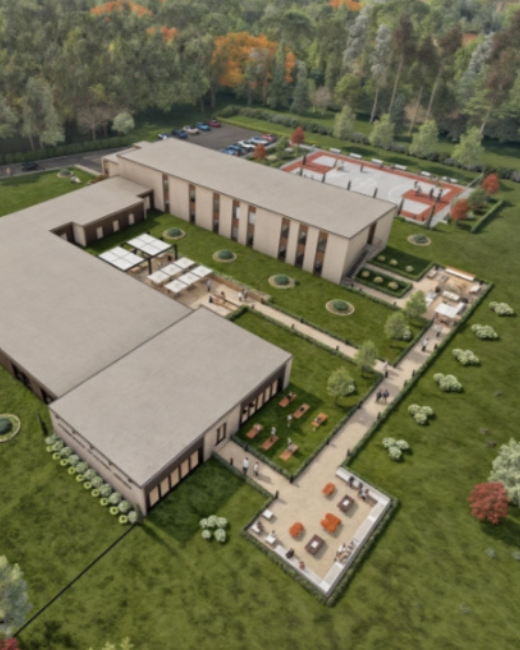
At Woodmont Treatment Center, we are proud to be the premier outpatient recovery facility serving Sussex County, Warren County, and the surrounding New Jersey communities. Located in a peaceful, luxurious environment that feels far removed from a clinical, institutional setting, we focus on personalized, holistic healing. We accept most major private insurance plans and are committed to helping you find a sustainable path forward.
Our clinical outcomes speak to the power of structured, compassionate care:
- 98% of our clients report greater life satisfaction after completing our program.
- 90% of our clients successfully reconnected with their families.
- 87% maintain stable, full-time employment.
If you are a resident of Sussex or Warren County, your path to a healthier, substance-free life is closer than you think. You don’t have to navigate this road alone. For more guidance on choosing the right program for yourself or a loved one, read More info about finding the best drug rehabs in NJ or explore the details of our specialized outpatient care by visiting More info about our treatment programs.
Reach out to our compassionate admissions team at Woodmont Treatment Center today, and let’s take the first step toward your new beginning together.