





Objective
This blog explains why structure matters so much in recovery. It shows how routine, therapy, and whole-person care help people build a more stable life after treatment. It also explains how short-term inpatient rehab, SMART recovery programs, and support from top rehab centers can help reduce relapse risk and support long-term change.
Key Takeaways
- Structure helps people feel safer, calmer, and more focused.
- A steady routine can lower stress and reduce the risk of relapse.
- Therapy helps people understand triggers and harmful patterns.
- Holistic care supports mind-body healing beside clinical treatment.
- Short term inpatient rehab can give people a strong start.
- Smart recovery programs can teach practical coping tools.
- Many top rehab centers use structure because it works over time.
Table Of Contents
- Why Structure Matters In Recovery
- How Daily Routine Builds Stability
- How Therapy Supports Long-Term Change
- How Holistic Care Helps Reduce Relapse
- Why Short Term Inpatient Rehab Can Help
- How Smart Recovery Programs Fit In
- What To Look For In Top Rehab Centers
- FAQs
Why Structure Matters In Recovery?
A lot of people think rehab is only about stopping drugs or alcohol. That is part of it, but it is not the full picture. Recovery also means learning to live a steady life again. It means waking up with a plan. It means eating on time, sleeping better, showing up for therapy, and learning how to handle stress without falling apart.
That is where structure matters.
When someone has been struggling with addiction, life often becomes messy. Sleep gets worse. Meals get skipped. Emotions run high. Days lose shape. Small tasks start to feel hard. People may stop trusting themselves because everything feels uncertain.
A structured rehab program helps bring order back into that kind of life.
Instead of living from one crisis to the next, the person starts following a clear day. There is time to wake up, attend sessions, eat, rest, reflect, and connect with others. At first, that may sound simple. In real life, it can be powerful. People often do better when they know what comes next.
That is one reason many top rehab centers do not treat structure like a small detail. They treat it like part of the treatment itself.
At Wood Mont Treatment, structure can give people something they may not have felt in a long time: steadiness.
How Daily Routine Builds Stability?
Recovery is not built in one big moment. It is in ordinary moments that keep happening every day that we build.
That is why routine matters so much.
A healthy routine teaches the brain and body what stability feels like. It also gives people less empty time, which can be hard in early recovery. When someone is left alone with stress, boredom, guilt, or cravings, the mind can drift back toward old habits.
Routine helps interrupt that.
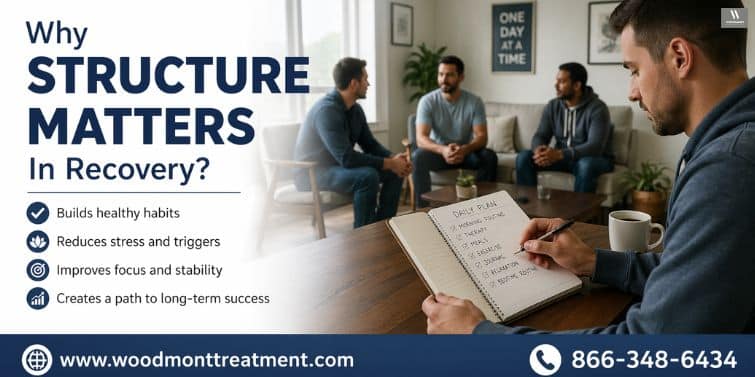
A structured day may include:
- Waking up at the same time
- Eating regular meals
- Attending counseling sessions
- Joining group discussions
- Taking part in fitness or movement
- Practicing quiet time or reflection
- Going to bed at a healthy hour
These habits may look basic from the outside, but they can make a big difference. Better sleep can improve mood. Regular meals can help the body recover. A full day with purpose can reduce the feeling of drifting.
Routine also builds trust. When people keep small promises to themselves, they start to feel more capable. That matters in recovery. Many people enter treatment feeling ashamed, discouraged, or unsure if they can really change. A steady routine gives them proof that change is possible.
This is one reason top rehab centers often focus on structure from the start. A strong day-by-day pattern gives people something solid to stand on while everything else is still healing.
How Therapy Supports Long-Term Change?
Structure helps, but structure alone is not enough. People also need help understanding why addiction took hold in the first place and what keeps it going.
That is where therapy comes in.
Good treatment does not only tell people to avoid substances. It helps them understand their thoughts, emotions, pain, and behavior. It helps them see patterns they may not have noticed before.
Individual therapy can give someone a safe place to speak honestly. Group therapy can help people feel less alone. Family therapy can help repair trust and improve communication. Cognitive behavioral therapy can help people notice harmful thinking and replace it with healthier responses.
This work matters because relapse often starts long before a person uses again. It may begin with stress, anger, isolation, shame, or hopeless thinking. Therapy helps people catch those warning signs earlier.
It also teaches practical skills, such as:
- Managing cravings
- Handling conflict better
- Setting healthy limits
- Coping with anxiety
- Responding to triggers
- Building relapse prevention plans
That is why many top rehab centers build therapy into the rhythm of each day rather than treating it as an occasional add-on. Change lasts longer when people practice it often.
At Wood Mont Treatment, therapy can be one of the places where structure begins to turn into real personal growth.
How Holistic Care Helps Reduce Relapse?
Recovery is not only mental. It is physical and emotional too. A person may stop using substances, but still feel tense, restless, overwhelmed, angry, or numb. If those feelings are not addressed, relapse risk can stay high.
That is why whole-person care matters.
Holistic care works alongside clinical treatment. It does not replace medical support or therapy. It adds support for the body and nervous system, which often carry a lot of stress.
This may include:
- Yoga
- Breathing exercises
- Meditation
- Fitness
- Nutrition support
- Art or music therapy
- Time outdoors
- Mindfulness practice
These tools help people slow down and notice what they feel. They can also reduce emotional intensity. That matters because many people use substances to escape discomfort fast. When they learn healthier ways to calm their bodies and minds, they have more space to make better choices.
Holistic care can help lower common relapse triggers such as:
- Stress
- Anger
- Anxiety
- Restlessness
- Loneliness
- Emotional overload
That is why many top rehab centers include mind-body healing in treatment plans. It gives people more than insight. It gives them ways to feel better without returning to harmful habits.

Why Short Term Inpatient Rehab Can Help?
Not everyone needs the same kind of treatment, but many people benefit from a focused start. Short term inpatient rehab can provide that.
In short term inpatient rehab, people live in a treatment setting for a limited period. This gives them space from daily triggers and outside pressure. It can be especially helpful when home life is unstable or cravings are strong.
Short term inpatient rehab may help someone by giving them:
- A safe environment
- Daily treatment and support
- Distance from triggers
- Time to stabilize physically
- A stronger start before outpatient care
For some people, short term inpatient rehab is the step that helps them slow down enough to begin healing. It may not solve everything at once, but it can create momentum and direction.
How Smart Recovery Programs Fit In?
Some people connect well with practical, skill-based support. That is where smart recovery programs can be useful.
Smart recovery programs focus on self-management. They help people understand urges, challenge unhealthy thinking, and build better habits. Many people like this approach because it feels direct and useful in daily life.
Smart recovery programs often help people work on:
- Motivation
- Coping skills
- Emotional control
- Decision-making
- Goal setting
For many people, smart recovery programs work well beside therapy and structured care. They can give people tools they can keep using after treatment ends.
What To Look For In Top Rehab Centers?
When people search for top rehab centers, they often see big promises. What matters more is the quality of care.
Look for programs that offer:
- Licensed staff
- Strong therapy options
- Clear daily structure
- Mental health support
- Holistic care
- Relapse prevention planning
- Aftercare support
The best top rehab centers do not only help people get through treatment. They help them prepare for real life after treatment.
Conclusion
Long-term stability does not come from luck. It usually comes from structure, support, and daily effort. That is why top rehab centers often focus on routine, therapy, and mind-body care together. Short-term inpatient rehab can help people start in a safe place. Smart recovery programs can help them build practical skills that last. Over time, these pieces can help recovery feel less fragile and more real.
At Wood Mont Treatment, that kind of stability can begin with one structured day and grow from there.
Real recovery grows stronger when each day offers support, purpose, and space to heal.
FAQs
What Makes Structured Rehab Different?
It gives people a clear daily plan, regular therapy, and healthy routine, which can make recovery feel more stable.
Can Short Term Inpatient Rehab Really Help?
Yes. Short term inpatient rehab can help people step away from triggers and begin treatment with strong support.
Are Smart Recovery Programs Useful After Rehab?
Yes. Smart recovery programs can teach coping skills that people continue to use after formal treatment ends.
Do Top Rehab Centers Offer Holistic Care?
Many top rehab centers offer yoga, mindfulness, fitness, and nutrition alongside clinical treatment.
How Does Holistic Care Help Reduce Relapse?
It can lower stress, improve emotional control, and help people manage triggers more healthily.
What Should I Ask When Comparing Top Rehab Centers?
Ask about therapy, daily routine, staff qualifications, aftercare planning, and how the program supports long-term stability.