





Objective
Explain why treating heroin use and mental health as two separate problems doesn’t work, and what it actually looks like when a program treats them together.
Key Takeaways
- Heroin hijacks the same brain chemistry involved in mood regulation. Depression and anxiety aren’t a side effect of the addiction; they’re tangled up in it.
- SAMHSA data puts the overlap between substance use disorders and mental illness at close to half of all cases. That’s not a niche issue.
- Co-occurring disorders treatment that handles both conditions at once outperforms treating either one alone, and the gap isn’t small.
- Trauma shows up behind a large share of heroin use. Skip the trauma work, and relapse tends to follow.
- Detox gets someone off heroin physically. It does almost nothing for the depression, anxiety, or trauma sitting underneath the use.
- Woodmont Treatment Center in Newton, NJ, builds dual-diagnosis care into its heroin programs from day one instead of bolting it on later.
A guy sits in his car outside a pharmacy, telling himself he’ll fill the prescription tomorrow. Eleven days off heroin, and the anxiety hasn’t budged an inch. Nobody ever told him the two might be connected. He just figures something else is broken in him, separate from the addiction, and he’s not sure where to even start with that.
That disconnect is more common than most people realize. Plenty of treatment programs still run substance use and mental health through two different intake forms, two different teams, two different plans. It rarely holds up, and heroin makes the gap especially obvious. The psychological toll runs just as deep as the physical dependence, sometimes deeper.
This piece walks through how heroin addiction treatment and mental health recovery actually intersect, what the research says about it, and what integrated care looks like when a facility does it right instead of just advertising it.
Why Heroin Addiction and Mental Health Keep Showing Up Together
Heroin works on the same brain systems that regulate mood, so depression and anxiety tend to travel with opioid use disorder rather than trail behind it. One feeds the other, and the cycle doesn’t break on its own.
Someone using heroin to dull depression gets real relief at first. That’s the trap. Over time the drug wears down the brain’s ability to manage mood on its own, so the person ends up more depressed between doses than they were before they started using.
A few patterns come up over and over in co-occurring disorders treatment:
- Depression usually shows up before the heroin use starts. The drug becomes a form of self-medication, not the original problem.
- Anxiety often spikes hardest during withdrawal, and that spike triggers relapse before the physical symptoms even finish running their course.
- PTSD and heroin use overlap at unusually high rates, especially among veterans and people with a history of abuse.
- Sleep falls apart in both depression and opioid withdrawal, and the two feed each other until neither improves.
SAMHSA’s numbers put roughly half of people with a substance use disorder in the co-occurring category, meaning they also meet criteria for a mental illness. Treat one and ignore the other, and you’re working against yourself.
What Heroin Actually Does to Someone’s Mental State
The psychological effects of heroin run well past the high itself; depression, anxiety, and a dulled emotional response are common, and they often outlast the physical withdrawal by weeks or months.
In the short term
- A sharp, brief high followed by a crash that dips well below baseline mood
- Judgment that gets noticeably worse, especially around risk
- A flattened ability to feel pleasure from things that used to matter
Over the longer haul
- Depression that sticks around even during stretches of abstinence
- Anxiety and a shorter fuse than the person had before
- Relationships that get harder to build and harder to hold onto
- Memory and focus that don’t snap back right away
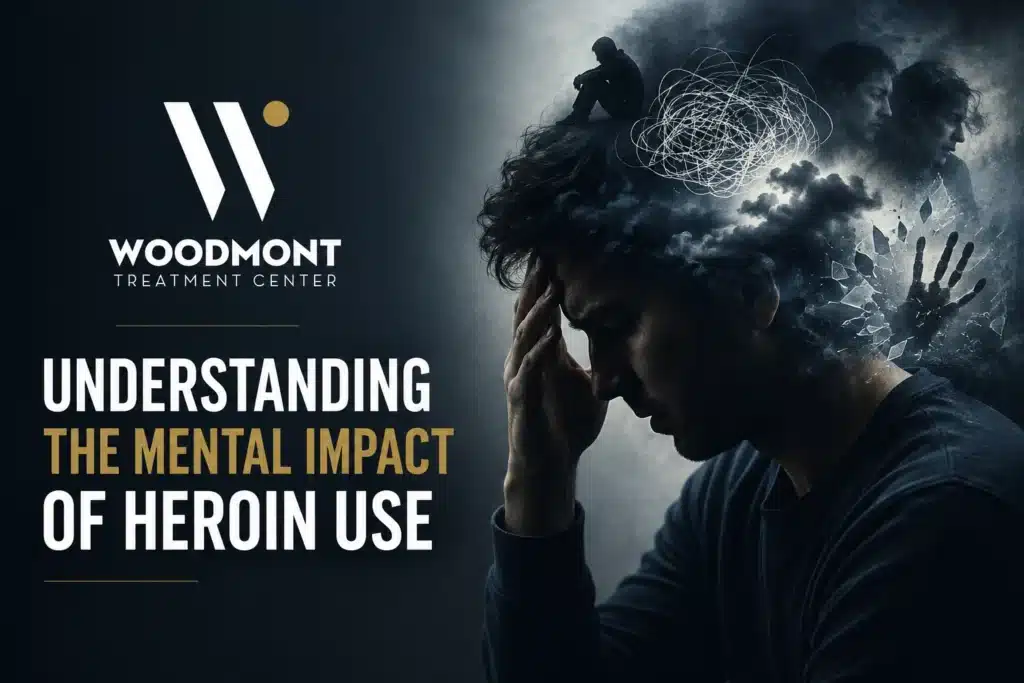
What withdrawal does to mood and mind
| Symptom | Usually Starts | Usually Lasts |
| Anxiety, irritability | 6–12 hours after last use | 1–2 weeks, easing gradually |
| Depression | 24–72 hours after last use | Weeks to months without treatment |
| Insomnia | Within the first day | 1–3 weeks |
| Cravings | Ongoing, worst around days 3–5 | Can drag on for months |
This is a big reason relapse rates stay stubbornly high when treatment stops at detox. The physical part clears up faster than the psychological part ever does.
Where Trauma Fits Into All of This
Trauma is one of the strongest predictors of heroin use in the first place, and it’s an even stronger predictor of relapse when it’s left untreated during recovery.
Trauma and addiction recovery work matters because for a lot of people, heroin didn’t start as recreation. It started as the only thing that quieted a nervous system that wouldn’t shut off on its own.
One case that comes up a lot
A woman in her thirties enters treatment for heroin use. Six weeks in, therapy uncovers a car accident from years earlier, chronic pain that never got addressed properly, and PTSD nobody had diagnosed. Detox never touched any of that. Once trauma-focused therapy started, her cravings and her depression began improving at the same time, not one before the other.
Programs that skip the trauma piece tend to see the same faces come back through intake. That’s rarely about willpower. It’s usually because whatever drove the use in the first place never got treated.
What Co-Occurring Disorders Treatment Looks Like in Practice
Real co-occurring disorders treatment combines medical detox, individual therapy, medication management where it’s needed, and group support, with one clinical team handling both the addiction and the mental health side, not two teams working separately.
How it typically unfolds
- Intake covers both issues at once. Clinicians look at substance use history and mental health symptoms together, not on separate forms handled by different departments.
- Detox happens with psychiatric eyes on the person. Withdrawal gets managed medically while staff also watch for depression, anxiety, or symptoms that weren’t obvious at intake.
- Therapy targets both conditions in the same sessions. Cognitive behavioral therapy and trauma-informed work address addiction and mental health as one problem, not two.
- Medication gets introduced carefully, if it’s needed. Antidepressants or anti-anxiety medication come with real attention to interaction risk, not a blanket prescription.
- Group therapy does real work here. Sitting with other people facing the same dual struggle cuts down on the isolation that drives a lot of relapses.
- Discharge planning includes a mental health follow-up, not just a meeting schedule. A good aftercare plan names an outpatient therapist or psychiatrist by the time someone leaves.
Woodmont Treatment Center builds dual-diagnosis programming into the treatment plan from the first day, rather than adding it on after someone finishes detox.
The Real Timeline for Recovery
Heroin recovery moves through medical detox, then weeks of inpatient or outpatient care, and mental health treatment usually needs to keep going well past the point someone leaves the program.
| Phase | What’s Happening | Typical Length |
| Medical detox | Withdrawal managed with medical and psychiatric support | 5–10 days |
| Inpatient or residential care | Structured therapy, dual-diagnosis work, medication management | 30–90 days |
| Outpatient or intensive outpatient | Continued therapy while living at home | 8–16 weeks |
| Ongoing mental health care | Individual therapy, psychiatric follow-up, support groups | Ongoing, often years |
Physical withdrawal can be fully done in ten days. The depression or trauma that drove the use in the first place usually isn’t, and treating those two timelines as the same thing is where a lot of relapse starts.
How to Tell If a Program Treats Both Conditions, or Just Says It Does
A program actually treating co-occurring conditions has licensed mental health clinicians on staff, not just addiction counselors, and builds psychiatric care into the plan rather than tacking it on as an extra.
Worth asking directly:
- Do you have psychiatrists or psychiatric nurse practitioners on staff, or just addiction counselors?
- How is your dual-diagnosis plan actually different from your standard program?
- What happens if someone’s depression gets worse mid-detox?
- Who delivers trauma-focused therapy here, specifically?
- What does aftercare look like for someone with a diagnosed mental health condition?
Vague or rehearsed-sounding answers to any of these are worth paying attention to. “Dual-diagnosis” gets used loosely in this industry.
Paying for Dual-Diagnosis Treatment
Most major insurance plans cover co-occurring disorders treatment, since federal parity laws require insurers to cover mental health and substance use the same way they cover other medical conditions.
Woodmont works with most major commercial insurers, including Aetna, Cigna, Anthem, and Blue Cross Blue Shield. What’s actually covered depends on the specific plan, so it’s worth verifying before assuming anything about cost.
Families and individuals can verify insurance through Woodmont’s admissions team directly, often the same day they call.
Find Comprehensive Support for Recovery and Mental Health
Recovery is most effective when addiction and mental health are treated together. At Woodmont Treatment Center, our experienced clinical team provides personalized co-occurring disorders treatment, combining evidence-based therapies, medical support, and compassionate care to help you achieve lasting healing and long-term recovery.
Schedule Your Confidential AssessmentFAQ
What’s the difference between depression and heroin withdrawal symptoms?
They overlap a lot, which is part of what makes them hard to tell apart. Withdrawal-related low mood generally eases within a few weeks as the body stabilizes. If it sticks around longer than that, especially if it was there before the heroin use started, it usually needs its own treatment.
Can heroin addiction cause permanent mental health damage?
Some changes to mood regulation and stress response can stick around, but a lot of it improves with sustained treatment and time. Ongoing therapy makes a real, measurable difference in how much of that recovers.
Do I need to deal with my trauma before starting heroin treatment, or at the same time?
At the same time. Detoxing first and saving the trauma work for later often leaves the actual driver of the use untreated, and that’s exactly what pushes relapse risk up. Integrated programs handle both from the start.
Is dual-diagnosis treatment more expensive than standard addiction treatment?
Not necessarily. Most insurance plans cover mental health and substance use at similar rates, thanks to federal parity requirements. Your specific plan is what actually determines the cost, so it’s worth checking.
How long does heroin withdrawal usually last?
Physical symptoms typically peak around 72 hours and ease off over one to two weeks. The psychological symptoms, depression and cravings especially, tend to run longer and respond well to continued therapy after the physical part is over.
What are the warning signs that someone’s heroin use is tangled up with a mental health issue?
Low mood that doesn’t lift between uses, growing isolation, sudden mood swings, and using heroin to manage anxiety rather than to get high are all signs worth paying attention to. That pattern usually points to something underneath the substance use.
Does Woodmont Treatment Center serve people outside of Newton, New Jersey?
Yes. Woodmont sits in Newton, in Sussex County, and works with clients from Andover Township, Bergen County, and other communities across New Jersey.
Will my family be part of treatment if I have both a mental health condition and heroin addiction?
Usually, yes. Addiction and mental health both ripple through the whole household, so most programs, Woodmont included, build family therapy into dual-diagnosis care rather than treating it as optional.
What happens if my depression gets worse during detox?
That gets caught and handled in real time in a program that’s actually doing dual-diagnosis work. Staff might adjust medication or increase therapeutic contact rather than waiting until detox wraps up to deal with it.
Can heroin addiction treatment guarantee my mental health will improve too?
No program can promise a specific outcome, and anyone claiming otherwise is overselling. What the research does show clearly is that integrated treatment produces meaningfully better outcomes than treating addiction and mental health as separate problems, or not treating one of them at all.
Getting Started
Healing from heroin addiction and healing your mental health were never two different journeys to begin with. They move together, or the whole thing stalls. Programs that get this right treat both from the first day, not as something added on once detox wraps up.
Woodmont Treatment Center builds dual-diagnosis care directly into its heroin addiction treatment programs, with a clinical team trained to handle addiction and mental health as one problem, in a setting built for actual recovery rather than short-term stabilization.
A confidential assessment takes a few minutes and costs nothing. Call 1-866-348-6434 to talk with our admissions team, or reach out through our contact page. Family members are welcome to call on someone else’s behalf.
For a closer look at what heroin recovery involves day to day, read our related guide: Understanding the Different Paths to Heroin Recovery Through Professional Addiction Treatment Centers.