




Is Alcohol Rehab in Monroe County Pennsylvania Right for You?
Alcohol rehab in Monroe County Pennsylvania is available at multiple levels of care — from medical detox and residential inpatient to outpatient and telehealth programs — serving adults, adolescents, and people with co-occurring mental health conditions.
Quick answer — here’s what’s available locally:
| Level of Care | What It Involves |
|---|---|
| Medical Detox | 24/7 supervised withdrawal management |
| Residential Inpatient | Structured live-in treatment, minimum 28 days |
| Partial Hospitalization (PHP) | ~40 hours/week, no overnight stay |
| Intensive Outpatient (IOP) | Flexible scheduling around work or family |
| Outpatient / Telehealth | Lower-intensity, ongoing support |
Payment options include: Medicaid, Medicare, private insurance, sliding fee scales, and funding for uninsured residents.
To get help right now, call the Carbon-Monroe-Pike 24/7 referral line: 1-866-824-3578.
Monroe County is facing a serious substance use crisis. SUD diagnoses in the county jumped 250% between 2016 and 2020 — from 1,682 to 5,860 people. Overdose deaths more than doubled in the same period.
Alcohol addiction is a major part of that picture. And if you or someone you love is struggling, knowing when and where to get help can make all the difference.
This guide walks you through 5 clear signs that professional alcohol rehab may be the right next step — and exactly what your options look like in Monroe County.
Understanding the Need for Alcohol Rehab in Monroe County Pennsylvania

When we look at the landscape of health in the Poconos, the numbers tell a story of a community under pressure. For many of us living in or near Monroe County, the quiet beauty of the mountains can sometimes mask a growing public health crisis. Substance Use Disorder (SUD) is no longer a “hidden” problem; it is a visible challenge affecting our neighbors, coworkers, and families.
The statistics are sobering. In 2020, approximately 5,860 individuals in Monroe County were diagnosed with an SUD. This represents about 3.4% of our local population, a figure that sits higher than the Pennsylvania statewide average of 3.1%. Even more concerning is the rate of growth. Between 2016 and 2020, SUD diagnoses in our county rose by a staggering 250%. This isn’t just a slight uptick; it’s a surge that highlights the urgent need for accessible alcohol rehab in Monroe County Pennsylvania.
Recognizing the Local Impact of Alcoholism
While much of the national conversation focuses on the “opioid crisis,” we know that alcoholism remains one of the most common and devastating addictions in Pennsylvania. In the Carbon-Monroe-Pike region, alcohol is a primary driver for individuals seeking treatment. It doesn’t discriminate—it affects the young professional in Stroudsburg just as much as the retiree in Mount Pocono.
Because we are part of the Carbon-Monroe-Pike Drug & Alcohol Commission service area, we have access to coordinated care, but the demand often outpaces the immediate local supply. This is why understanding the scope of the problem is the first step toward solving it.
Addressing Polysubstance Use and the Opioid Crisis
We cannot talk about alcohol rehab without mentioning the “fourth wave” of the addiction crisis. In Monroe County, overdose deaths increased from 39 in 2015 to 83 in 2020—a 112% increase. While alcohol is often the primary substance of choice, it is increasingly being used alongside other substances.
Data from 2017 and 2018 showed that opioids were involved in 94-96% of overdose cases in the county. Today, we see a rise in polysubstance use, where individuals may struggle with alcohol while also using stimulants like cocaine or methamphetamine, often unknowingly contaminated with fentanyl. This complexity makes professional, medically supervised rehab more important than ever. Dealing with alcohol withdrawal is dangerous enough on its own; when combined with other substances, it becomes a life-threatening medical emergency.
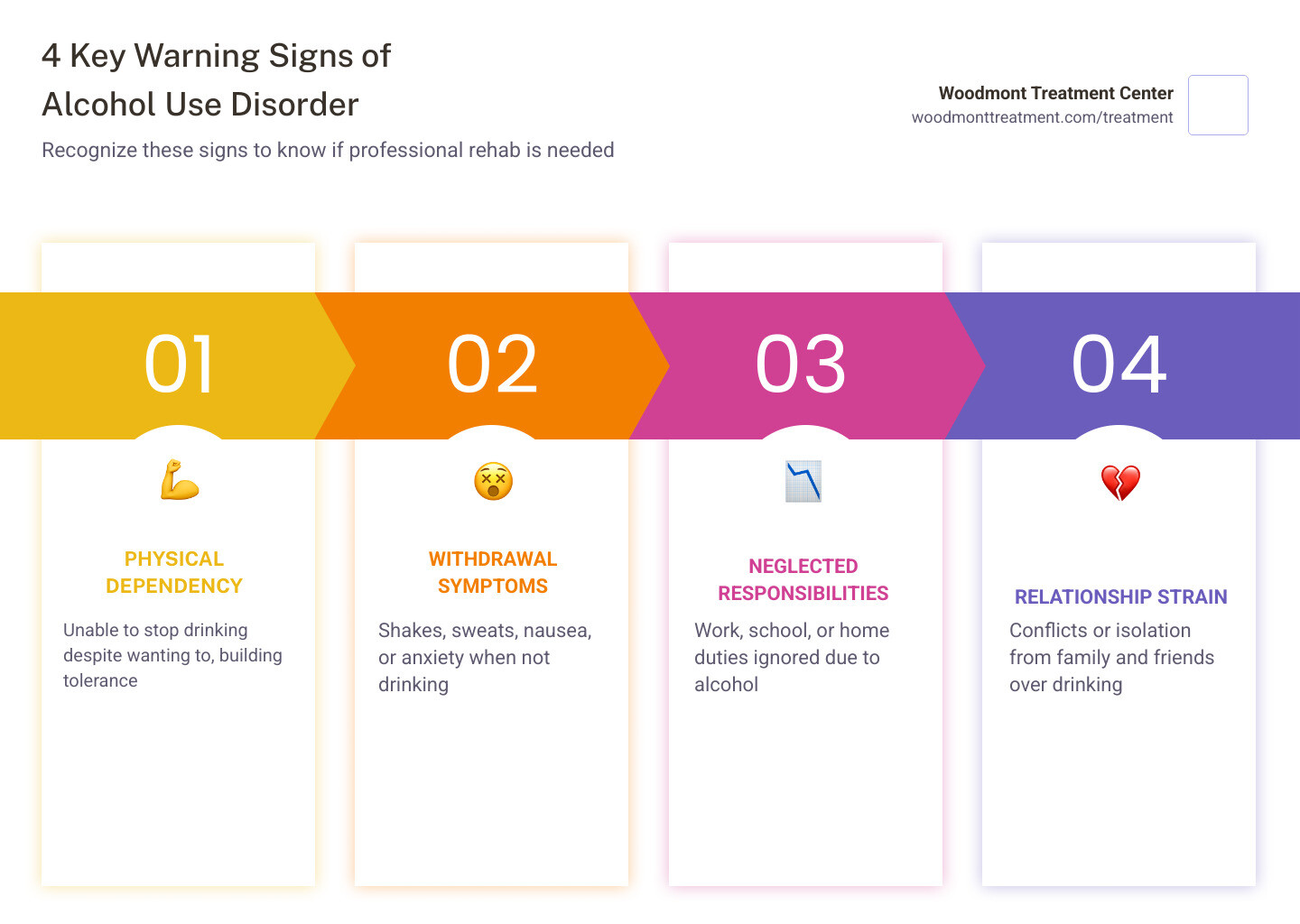
1. You Recognize the Warning Signs of Alcohol Use Disorder
The first way to know if rehab is right for you is to look honestly at the warning signs. Alcohol Use Disorder (AUD) often creeps up slowly. It starts as a “social” habit and evolves into a physical and psychological necessity.
Some of the most common red flags we see include:
- Physical Dependency: Do you feel shaky, nauseous, or anxious when you haven’t had a drink? These are early signs of withdrawal.
- Neglected Responsibilities: Are you missing work, skipping school, or failing to keep up with household chores because of drinking or hangovers?
- Relationship Strain: Is your drinking causing arguments with your spouse, parents, or friends? Have people expressed concern about your intake?
- Tolerance: Do you find yourself needing to drink significantly more than you used to just to feel the same effects?
- Loss of Control: Do you often set out to have “just one” but end up drinking until you black out or the bottle is empty?
If you recognize these signs, the first step is to reach out for a professional assessment. You don’t have to have “hit rock bottom” to ask for help. In fact, seeking help early is the most effective way to prevent the long-term health consequences of alcoholism.
2. You Need a Specific Level of Care for Recovery
Not everyone needs the same type of help. One of the biggest mistakes people make is thinking that “rehab” only means staying in a hospital for 30 days. In reality, modern alcohol rehab in Monroe County Pennsylvania offers a “continuum of care” designed to meet you where you are.
At Woodmont Treatment Center, we believe in personalized treatment services that address the specific needs of the individual. Depending on the severity of your addiction, you might require one of the following:
Detoxification and Inpatient Alcohol Rehab in Monroe County Pennsylvania
For those with a heavy or long-term drinking habit, the first step is almost always medical detox. Alcohol withdrawal can cause seizures and a dangerous condition called Delirium Tremens (DTs). A medically supervised detox provides 24/7 monitoring to ensure you stay safe and comfortable while the alcohol leaves your system.
Following detox, a residential inpatient program—typically lasting at least 28 days—offers a structured environment away from the triggers of daily life. This is where the deep work of therapy begins, helping you understand the “why” behind your drinking.
Outpatient and PHP Options in the Poconos
For those who have completed inpatient care or who have a less severe dependency, outpatient options provide more flexibility.
- Partial Hospitalization Programs (PHP): These usually involve about 40 hours of treatment per week. You spend your days in clinical sessions but can return home or to a sober living environment at night.
- Intensive Outpatient Programs (IOP): This level of care allows you to maintain work or family obligations while attending therapy sessions several times a week.
- Telehealth: In our modern world, many programs now offer online therapy, making it easier than ever for residents in remote parts of Monroe County to access world-class counseling without a long commute.
3. You Require Specialized Therapy or Dual Diagnosis Support
Rehab isn’t just about “not drinking.” It’s about learning how to live a life where you don’t need to drink. This requires evidence-based therapies that give you actual tools for your “recovery toolbox.”
Common approaches used in our local programs include:
- Cognitive Behavioral Therapy (CBT): Helping you identify and change the thought patterns that lead to drinking.
- Motivational Interviewing: A goal-oriented style of counseling that helps you find your own internal motivation to change.
- 12-Step Facilitation: Introducing you to the principles of groups like Alcoholics Anonymous (AA).
- Trauma-Informed Care: Addressing past experiences that may be driving your substance use.
Holistic and Specialized Treatment Approaches
We know that healing involves the whole person—mind, body, and spirit. That’s why many programs now incorporate holistic therapies such as:
- Yoga and Meditation: To help manage stress and anxiety.
- Nutritional Guidance: To repair the damage alcohol does to the body.
- Equine Therapy: Using interaction with horses to build emotional regulation and trust.
- Gender-Specific Care: Recognizing that men and women often face different societal pressures and biological challenges in recovery.
Integrated Care for Dual Diagnosis
Many people struggling with alcohol are also dealing with “co-occurring disorders” like depression, anxiety, PTSD, or bipolar disorder. If you only treat the alcohol and ignore the depression, you are much more likely to relapse.
Integrated care treats both conditions simultaneously. This is a specialized field, and it’s important to find a facility that is equipped to handle mental health alongside addiction. Before you commit to a program, make sure to verify your insurance provider’s policy to see what types of specialized care are covered under your plan.
| Feature | Cognitive Behavioral Therapy (CBT) | 12-Step Facilitation |
|---|---|---|
| Core Focus | Identifying/changing negative thought patterns | Spiritual growth and peer support |
| Structure | Skill-based, homework-oriented | Step-by-step progress, mentorship |
| Goal | Practical coping mechanisms | Lifelong abstinence and community |
| Setting | Individual or small group with therapist | Peer-led group meetings |
4. You Are Looking for Local Resources and Referral Systems
One of the best things about seeking alcohol rehab in Monroe County Pennsylvania is the robust local support network. You don’t have to figure this out on your own.
The Carbon-Monroe-Pike Drug & Alcohol Commission serves as the Single County Authority (SCA) for our area. They coordinate services, provide assessments, and help residents find the right level of care. They even offer a 24/7 referral center at 1-866-824-3578. Whether it’s 2:00 PM or 2:00 AM, there is someone available to help you find a bed or a counselor.
Another innovative local resource is the Law Enforcement Treatment Initiative (LETI). This program, a collaboration between the PA Office of Attorney General and the Monroe County District Attorney’s Office, allows individuals to contact local law enforcement to ask for help with addiction without fear of arrest. The goal is to divert people away from the criminal justice system and directly into the treatment they need. It’s a powerful way our community is working together to break the stigma of addiction.
For more information on how our local commission operates, you can visit the Carbon-Monroe-Pike Drug & Alcohol Commission website for administrative details and office locations in Stroudsburg.
5. You Need Accessible Payment and Insurance Options
We often hear people say, “I want help, but I can’t afford it.” We want you to know that there are always options, regardless of your financial situation.
In Monroe County, treatment is accessible through:
- Private Insurance: Many plans from providers like Aetna, Cigna, and Blue Cross Blue Shield cover detox and residential rehab.
- Medicaid and Medicare: Pennsylvania Medical Assistance is widely accepted at many local outpatient and state-funded facilities.
- Sliding Fee Scales: For those without insurance, some clinics offer costs based on your income level.
- County Funding: The Drug & Alcohol Commission has funding specifically set aside for uninsured or underinsured residents who meet certain eligibility requirements.
Don’t let the fear of a bill stop you from saving your life. We recommend that your first step be to verify your insurance coverage to understand exactly what your out-of-pocket costs (if any) might be.
Life After Alcohol Rehab in Monroe County Pennsylvania
Recovery doesn’t end when you leave the rehab facility. In fact, that’s just the beginning. Long-term sobriety requires a solid aftercare plan. This usually includes a combination of alumni networks, ongoing therapy, and local support groups.
Monroe County has a vibrant recovery community. There are dozens of AA and NA meetings held every week in towns like East Stroudsburg, Stroudsburg, and Tobyhanna. For those looking for a non-secular approach, SMART Recovery meetings are also available.
Sober Activities and Community Support
Living sober in the Poconos is actually quite a lot of fun! Part of recovery is rediscovering the things you enjoy without a drink in your hand. Our region and the surrounding areas offer incredible opportunities for sober recreation:
- Outdoor Adventures: Explore the trails at Ramapo Mountain State Forest or take in the views at Delaware Water Gap.
- Family Fun: Spend a day at Six Flags Great Adventure or visit the animals at the Turtle Back Zoo.
- Coastal Trips: Take a sober day trip to the Jersey Shore and enjoy the boardwalk at Jenkinson’s Point Pleasant.
- Scenic Parks: Walk the waterfront at Liberty State Park for stunning views and fresh air.
Frequently Asked Questions about Monroe County Rehab
How do I access 24/7 help for addiction in Monroe County?
You can call the Carbon-Monroe-Pike Referral Center at 1-866-824-3578 at any time. For statewide assistance, you can also call the PA Get Help Now hotline at 1-800-662-HELP.
What is the Law Enforcement Treatment Initiative (LETI)?
LETI is a program where local police departments help connect individuals struggling with addiction to treatment services instead of funneling them into the jail system. It is a “no-cost, no-consequence” way to seek help through law enforcement.
Does insurance cover alcohol rehab in Pennsylvania?
Yes. Under the Affordable Care Act, substance use disorder treatment is considered an “essential health benefit.” Most private plans, as well as Medicaid and Medicare, provide coverage for various levels of alcohol rehab.
Conclusion
Deciding to seek help for alcohol addiction is one of the bravest things you will ever do. Whether you are noticing the first warning signs or you have been struggling for years, alcohol rehab in Monroe County Pennsylvania offers a path back to the person you used to be.
At Woodmont Treatment Center, we are dedicated to providing the high-quality, evidence-based care you deserve. From the first moment of detox to the lifelong support of our alumni community, we are with you every step of the way. Our luxurious facilities in nearby New Jersey offer a peaceful, holistic environment where you can focus entirely on your healing.
Don’t wait for things to get worse. Reach out to us today to start the admissions process and take the first step toward your new life. Your recovery starts with a single phone call.