





A Flexible, Structured Path for Alcohol Recovery
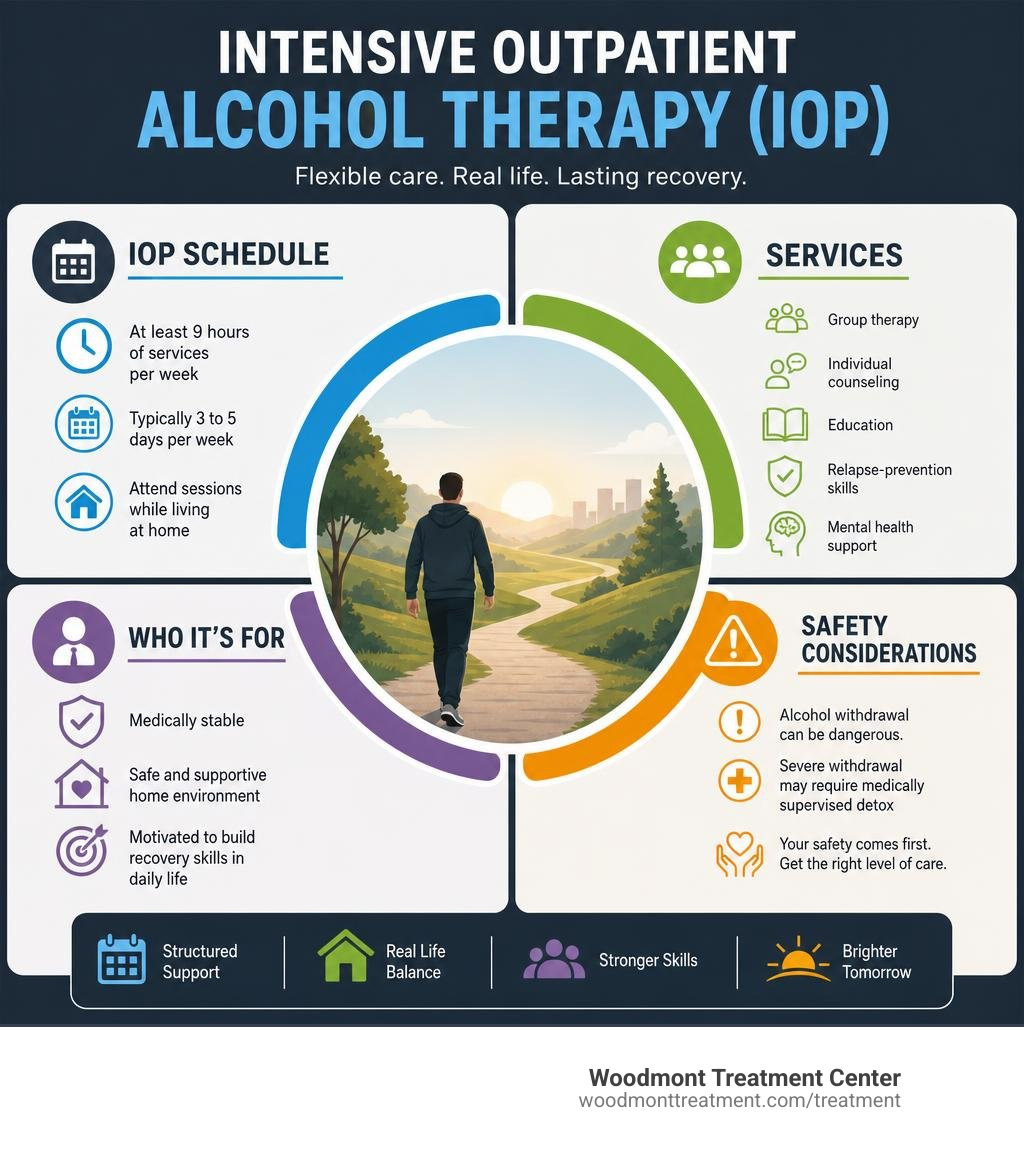
Intensive outpatient alcohol therapy is a structured addiction treatment program that provides several hours of counseling and recovery support each week while you continue living at home. It can be a good fit for people who need more help than weekly therapy but do not need 24-hour residential care.
- What it includes: Group therapy, individual counseling, education, relapse-prevention skills, and often support for anxiety, depression, or other mental health needs.
- Time commitment: Adult IOPs provide at least 9 hours of services per week, often spread across 3 to 5 days.
- Who it helps: People who are medically stable, have a safe place to live, and can benefit from practicing recovery skills in daily life.
- Important safety note: Alcohol withdrawal can be dangerous. Anyone at risk for severe withdrawal may need medically supervised detox before starting outpatient care.
For many people, recovery has to work alongside jobs, family responsibilities, and the real pressures that can trigger drinking. IOP creates steady accountability without removing someone entirely from their everyday world. Research cited by SAMHSA has found that, for people who are appropriate for outpatient care, IOP outcomes can be similar to inpatient treatment at close to half the cost.
At Woodmont Treatment Center, the premier facility serving Sussex and Warren County, we understand that alcohol addiction can affect health, trust, work, and family relationships. The right level of care starts with an honest assessment of withdrawal risk, mental health needs, home support, and recovery goals. If you or a loved one in Sussex or Warren County is ready to take the first step toward lasting healing, contact our compassionate admissions team today to schedule a confidential consultation.
Understanding Intensive Outpatient Alcohol Therapy
Navigating addiction treatment can feel overwhelming when you or a loved one is searching for the right path forward. Understanding how intensive outpatient alcohol therapy fits into the continuum of recovery helps remove the guesswork. Designed as a vital middle ground between round-the-clock residential programs and traditional once-a-week therapy, an Intensive Outpatient Program (IOP) offers structured care while honoring your daily life and family connections.
When clinical professionals evaluate treatment options, we rely on established standards such as the American Society of Addiction Medicine (ASAM) placement criteria. These criteria look closely at medical stability, emotional wellness, readiness for change, relapse potential, and the safety of your home environment. If you do not require 24-hour medical supervision, an IOP delivers intensive clinical support while allowing you to sleep in your own bed at night.
What Is an IOP and How Does It Work?
An IOP is an ambulatory addiction treatment model that brings clinical structure directly into your routine. Instead of staying overnight in a residential setting, you visit our warm, supportive recovery center several times each week for multi-hour therapy sessions.
In an IOP setting, accountability and clinical guidance work hand-in-hand. To maintain safety and measure progress, programs integrate objective drug and alcohol monitoring, such as routine breathalyzer or urinalysis screenings. Beyond accountability, core sessions focus on psychoeducation and real-world coping mechanisms. You learn how alcohol impacts brain chemistry, practice emotional regulation techniques, and discover how to identify personal triggers before they lead to potential relapse.
One of the greatest strengths of an IOP is its immediate real-world application. You learn a coping skill in group therapy in the morning or evening, practice it at home or work that very night, and process the results with your counselor the following day. To learn more about how this level of care can fit your schedule, explore our Intensive Outpatient Treatment Services.
Core Components of Intensive Outpatient Alcohol Therapy
A comprehensive IOP combines multiple evidence-based therapies to treat the whole person rather than just the symptoms of alcohol use disorder. These components form a well-rounded weekly program tailored to your personal goals:
- Group Therapy: Serving as the foundation of outpatient care, group sessions build a supportive peer community. Sharing experiences with others who truly understand the challenges of alcohol recovery breaks the isolation that addiction often causes.
- Individual Counseling: One-on-one sessions with a dedicated therapist allow you to dive deep into personal history, process underlying emotional pain, and refine your specific recovery goals.
- Cognitive Behavioral Therapy (CBT): CBT helps you identify and modify negative thought patterns and behaviors surrounding alcohol, turning irrational triggers into manageable situations.
- Dialectical Behavior Therapy (DBT): DBT teaches vital life skills, including distress tolerance, emotional regulation, and mindfulness, helping you navigate intense cravings without turning to alcohol.
- Medication Management: When appropriate, medical professionals manage non-addictive, FDA-approved medications (such as naltrexone or acamprosate) to reduce alcohol cravings and support long-term brain healing.
- Family Psychoeducation: Involving loved ones helps repair relationships, establish healthy boundaries, and create a supportive environment for long-term sobriety.
IOP vs. Inpatient Rehab and Partial Hospitalization (PHP)
Selecting the ideal level of care depends on your medical safety, addiction severity, and home environment. The diagram below shows how care levels progress across the recovery spectrum:

To help clarify how these levels differ, consider this side-by-side comparison:
| Program Feature | Inpatient / Residential Rehab | Partial Hospitalization Program (PHP) | Intensive Outpatient Program (IOP) |
|---|---|---|---|
| Hours per Week | 24/7 care and residence | 20 to 30 hours per week | 9 to 20 hours per week |
| Living Arrangements | On-site overnight stay | Lives at home or supportive housing | Lives at home |
| Medical Supervision | Continuous 24/7 clinical oversight | Daily medical monitoring | Periodic clinical & medication check-ins |
| Weekly Schedule | Full-time residential immersion | 5 to 7 days per week (full days) | 3 to 5 days per week (3-hour sessions) |
| Best For | Severe AUD, high relapse/withdrawal risk | Moderate to severe AUD, high structure needs | Stable home environment, moderate AUD |
While residential care offers round-the-clock immersion, PHP acts as a full-day step-down or high-structure option. If you want to understand these higher levels of care in more detail, you can learn about Partial Hospitalization Programs or read about what to expect at an inpatient addiction rehab center.
Candidates, Detox, and Dual Diagnosis Care

Choosing intensive outpatient alcohol therapy is a personalized decision. While IOP offers outstanding balance and flexibility, ensuring clinical suitability and safety remains our top priority.
Who Benefits Most from Intensive Outpatient Alcohol Therapy?
An IOP is particularly effective for individuals diagnosed with mild to moderate alcohol use disorder who possess a safe, stable, and alcohol-free living environment. Having supportive family members or friends at home significantly increases treatment success in an outpatient setting.
An IOP is also an ideal fit for working professionals, parents, and students who cannot step away from daily obligations for weeks at a time. For individuals in high-responsibility leadership roles, specialized options provide additional discretion; you can review The Definitive Guide to Confidential Executive Alcohol Rehab to learn how privacy and career obligations are protected during treatment.
Additionally, IOP serves as a vital transition program for individuals stepping down from residential rehab or PHP, helping them integrate back into community living without losing clinical guidance.
Ambulatory Detox vs. Inpatient Medical Detox
Alcohol withdrawal syndrome can present serious physical risks, including seizures, tremors, severe anxiety, and delirium tremens (DTs). Because patient safety is paramount, severe alcohol addiction requires a careful medical assessment before outpatient care begins.
Ambulatory (outpatient) detox may be appropriate for individuals with mild withdrawal symptoms, solid physical health, and reliable social support. However, for those with long-term severe alcohol dependency, a high risk of complicated withdrawal, or past withdrawal seizures, inpatient medical detox is essential. Research published in SAMHSA clinical advisories highlights that individuals who complete medically managed withdrawal prior to enrolling in an IOP achieve lower 2-year post-treatment mortality rates and better long-term recovery outcomes.
If you or a loved one needs round-the-clock medical stabilization prior to starting therapy, read our Alcohol Detox Inpatient NJ Complete Guide or explore our safe medical detoxification options.
Integrated Dual Diagnosis Treatment for Co-Occurring Disorders
It is common for alcohol addiction to walk hand-in-hand with mental health conditions like depression, panic disorder, generalized anxiety, PTSD, or bipolar disorder. Many people initially use alcohol as a self-medication tool to soothe emotional distress, which can lead to a cycle of dependence.
A quality IOP provides trauma-informed, integrated dual-diagnosis treatment. Treating addiction and mental health simultaneously ensures that underlying emotional triggers are addressed alongside substance use. Our clinicians create individualized care plans incorporating therapy, mindfulness, coping strategies, and psychiatric medication management. You can explore the various co-occurring conditions we treat to see how integrated therapy promotes lasting emotional stability.
Duration, Weekly Commitment, and Program Structure

One of the main benefits of intensive outpatient alcohol therapy is its structured yet adaptable schedule. It offers clear framework and daily routine while allowing you to preserve your personal and professional responsibilities.
Weekly Hourly Requirements and Program Schedules
By standard clinical guidelines, an adult IOP requires a minimum of 9 hours of core services per week, though many programs provide up to 15 or 20 weekly treatment hours depending on individual needs.
To accommodate work, family, and educational obligations, flexible scheduling tracks are available:
- Morning Tracks: Typically operate from 9:00 AM to 12:00 PM, 3 to 5 days per week, ideal for individuals working evening shifts or managing home life later in the day.
- Evening Tracks: Typically operate from 6:00 PM to 9:00 PM, 3 to 4 days per week, perfect for working adults, executives, or full-time students.
- Daytime Flexible Blocks: Allow tailored therapy times around childcare or specific employment arrangements.
Typical Length of Stay and Step-Down Recovery Continuum
Recovery is not an overnight event; it is a gradual process that unfolds over time. According to federal Treatment Episode Data Set (TEDS) reports, the median length of stay for adults who successfully complete an IOP is 81 days (approximately 12 weeks). Depending on individual progress, an IOP program may last anywhere from 2 months up to a year before stepping down to standard outpatient care.
Programs are often structured in 8-week clinical modules focused on core recovery milestones. As you gain confidence and demonstrate stable recovery skills in daily life, care transitions seamlessly down the continuum:
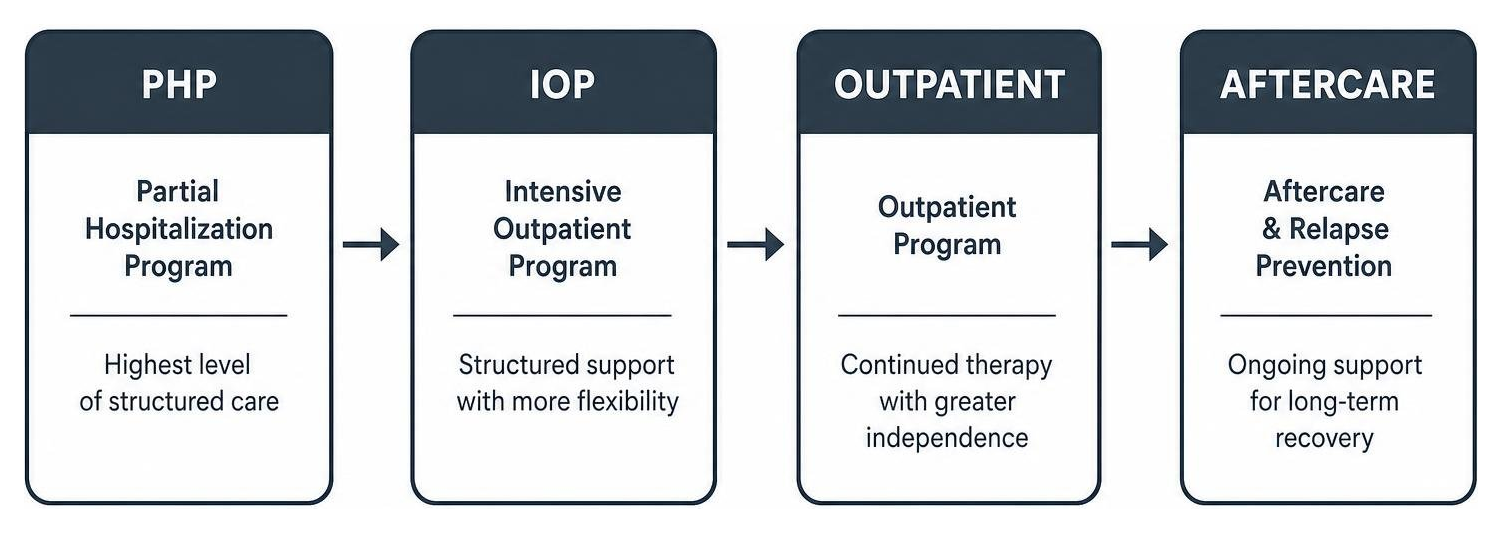
Stepping down gradually ensures you are never suddenly left without support. You can read more about the stages of addiction recovery and explore ongoing outpatient therapy options to understand how step-down care prevents relapse over the long term.
Cost, Effectiveness, and Health Insurance Coverage
When considering treatment options for alcohol use disorder, financial questions and concerns about efficacy are completely natural. Understanding the clinical evidence and insurance landscape can give you confidence in your care decisions.
Clinical Effectiveness and Relapse Prevention Outcomes
The federal Substance Abuse and Mental Health Services Administration (SAMHSA) reports in its Advisory on Intensive Outpatient Treatment that 46 percent of substance use disorder treatment facilities across the nation offer IOP services. This widespread adoption reflects the proven clinical success of intensive outpatient care.
Decades of outcome studies show that for individuals who do not require overnight medical containment, IOP provides treatment outcomes comparable to inpatient residential care. Patients in IOP achieve similar rates of long-term abstinence and relapse reduction, but with the distinct advantage of learning and applying recovery skills directly within their real-world environment. Furthermore, clinical trials highlight that completing an outpatient continuum significantly reduces two-year mortality rates for individuals recovering from severe alcohol dependency.
Cost Comparisons and Insurance Verification
From a financial perspective, an IOP is significantly more affordable than 24/7 residential care. Because outpatient care eliminates room-and-board expenses, the overall cost of an IOP is often nearly half that of inpatient residential programs.
Most private health insurance plans cover intensive outpatient alcohol therapy under federal parity regulations and the Affordable Care Act (ACA), which recognize mental health and substance use treatment as essential health benefits. Depending on your specific policy, insurance may cover a substantial portion—or even all—of your treatment costs after deductible and copay requirements are met.
For a detailed breakdown of coverage details and financial planning, read The Ultimate Guide to Rehab Covered by Insurance NJ and review our cost of inpatient rehab comparison.
Finding the Right IOP and Continuing Long-Term Recovery
Finding the right care center close to home can bring immense peace of mind. Choosing an accredited, compassionate center ensures you receive high-quality clinical care tailored to your unique journey.
How to Choose an Accredited Program Near You
When evaluating intensive outpatient programs, look for licensed facilities that emphasize evidence-based therapeutic modalities, qualified clinical staff, low client-to-therapist ratios, and structured aftercare planning. Resources like the national SAMHSA treatment locator can help identify accredited providers in your region.
For residents in New Jersey, Woodmont Treatment Center stands out as the premier facility serving Sussex County and Warren County, as well as surrounding communities including Newton, Andover Township, and Bergen County. Our peaceful, home-like setting provides personalized, holistic care in a luxurious NJ setting while accepting most major health insurance plans.
Whether you reside locally in Newton, Andover, or elsewhere across northern New Jersey, choosing a regional center allows your family to easily participate in weekly family sessions and support your healing process. If you are a Sussex or Warren County resident seeking compassionate, expert guidance, call Woodmont Treatment Center today to speak directly with our recovery specialists. To learn more about regional options, explore our guide on finding the best alcohol addiction rehab in NJ today, browse our Alcohol Rehab Near Me Ultimate Guide, or view our complete range of comprehensive addiction treatment services.
Family Involvement, Case Management, and Aftercare Support
A robust IOP does more than provide group therapy; it builds a durable support system around your life. Key support components include:
- Family Psychoeducation: Addiction impacts the entire family unit. Family counseling sessions help repair trust, rebuild healthy communication, and teach loved ones how to support your recovery without enabling unhealthy behaviors.
- Dedicated Case Management: Case managers work closely with you to address practical real-world needs, such as vocational support, legal obligations, housing stability, and primary healthcare connection.
- 12-Step & Mutual Support Integration: Programs actively assist clients in connecting with local community support groups, such as Alcoholics Anonymous (AA) or SMART Recovery, building an ongoing network of peer encouragement.
- Non-Acute Warm Lines: Many programs offer peer-staffed phone lines for non-emergency guidance outside regular hours, offering real-time de-escalation when personal stressors arise.
- Comprehensive Relapse Prevention Plans: Before completing your program, you will collaborate with your clinical counselor to craft a detailed aftercare plan identifying personal triggers, emergency contact networks, ongoing therapy schedules, and wellness routines.
Frequently Asked Questions About Intensive Outpatient Programs
Can I work or attend school while participating in an IOP?
Yes. One of the primary advantages of an IOP is its scheduling flexibility. Programs offer morning, afternoon, and evening session blocks specifically designed to accommodate full-time employment, academic commitments, and family responsibilities. This flexibility allows you to maintain your daily responsibilities while receiving high-level clinical care.
How long does an intensive outpatient program for alcohol usually last?
While client timelines are tailored to individual needs, the national median length of stay for an adult completing an IOP is 81 days (around 12 weeks). Programs are typically structured in 8- to 12-week clinical modules, with treatment duration ranging from 2 months up to a year based on recovery progress and step-down goals.
Does insurance cover the full cost of intensive outpatient alcohol therapy?
Most private health insurance policies, including employer-sponsored plans, offer coverage for IOP services under behavioral health benefits. Depending on your specific plan’s deductible, copayment, or co-insurance structure, insurance may cover a major portion—and in some cases all—of the treatment cost. Our admissions team can verify your benefits directly with your provider to explain your coverage prior to enrollment.
Conclusion
Taking the step to address alcohol addiction is a courageous decision that can restore your health, repair relationships, and reclaim your personal path. Intensive outpatient alcohol therapy offers a practical, structured, and clinically proven path to sustainable sobriety without interrupting your home life or career.
At Woodmont Treatment Center, as the premier facility in Sussex and Warren County, our dedicated team of professionals is committed to guiding you through every step of healing. Through personalized therapy, dual-diagnosis support, family healing, and long-term relapse prevention planning, we provide a warm, compassionate environment where lasting recovery thrives. If you live in Sussex County or Warren County, reach out to Woodmont Treatment Center today to verify your insurance benefits and begin your confidential journey toward lifelong wellness.