




Objective
Give someone starting recovery, or supporting someone who is, a realistic map of what the process actually looks like, so the road ahead feels less like a fog and more like something they can plan around.
Key Takeaways
- The stages of addiction recovery generally move through detox, structured treatment, early recovery, and long-term maintenance, each with its own risks and goals.
- There’s no single addiction recovery timeline that fits everyone. Progress depends on the substance, how long it was used, and what else is going on medically or emotionally.
- Moving from addiction to recovery isn’t a straight line. Setbacks happen, and they don’t erase the progress made before them.
- Addiction recovery milestones, 30 days, 90 days, a year, matter less as finish lines and more as checkpoints to reassess what’s working.
- Maintaining recovery from addiction long-term depends on ongoing support, not just what happens during the initial program.
Somewhere around week three of quitting cold turkey, most people hit a wall they didn’t see coming. The physical part felt manageable, maybe even easy. It’s the part after that catches people off guard, the boredom, the irritability, the sudden urge to use again for no clear reason at all.
That wall exists because addiction recovery isn’t one event. It’s several distinct phases, each with its own demands, and skipping ahead mentally to “recover” before working through the earlier stages is usually what sends people back to square one.
This blog walks through the real stages of addiction recovery, in order, with a realistic sense of what each one actually requires.
If you’re standing at the start of this and it feels overwhelming, that’s normal. Call Woodmont Treatment Center at (866) 348-6434, a conversation with admissions costs nothing and commits you to nothing.
Why “Just Quitting” Rarely Works
Stopping a substance and recovering from addiction aren’t the same thing. The body can be substance-free within days. The habits, thought patterns, and emotional dependence built around use take considerably longer to unwind.
This is why unsupervised quitting so often fails, and why drug rehab programs exist as a structured alternative. They’re built around the fact that willpower alone rarely holds up against physical withdrawal, psychological cravings, and the environment someone returns to once treatment ends.
Stage One: Detox and Physical Stabilization
Detox is the process of clearing a substance from the body (stages of addiction recovery) while managing withdrawal symptoms under medical supervision.
This stage typically lasts anywhere from a few days to about two weeks, depending on the substance involved. Alcohol and benzodiazepines carry the most serious withdrawal risks, including seizures, which is why medical oversight matters here more than almost any other point in the process.
What detox does not do is address the reasons someone started using in the first place. It stabilizes the body. Everything else, the therapy, the behavior change, the actual work of recovery, comes after.
Woodmont Treatment Center runs medical detox onsite in Newton, with round-the-clock clinical monitoring built specifically for this stage.
Stage Two: Structured Treatment
Structured treatment is where the actual clinical work happens, therapy, skill-building, and identifying what’s driving the substance use.
This stage usually includes:
- Individual therapy focused on root causes, not just symptoms
- Group therapy with peers going through the same process
- Dual-diagnosis care for anyone dealing with co-occurring anxiety, depression, or trauma
- Education on relapse triggers and coping strategies
- Family involvement, where appropriate
Length varies. Residential treatment commonly runs 30 to 90 days, though the exact number depends on individual progress rather than a fixed calendar. Drug rehab programs that rush this stage tend to produce shakier long-term results.
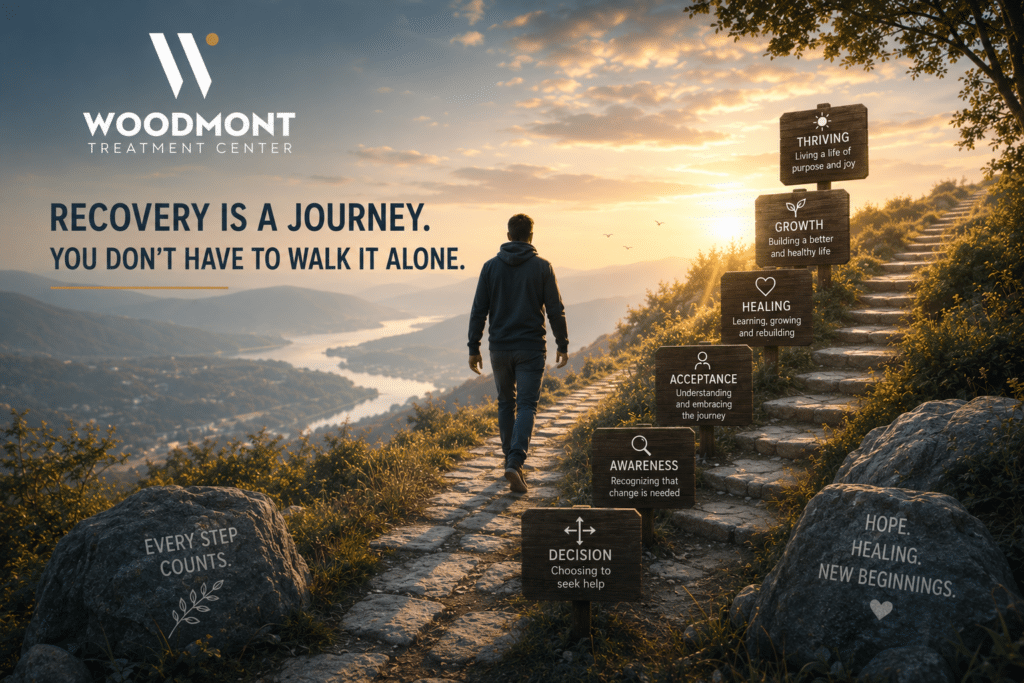
Stage Three: Early Recovery
Early recovery covers the first several months after formal treatment ends, when new habits are still fragile and old triggers are still close by.
This is often the hardest stretch, not the easiest. The structure of a treatment program is gone. Daily life, work, family, old routines, comes rushing back, often before someone feels fully ready for it.
Common features of this stage:
- Stepping down into intensive outpatient or standard outpatient care
- Attending support groups on a regular schedule
- Rebuilding routines around sleep, food, and exercise
- Navigating relationships that may have been damaged during active use
A real-world example: Someone finishes a 60-day inpatient program and returns to a house where old drinking buddies still stop by unannounced. Early recovery is where that specific, uncomfortable situation gets a plan, not avoided, planned for.
Not sure what level of ongoing support makes sense after inpatient care? Speak with the admissions team about aftercare options before treatment even ends.
Stage Four: Maintaining Recovery Long-Term
Maintaining recovery from addiction is an ongoing practice, not a status someone reaches and keeps permanently without effort.
People who sustain recovery for years typically keep a few things in place indefinitely:
- Regular connection to a support group or recovery community
- A relapse prevention plan that gets revisited, not filed away
- Honest relationships where struggles can be said out loud
- Continued attention to sleep, stress, and mental health
These stages of addiction recovery don’t have a clean end date. Some people check in with a therapist for years. Others lean more heavily on peer support. What matters is that something stays in place, because unattended recovery tends to erode quietly, long before anyone notices.
What Does the Full Addiction Recovery Timeline Look Like?
Timelines vary by person, but here’s a realistic shape for someone moving through the full continuum:
| Stage | Typical Length | Primary Focus |
| Detox | 3–14 days | Physical stabilization |
| Residential treatment | 30–90 days | Therapy, root-cause work |
| Early recovery | 3–12 months | Rebuilding routine, outpatient support |
| Long-term maintenance | Ongoing | Sustained support, relapse prevention |
Someone detoxing from opioids might move through the early stages faster than someone with a decade of alcohol dependence. The timeline bends to the person, not the other way around.
What Actually Marks a Recovery Milestone?
Addiction recovery milestones matter less as trophies and more as check-in points to see what’s working and what needs adjusting.
Common markers people track:
- 30 days: physical stabilization, early clarity returning
- 90 days: new routines starting to feel less forced
- 6 months: identity beginning to shift away from “someone in recovery” toward just living
- 1 year: often a meaningful marker, though far from an endpoint
None of these numbers guarantee anything on their own. Someone can hit a year and still be white-knuckling it, while someone else at 90 days has already built something solid. Milestones are useful for reflection, not for comparison against anyone else’s timeline.
What Woodmont Treatment Center Offers at Each Stage
Recovery works best when the level of care actually matches the stage someone is in. Woodmont Treatment Center, on a 10-acre campus in Newton, New Jersey, builds its programs around that continuum:
- Medical detox for physical stabilization, with 24/7 clinical support
- Residential inpatient care for the structured treatment phase, in semi-private en-suite accommodations
- Aftercare planning, including outpatient and sober living options, for early recovery and beyond
Care here is trauma-informed and evidence-based, built around the idea that treating the person matters as much as treating the addiction itself.
Start Your Recovery Journey with Compassionate Care
Every stage of addiction recovery comes with unique challenges, but you don’t have to face them alone. At Woodmont Treatment Center, we provide medically supervised detox, personalized treatment plans, evidence-based therapies, and long-term aftercare to help you build a healthier future. Whether you’re seeking support for yourself or a loved one, our team is here to guide you through every step of recovery.
Start Your Confidential AssessmentFAQ
How long does the full recovery process usually take?
It varies widely, but most people move through detox and residential treatment over one to three months, with early recovery continuing well past that.
Is relapse a normal part of the process?
It can be, though it isn’t guaranteed or required. If it happens, it doesn’t erase prior progress, it usually signals a plan needs adjusting.
What’s the difference between detox and rehab?
Detox manages physical withdrawal. Rehab addresses the behavior, thinking, and root causes behind the addiction. Most people need both, in sequence.
Do I have to complete inpatient treatment before outpatient care?
Not always. It depends on the severity of substance use and whether physical dependence is involved. An assessment determines the right starting point.
How do I know if I’m actually making progress?
Progress often looks like small, steady changes, better sleep, fewer cravings, more honest relationships, more than any single dramatic turning point.
Does insurance cover the different stages of treatment?
Often, yes, at least partially. Verifying insurance before starting confirms what’s actually covered at each stage.
What happens if someone struggles after completing treatment?
Aftercare exists for exactly this. Adjusting the plan, adding more support, or stepping back up in care are normal parts of long-term recovery.
Can family be involved throughout the process?
Yes, particularly during structured treatment and early recovery, when family therapy and communication rebuilding tend to matter most.
Is there a “right” amount of time to spend in each stage?
No fixed number. Length depends on the substance, the individual’s history, and how they’re responding to treatment at each point.
What makes long-term recovery actually stick?
Consistent, ongoing support tends to matter more than any single program. Recovery that ends abruptly at discharge is far more fragile than recovery that continues.
Starting the Journey in New Jersey
Moving from addiction to recovery isn’t about crossing one finish line. It’s a series of stages, each requiring something different, each building toward something more stable than the one before it.
Woodmont Treatment Center, in Newton, New Jersey, supports people through every one of these stages, from medical detox through long-term aftercare, with care built around the individual, not a fixed script.
If you’re ready to talk through where you or someone you love might be starting, contact Woodmont Treatment Center or call (866) 348-6434. The first conversation is confidential, and it’s often the point where the fog starts to clear.