





Objective: Give families a realistic picture of what addiction aftercare involves once a loved one leaves heroin treatment, so the transition home doesn’t feel like a second crisis.
Key Takeaways:
- Addiction aftercare is a structured plan, not a vague promise to “stay in touch”
- Relapse prevention works best when the whole family understands the warning signs, not just the person in recovery
- Communication strategies learned in family therapy often matter more than anything said in the first six months
- Emotional support has to flow in both directions, the client needs it, and so does everyone who stood by them
- Aftercare planning starts before discharge, not after
Nobody in a family signs up for heroin addiction. It shows up in a missed shift, a locked bedroom door, a phone call from a hospital nobody expected to make. By the time treatment starts, the person using it isn’t the only one who’s exhausted.
Recovery doesn’t end at discharge, and it was never supposed to be a solo project in the first place. Addiction aftercare is where the real work of staying sober, and staying connected as a family, actually happens.
This piece walks through what that looks like in practice, at Woodmont Treatment Center in Newton, New Jersey, and beyond.
Have questions about what comes after treatment? Call 1-866-348-6434, Woodmont’s admissions team can walk your family through it.
Why Heroin Addiction Is a Family Event, Not a Solo One
A parent covers for a missed rent payment. A sibling stops answering calls out of frustration. A spouse starts checking phones and pockets, not because they want to, but because trust ran out months ago. These patterns show up in nearly every family dealing with heroin addiction.
Treatment addresses the person using. It doesn’t automatically repair what happened to everyone around them. That repair takes its own process, usually starting with family therapy during residential care and continuing well past discharge.
Common Warning Signs Families Notice First
Before treatment even starts, families are often the first to catch the signs:
- Withdrawal from family gatherings or regular routines
- Sudden secrecy about money, whereabouts, or relationships
- Noticeable mood swings or irritability
- Physical signs like weight loss, needle marks, or constant fatigue
- Missed work, school, or financial obligations
Recognizing these early matters because families searching for heroin addiction treatment near Newton, Sussex County, or as far as Bergen and Morris counties are usually already seeing two or three of these at once.
What Addiction Aftercare Actually Includes
Addiction aftercare isn’t a single service. It’s a combination of supports built around what a specific person and family actually need. At Woodmont, that typically includes:
- Outpatient counseling sessions
- Support group access, including 12-step meetings
- Sober living arrangements for those who need a structured transition
- Ongoing family therapy
- Relapse prevention planning
- Career and educational support
- Health and wellness resources
None of these run in isolation. A client stepping down from residential care might attend outpatient sessions twice a week while also living in a sober home and checking in with a support group. The combination matters more than any single piece.
How Aftercare Planning Works at Woodmont
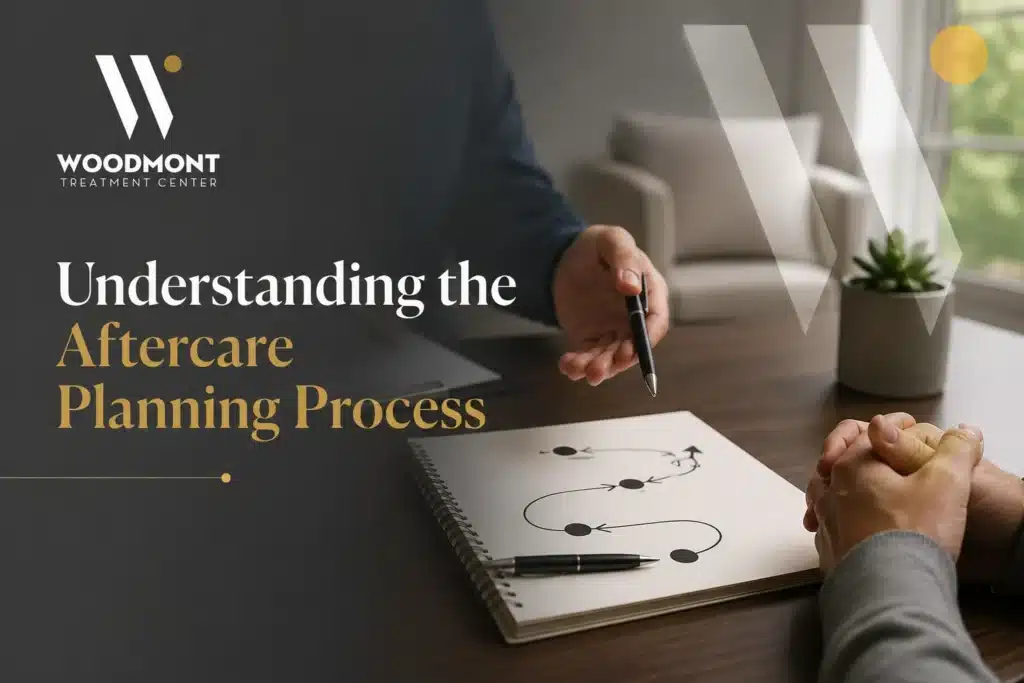
Aftercare planning doesn’t start on someone’s last day of treatment. It starts near the beginning, once the clinical team has a clear picture of what triggers relapse for that individual and what kind of support system is waiting for them at home.
Here’s the general sequence:
- Early assessment. During residential treatment, counselors identify specific relapse risks: certain relationships, environments, or stressors.
- Family involvement. Family therapy sessions start well before discharge, so communication patterns can improve while the person is still in a controlled setting.
- Step-down planning. The team recommends a next level of care, whether that’s outpatient treatment, intensive outpatient, or sober living.
- Resource handoff. Support group contacts, outpatient scheduling, and relapse prevention tools get finalized before the client leaves.
- Check-ins. Woodmont’s alumni and aftercare program includes ongoing contact after discharge, not a single goodbye conversation.
For a closer look at how the process starts on day one, see what to expect during admission to a heroin treatment center.
Communication Strategies That Rebuild Trust
Families often default to two extremes after treatment: walking on eggshells, or interrogating every move. Neither works long-term.
What Actually Works in Practice
Family therapy at Woodmont focuses on communication strategies that hold up outside a clinical setting:
- Naming a concern without accusing (“I noticed you seemed off today” instead of “Are you using again?”)
- Setting boundaries clearly, once, without repeating them as threats
- Separating the person from the behavior in conversation
- Scheduling regular check-ins instead of only talking during a crisis
A mother who used to search her son’s room every time he came home late learned, through family sessions, to ask him directly instead. It didn’t fix everything overnight. It did stop the relationship from feeling like surveillance.
Relapse Prevention: What Families Can Actually Do
Relapse prevention isn’t only the client’s job. Families play a real role, and it’s usually smaller and more specific than they expect.
What actually helps:
- Learning the person’s specific triggers, not generic ones
- Agreeing on a plan before a crisis happens, not during one
- Knowing the warning signs listed above and taking them seriously the second time, not just the first
- Having a direct line to the treatment center or a sponsor, not waiting to “see if it gets worse”
What doesn’t help: constant monitoring, ultimatums delivered in anger, or pretending the risk isn’t there. Relapse prevention works better as an ongoing conversation than a one-time warning.
Worried about a loved one’s risk of relapse? Reach out to Woodmont’s team for guidance, even outside of active treatment.
Emotional Support for the Person in Recovery and Everyone Around Them
Emotional support gets framed as something the person in recovery needs. That’s true, but incomplete. Spouses, parents, and siblings carry their own weight after months or years of addiction in the family, and that doesn’t disappear once someone completes treatment.
Woodmont’s dual-diagnosis and family programs address both sides. The client works through the psychological roots of addiction. Family members get space, often through their own therapy or support groups like Al-Anon, to process what they went through too.
Skipping this step is common, and it’s one of the fastest ways a family ends up right back in crisis mode. Recovery holds up better when everyone involved has somewhere to put their own stress.
Aftercare Options Compared
| Aftercare Option | Best For | Family Involvement | Typical Duration |
| Outpatient Counseling | Stable home environment, lower relapse risk | Moderate; scheduled family sessions | Ongoing, several weeks minimum |
| Intensive Outpatient (IOP) | Needs more structure than weekly therapy | Moderate to high | 8 to 12 weeks typical |
| Sober Living | Transitioning from residential care, unstable home environment | Lower during stay, higher after | Varies by individual |
| Ongoing Family Therapy | Rebuilding trust and communication | High; core focus | Often 6+ months |
Most clients use more than one of these at the same time. A person in sober living, for example, might also attend outpatient sessions and join weekly family therapy calls.
Who’s Typically Involved at Each Stage
| Stage | Client’s Role | Family’s Role |
| During residential treatment | Individual and group therapy | Family therapy sessions, education |
| First 30 days post-discharge | Outpatient sessions, support groups | Regular check-ins, boundary-setting |
| 3-6 months out | Ongoing counseling, sober living if needed | Al-Anon or similar support, continued family therapy |
FAQs
How long does addiction aftercare typically last?
There’s no fixed endpoint. Many people stay connected to some form of aftercare, whether it’s outpatient sessions or support groups, for a year or longer.
Does insurance cover aftercare planning?
Most major commercial plans cover outpatient counseling and family therapy. Insurance verification happens before discharge so families know what’s covered.
What if my loved one relapses after treatment?
Relapse doesn’t mean treatment failed. It usually means the aftercare plan needs adjusting. Contact the treatment center immediately rather than waiting to see what happens.
Can the whole family participate in aftercare, or just the person in recovery?
Family involvement is actively encouraged. Family therapy, education sessions, and support groups like Al-Anon are part of a complete aftercare plan.
How do we start aftercare planning before our loved one even finishes treatment?
Ask about it during the admissions process. At Woodmont, aftercare planning begins early in residential treatment, not at the last minute.
Is there an addiction aftercare program near Newton or Sussex County?
Yes. Woodmont Treatment Center is based in Newton, NJ, and serves families across Sussex, Morris, Passaic, and Bergen counties, with outpatient and aftercare options available close to home.
What are the warning signs that someone might be heading toward relapse?
Watch for withdrawal from family activities, secrecy about whereabouts, sudden mood changes, or a drop-off in attending aftercare sessions. These often show up weeks before an actual relapse.
Does aftercare include support for family members, not just the client?
Yes. Family therapy and referrals to groups like Al-Anon are built into Woodmont’s aftercare planning, since recovery affects the whole household.
What’s the difference between outpatient treatment and sober living as aftercare?
Outpatient counseling means living at home and attending scheduled sessions. Sober living provides structured, substance-free housing for those who need more support during the transition.
Who do we call if we’re not sure what level of aftercare our loved one needs?
Woodmont’s admissions and clinical team can assess this directly. Call 1-866-348-6434 for a confidential conversation, even if treatment already ended somewhere else.
Conclusion
Addiction doesn’t stay contained to one person, and recovery doesn’t either. The family that showed up exhausted at the start of treatment is the same family that has to relearn how to trust, communicate, and support each other once treatment ends. That’s the harder, longer part, and it’s exactly what addiction aftercare is built for.
Woodmont Treatment Center’s aftercare planning starts before discharge and stays in place well after, with family therapy, relapse prevention, and ongoing support built into the process from day one. If your family is somewhere in the middle of this, whether you’re near Newton, Sussex County, or anywhere else in northern New Jersey, call 1-866-348-6434 for a confidential conversation about what aftercare could look like for your specific situation.
Build a Strong Recovery With Addiction Aftercare
Recovery continues long after treatment ends. At Woodmont Treatment Center, our addiction aftercare program provides personalized aftercare planning, family therapy, relapse prevention strategies, and ongoing support to help individuals and their loved ones move forward with confidence and lasting stability.
Start Your Confidential Assessment