





What You Need to Know About Drug and Alcohol Detox in Essex County NJ
Drug and alcohol detox in Essex County NJ is the critical first step toward recovery — and knowing what to expect can make all the difference.
Here are the 5 most important things to know before you start:
- Medical supervision is not optional — quitting cold turkey can be life-threatening for alcohol, opioids, and benzodiazepines
- Detox typically lasts 3–7 days, depending on the substance and how long you’ve been using
- Multiple levels of care exist — inpatient, outpatient, and residential programs are all available in Essex County
- Most insurance plans cover detox, including Medicaid, Medicare, and private insurance
- Detox is just the beginning — a full recovery plan includes therapy, rehab, and aftercare support
Essex County is facing a serious addiction crisis. In 2018 alone, the county recorded 1,096 overdose deaths — with heroin involved in 44% of cases. Over 643 people sought emergency care for opioid-related issues in just the first half of 2019. More recently, 2023 saw 447 suspected overdose deaths in the county, nearly four times the number recorded a decade earlier.
If you or someone you love is struggling, you are not alone — and effective, safe help is available close to home.
1. Medical Supervision is Essential for Safety
When we talk about Drug and alcohol detox in Essex County NJ, the word “safety” isn’t just a buzzword—it is the entire point of the process. Many people believe they can simply “tough it out” at home or “white-knuckle” their way through withdrawal. We cannot stress this enough: quitting certain substances cold turkey is not just difficult; it can be fatal.

The Dangers of “Cold Turkey”
For substances like alcohol and benzodiazepines (Xanax, Valium, etc.), the brain becomes physically dependent on the drug to function. When you suddenly stop, the central nervous system goes into overdrive. This can lead to:
- Grand Mal Seizures: These can occur without warning and can lead to permanent injury or death.
- Delirium Tremens (DTs): A severe form of alcohol withdrawal that involves shaking, confusion, high blood pressure, fever, and hallucinations. These typically begin 2 to 5 days after the last drink.
- Cardiac Distress: Extreme fluctuations in heart rate and blood pressure can lead to heart failure or stroke.
Common Withdrawal Symptoms
Even if the symptoms aren’t life-threatening, they are often so painful that they drive a person straight back to the substance just to make the pain stop. This is why medical supervision is so vital. In a professional setting, we monitor your vital signs 24/7. Common symptoms managed during detox include:
- Physical: Tremors, nausea, vomiting, sweating, and intense muscle aches.
- Psychological: Severe anxiety, depression, insomnia, and suicidal ideation.
- Neurological: Confusion, agitation, and sensory disturbances.
By choosing a medically supervised program, you aren’t just staying safe—you’re staying comfortable. Medications can be administered to mitigate these symptoms, ensuring that the process is humane and manageable.
2. Understanding the Process of Drug and Alcohol detox in Essex County NJ
Detox is not a one-size-fits-all event. It is a highly individualized clinical process designed to clear toxins from your body while stabilizing your physical and mental health.
The Detox Timeline
The duration of detox varies based on the substance used, the length of the addiction, and your overall health. On average, a medically assisted detox lasts between 3 and 7 days, though some substances require a longer tapering period.
| Substance | Typical Detox Duration | Primary Withdrawal Management |
|---|---|---|
| Alcohol | 3–7 Days | Benzodiazepines, Anti-seizure meds, Hydration |
| Opioids | 4 Days – 2 Weeks | Buprenorphine, Methadone, Clonidine |
| Benzos | Weeks – Months | Gradual weaning/tapering protocols |
| Stimulants | 3–5 Days | Sleep support, Mood stabilizers, Monitoring |
Medication-Assisted Treatment (MAT)
Modern medicine has revolutionized how we handle Drug and alcohol detox in Essex County NJ. We use FDA-approved medications to “trick” the brain into thinking it is still receiving the substance, which prevents the “crash” of withdrawal.
- For Opioids: Medications like Buprenorphine or Methadone reduce cravings and prevent the “bone-breaking” pain of withdrawal without producing a “high.”
- For Alcohol: Medications are used to prevent seizures and manage the symptoms of DTs.
- For Benzodiazepines: We often use a slow-taper method, gradually reducing the dose over time to allow the brain to adjust safely.
Throughout this process, our medical team performs constant vital sign monitoring. We check your heart rate, blood pressure, and oxygen levels to ensure your body is responding well to the treatment. You can learn more about these comprehensive detox services and how they set the stage for long-term health.
3. Levels of Care and Specialized Programs
Once you’ve decided to seek help, you’ll find that Essex County offers a variety of environments for recovery. Choosing the right “level of care” is about matching the intensity of the treatment to the severity of the addiction.
Inpatient and Residential Detox
For most people, inpatient detox is the gold standard. It provides a controlled, drug-free environment where you are removed from the triggers of your daily life. Residential care offers 24-hour nursing and clinical support, which is particularly important for those with a high risk of severe withdrawal or those who have relapsed in the past.
Outpatient Detox Programs
In some cases, individuals with mild-to-moderate withdrawal symptoms and a very strong support system at home may opt for outpatient detox. This involves daily check-ins for medication and counseling while allowing the person to return home at night. However, this is generally only recommended when the risk of complications is low.
Dual Diagnosis and Co-Occurring Disorders
It is estimated that over half of the people struggling with substance abuse also have a mental health disorder, such as depression, anxiety, or PTSD. This is known as a dual diagnosis.
In Essex County, specialized programs address both issues simultaneously. If you only treat the addiction but ignore the underlying trauma or depression, the risk of relapse is much higher. We focus on “whole-person” healing to ensure that the mind is as healthy as the body.
Specialized Services
We recognize that different groups face unique challenges in recovery. Many facilities in the area offer specialized tracks:
- Veterans: Programs that address combat-related PTSD and the specific culture of military service.
- Young Adults: Focus on peer pressure, social media, and building a life foundation.
- Gender-Specific Care: Men’s and women’s programs that allow for more vulnerable, honest communication in a safe space.
How to Choose the Right Drug and Alcohol detox in Essex County NJ
When searching for a facility, don’t be afraid to ask tough questions. We recommend looking for the following:
- Accreditation: Look for the Joint Commission Gold Seal or SAMHSA certification.
- Clinical Staff Qualifications: Are there board-certified doctors and licensed nurses on-site 24/7?
- Personalized Treatment Plans: Avoid “cookie-cutter” programs. Your plan should be tailored to your specific history.
- Facility Amenities: Recovery is hard work; having a comfortable, luxury environment can reduce stress and help you focus on healing.
- Location: Sometimes, traveling slightly outside your immediate neighborhood—to places like Newton or Sussex County—can provide the necessary distance from local triggers while remaining close enough for family involvement.
4. Insurance, Costs, and Aftercare Planning
The biggest hurdle for many families is the question: “How are we going to pay for this?” The good news is that addiction treatment is now recognized as an essential health benefit.
Insurance Coverage
Most private insurance plans (such as Amerihealth, Magellan, and others) are required by law to cover substance abuse treatment. In Essex County, many facilities also accept:
- Medicaid and Medicare: Providing access to those with limited income or seniors.
- TRICARE: For military members and their families.
- Sliding Scale Fees: Some non-profit organizations offer fees based on what you can afford to pay.
Before you commit, it is vital to verify your insurance coverage so you understand exactly what your out-of-pocket costs might be.
Transitioning to Aftercare
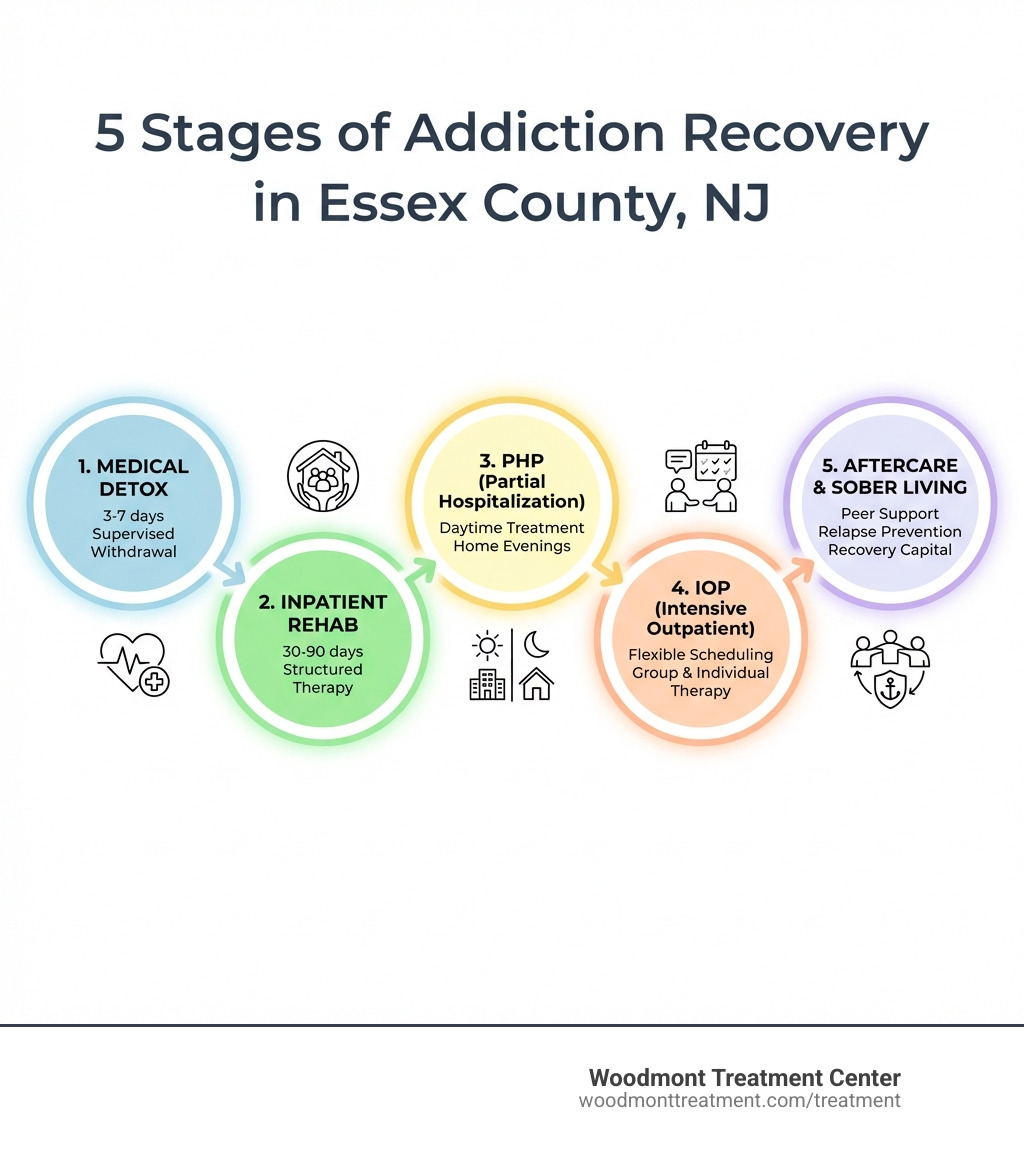
Detox is the “clearing of the slate,” but it is not the cure. To stay sober, you need a plan for what happens on day 8 and beyond.
- Partial Hospitalization Program (PHP): A high level of care where you spend the day in treatment but go home or to a sober living house at night.
- Intensive Outpatient Program (IOP): Flexible scheduling that allows you to return to work or school while attending group therapy 3–5 times a week.
- Sober Living: Group homes that provide a drug-free environment and peer accountability.
Success Rates for Drug and Alcohol detox in Essex County NJ
Success in recovery is often measured by “recovery capital”—the internal and external resources you have to stay sober. This includes stable housing, a supportive family, and a strong peer network (like AA, NA, or SMART Recovery).
Statistically, individuals who complete a full continuum of care (detox followed by rehab and aftercare) have significantly higher long-term sobriety rates than those who only complete detox. Long-term addiction treatment addresses the physical, psychological, and social consequences of the disease, rather than just the immediate physical dependence.
Frequently Asked Questions about Addiction Recovery
How long does the detox process typically last?
While the average is 5–7 days, it is entirely dependent on individual factors. If you have been using high doses of alcohol or benzodiazepines for years, your medical team may recommend a longer, slower taper to prevent seizures. Conversely, a stimulant detox may be shorter but require more psychological support for the “crash.”
Does insurance cover the cost of detox in New Jersey?
Yes. Thanks to the Affordable Care Act and mental health parity laws, most insurance providers cover detox. Some plans cover 100% of the cost, while others may require a co-pay or deductible. We always recommend getting a professional insurance verification before starting.
What happens immediately after detox is completed?
The moment detox ends is the most vulnerable time for a person in recovery. Cravings are often high, and the “protective” fog of the substance is gone. Ideally, you will transition directly into a residential rehab or a PHP program. This transition involves behavioral therapy, individual counseling, and the development of a relapse prevention plan.
Can I do detox at home if I have a nurse friend?
We strongly advise against this. Even with a medical professional present, a home environment lacks the emergency equipment and specialized medications found in a clinical detox center. If a seizure or cardiac event occurs, every second counts.
Will I lose my job if I go to detox?
In many cases, the Americans with Disabilities Act (ADA) and the Family and Medical Leave Act (FMLA) protect your employment while you seek treatment for a substance use disorder. It is often better to seek help now than to wait until the addiction causes a workplace incident that leads to termination.
Conclusion
Taking the first step toward Drug and alcohol detox in Essex County NJ is a brave decision. It is the moment you stop letting a substance run your life and start reclaiming your future.
At Woodmont Treatment Center, we believe that recovery should be as comfortable and dignified as possible. We provide evidence-based, holistic care in a luxurious New Jersey setting that feels more like a home than a hospital. From the initial medical detox to residential treatment and aftercare, we are here to support you every step of the way.
Our team is ready to help you navigate the complexities of insurance, medical stabilization, and long-term planning. You don’t have to do this alone. If you’re ready to start your journey, you can begin the admissions process today. Your new life is waiting—let’s go get it.