





Why Alcohol Rehab in Essex County Is More Urgent Than Ever
Alcohol Rehab in Essex County is one of the most important steps a struggling New Jersey resident can take — and if you need help now, here’s what you should know right away:
Quick answers for people seeking help:
- Where to start: Call a local treatment center or helpline to get a free assessment and insurance verification
- Types of programs available: Medical detox, inpatient/residential, PHP, IOP, and outpatient care
- Cost range: Detox ($240–$850), outpatient ($1,450–$10,000/month), residential ($5,100–$80,000)
- Insurance accepted: Medicaid, Medicare, Aetna, Cigna, Horizon Blue Cross, and most private plans
- Who to call for a crisis: Dial 988 for the mental health and crisis lifeline
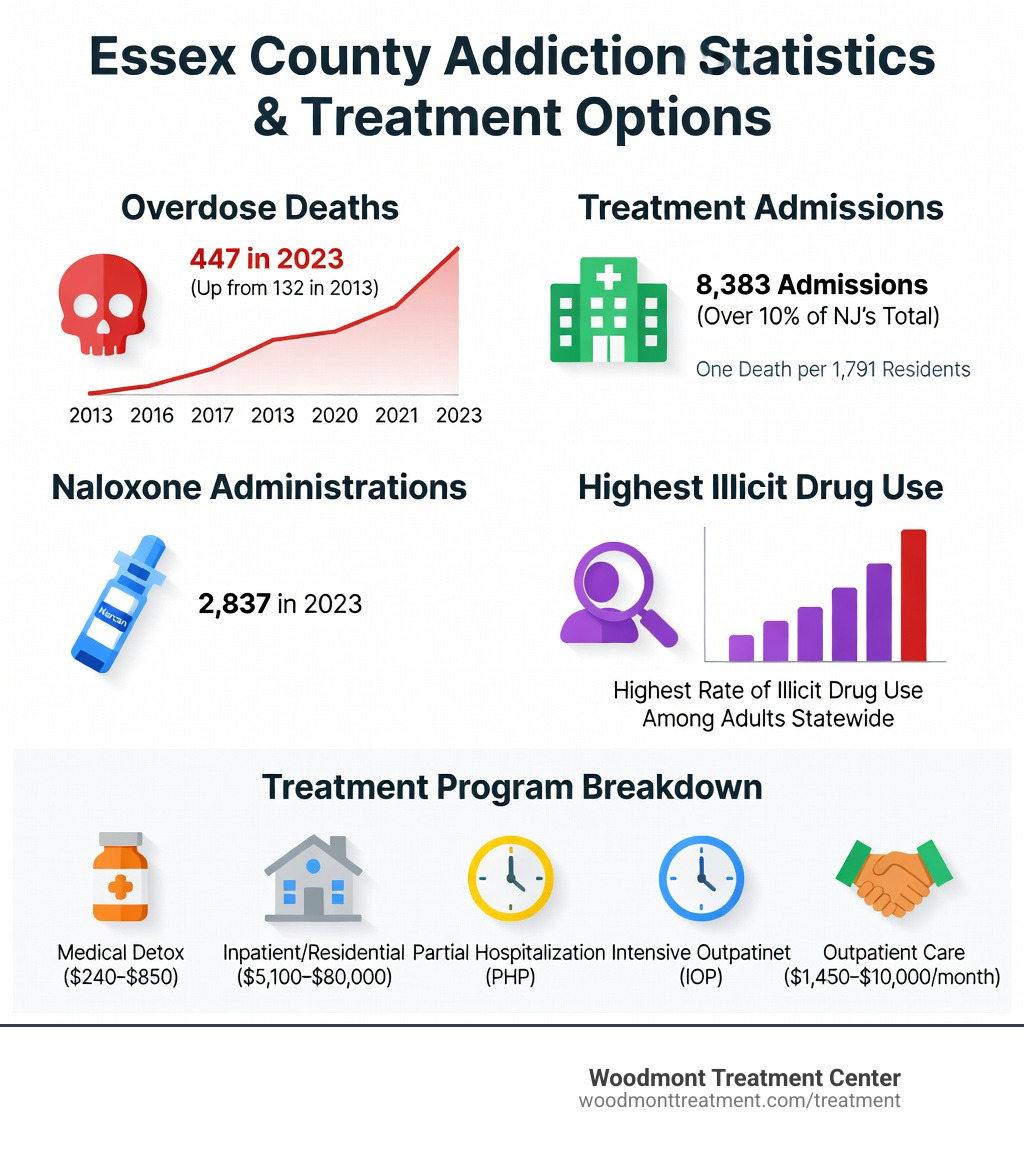
Essex County, NJ has a serious and growing substance use problem. In 2023 alone, the county recorded 447 suspected overdose deaths — more than triple the 132 deaths reported in 2013. Essex County also accounts for over 10% of all substance abuse treatment admissions in New Jersey, despite being just one of 21 counties.
Alcohol addiction doesn’t happen in isolation. Many people in Essex County are also dealing with anxiety, depression, trauma, or other mental health challenges that make recovery harder without professional support.
The good news? Essex County has a growing network of treatment options — from medically supervised detox to long-term outpatient care — designed to meet people exactly where they are.
This article walks through five convincing reasons why getting professional alcohol rehab in Essex County could be the most important decision you make.
*Alcohol Rehab in Essex County * vocab explained:
- Drug and Alcohol Detox Morris County New Jersey
- Drug and Alcohol Detox in Warren County NJ
- alcohol rehab in warren county nj
1. Addressing the Rising Local Addiction Crisis
When we look at the numbers for Essex County, they tell a story that is both heartbreaking and a call to action. We aren’t just looking at statistics; we are looking at our neighbors in Newark, East Orange, and Montclair. In 2020, Essex County residents accounted for 8,383 of New Jersey’s substance abuse treatment admissions. That is more than 10% of the entire state’s admissions coming from right here in our backyard.
The crisis is visible in the emergency response data as well. In 2023, there were 2,837 naloxone administrations recorded in the county. While naloxone is primarily used for opioid overdoses, it highlights a critical trend: polydrug use. Many residents struggling with alcohol are also facing challenges with opioids or cocaine, making the need for comprehensive Alcohol Rehab in Essex County even more vital.
The illicit drug use rate among adults in Essex County is the highest in the state. This environment can make it incredibly difficult to maintain sobriety without a structured intervention. Whether you are navigating the busy streets of Newark or the quieter suburbs of Montclair, the availability of alcohol and the prevalence of co-occurring substance use create a “perfect storm” for addiction.
Local government initiatives, such as the Substance Abuse Treatment Program in East Orange, work hard to provide culturally sensitive care, but the sheer volume of those in need means that private, high-quality facilities like ours are essential to bridge the gap. Choosing rehab locally means you are fighting back against a crisis that has affected one out of every 1,791 people in the county through overdose deaths. It’s about reclaiming your life in the same place you lost it.

2. Access to a Full Continuum of Care
One of the biggest misconceptions about recovery is that it’s just a “stay in a building for 30 days and you’re cured” situation. Real recovery requires a continuum of care—a series of steps that guide you from the dangerous initial days of quitting through to a lifetime of sobriety.
In Essex County, we offer access to every level of that journey:
- Medical Detox: This is the first and most critical step. Withdrawing from alcohol can be medically dangerous, involving seizures or delirium tremens (DTs). Professional detox provides 24/7 medical supervision to keep you safe and comfortable.
- Residential/Inpatient Rehab: This involves living at a facility where the focus is entirely on healing. It removes you from the triggers of your daily life in Essex County and provides a structured environment for intensive therapy.
- Partial Hospitalization Program (PHP): Think of this as “day treatment.” You spend the majority of your day in clinical care but return home or to a sober living environment in the evening.
- Intensive Outpatient Program (IOP): This is designed for those who need significant support but also have responsibilities like work or school. SAMHSA defines this as at least 9 hours of therapy per week.
- Outpatient Care: This is the most flexible level, involving weekly therapy sessions to maintain the progress you’ve made.
You can find more info about treatment levels to see which path aligns best with your current situation. The goal is stabilization first, followed by deep psychological work, and finally, a transition back into the community with a strong support plan.
Specialized Alcohol Rehab in Essex County Programs
We believe that treatment should be as unique as the person receiving it. A “one-size-fits-all” approach rarely works for long-term sobriety. That’s why specialized programs are so important. In the Essex and Bergen County areas, you can find resources tailored to specific life experiences.
For example, veterans and first responders often face unique traumas that require a specialized clinical approach. Similarly, the LGBTQ+ community and young adults have specific social and psychological needs that must be addressed for treatment to be effective. If you are looking for specific providers or therapists who specialize in these areas, the Psychology Today Essex Resources directory is a great place to start your search. We focus on dual diagnosis, ensuring that if you have a co-occurring mental health disorder like PTSD or depression, it is treated alongside the addiction.
3. Evidence-Based Therapies for Long-Term Success
Why does professional rehab work better than trying to quit “cold turkey” at home? The answer lies in evidence-based therapies. These are treatments that have been scientifically tested and proven to help people change their behavior and heal their brains.
In our programs, we utilize several key modalities:
- Cognitive Behavioral Therapy (CBT): This helps you identify the “stinking thinking”—the negative thought patterns that lead to the urge to drink.
- Dialectical Behavior Therapy (DBT): This focuses on emotional regulation and distress tolerance. It’s about learning how to handle a bad day without reaching for a bottle.
- Medication-Assisted Treatment (MAT): Medications like Naltrexone or Vivitrol can be used to reduce cravings and prevent relapse, especially in the early stages of recovery.
- EMDR (Eye Movement Desensitization and Reprocessing): This is a powerful tool for processing trauma, which is often at the root of alcohol dependency.
| Therapy Type | Primary Focus | Best For… |
|---|---|---|
| CBT | Changing negative thought patterns | Identifying triggers and building coping skills |
| DBT | Emotional regulation and mindfulness | Handling intense emotions and relationship stress |
| MAT | Physiological support via medication | Reducing physical cravings and withdrawal |
| Family Therapy | Repairing relationships | Building a supportive home environment |
Psychiatric evaluations and consistent medication monitoring are also part of the process. We don’t just want to stop the drinking; we want to help you achieve a “wellness equilibrium” where your mind and body are in balance.
Innovative Treatments in Alcohol Rehab in Essex County
While the clinical “talk therapy” is the backbone of rehab, we also incorporate holistic care to treat the whole person. Recovery isn’t just about the brain; it’s about the soul and the body.
Innovative treatments often include:
- Yoga and Mindfulness: To help you reconnect with your body and reduce stress.
- Equine Therapy: Working with horses to build trust and emotional awareness.
- Vocational Rehab: Helping you build the life skills and “recovery capital” needed to find employment and stability after treatment.
- Nutritional Support: Alcohol depletes the body of essential nutrients; we help you rebuild your physical health from the inside out.
4. Navigating Costs and Insurance Coverage
We know that the first question most people ask—after “Can you help me?”—is “How much will this cost?” It’s a valid concern. The cost of Alcohol Rehab in Essex County can vary wildly depending on the level of care.
As mentioned in the intro, a week of detox might cost a few hundred dollars, while a luxury residential stay can reach significant amounts. However, the cost of not going to rehab—lost jobs, legal fees, medical bills from liver failure or accidents—is always higher.
The good news is that under the Affordable Care Act, insurance companies are required to treat addiction and mental health services as “essential health benefits.” This means they must cover them in a similar way to how they cover surgery or diabetes treatment.
We work with a wide range of providers, including:
- Aetna
- Cigna
- Horizon Blue Cross Blue Shield
- UnitedHealthcare
- Amerihealth
If you aren’t sure what your policy covers, you can verify your insurance coverage through our secure online tool. For those without private insurance, there are other options like Medicaid, Medicare, and facilities that offer a sliding fee scale based on your income. We believe that financial barriers should never be the reason someone stays trapped in addiction.
5. Strong Local Support and Aftercare Networks
Rehab is the beginning, not the end. The real test starts when you return to your daily life in Essex County. This is where a strong aftercare network becomes your safety net.
Essex County has a vibrant recovery community. There are hundreds of AA and NA meetings every week in Newark, Montclair, and surrounding towns. If the traditional 12-step model isn’t for you, SMART Recovery offers a secular, science-based alternative.
One of the best things about recovering in this area is the access to “sober fun.” Relearning how to enjoy life without a drink is crucial. You might spend a Saturday morning hiking at Eagle Rock Reservation, taking in the views of the New York City skyline, or visiting the Turtle Back Zoo. These local landmarks provide a beautiful backdrop for your new, sober life.
For more structured support, the Sussex County Recovery Community Center and similar local hubs offer peer support, workshops, and a place to connect with others who truly understand what you’re going through. We also emphasize alumni services, keeping you connected to the people you met during your time in treatment.
Preparing for Alcohol Rehab in Essex County Admission
Taking the leap to enter rehab can feel overwhelming, but the process is designed to be as smooth as possible. When you call us, the first step is a confidential intake assessment. We’ll talk about your history, your health, and your goals.
Next, you’ll likely have a facility tour (either in person or virtually) to see where you’ll be staying. If you are entering detox, we will explain exactly what to expect so there are no surprises.
What to pack for rehab:
- Comfortable, modest clothing for about 7-10 days.
- Unopened toiletries (no alcohol-based mouthwash!).
- A list of current medications.
- A few meaningful photos of loved ones.
- A notebook or journal.
Your privacy is protected by HIPAA, and your job may be protected by the Family and Medical Leave Act (FMLA). You are taking a medical leave for a chronic illness, and you have rights. You can start the admissions process today and take that first brave step toward a better tomorrow.
Frequently Asked Questions about Alcohol Rehab
What are the signs that I need professional alcohol rehab?
If you’ve ever felt you should cut down on your drinking, or if people have annoyed you by criticizing your drinking, those are major red flags. Specific signs include physical withdrawal symptoms (shaking, sweating, nausea) when you stop, neglecting your work or family responsibilities, and needing to drink more and more to get the same effect. In Essex County, if your drinking is interfering with your ability to navigate your life safely—whether that’s your job in the city or your relationships at home—it’s time to seek help.
Is outpatient rehab as effective as inpatient treatment?
It depends on the individual. For someone with a long history of heavy drinking and a high risk of dangerous withdrawal, inpatient treatment is medically necessary. However, for many working professionals or parents in Essex County, an Intensive Outpatient Program (IOP) can be incredibly effective. It allows you to practice your new coping skills in the “real world” while still receiving hours of clinical support every week. The best program is the one that fits your medical needs and that you will actually stick with.
What emergency services are available for alcohol crisis in Essex County?
If you or a loved one is experiencing a life-threatening emergency, such as an overdose or severe withdrawal seizures, call 911 immediately or go to the nearest emergency room (such as those at University Hospital in Newark or Mountainside Medical Center). For a mental health or addiction crisis that isn’t immediately life-threatening, dial 988 to reach the national crisis lifeline. There are also mobile crisis units in Essex County that can provide immediate stabilization and referrals.
Conclusion
Recovery is a journey that requires courage, but you don’t have to walk the path alone. At Woodmont Treatment Center, we provide a personalized, holistic approach to addiction recovery in a luxurious New Jersey setting. We combine the best of evidence-based clinical care with the warmth and support of a community that truly cares about your success.
Whether you are looking for detox, residential care, or a flexible outpatient program, we are here to help you navigate the complexities of Alcohol Rehab in Essex County. Your struggle with alcohol doesn’t define you; your decision to seek help does. Explore our alcohol treatment programs today and see how we can help you build the sober, fulfilling life you deserve.