





When You’re Ready to Stop: Finding the Right New Jersey Detox Facility
If you’re looking for a new jersey detox facility, here are the most important things to know right now:
Quick answers for those in need:
- What is medical detox? A clinically supervised process to safely manage withdrawal symptoms in a comfortable, residential setting, typically lasting 3-7 days.
- Who needs it? Anyone stopping alcohol, opioids, benzodiazepines, or other substances where withdrawal can be dangerous.
- What does it cost? Most major insurers — including Aetna, Blue Cross Blue Shield, Cigna, and United Healthcare — cover detox treatment.
- How do I start? Call a facility directly for a confidential assessment and free insurance verification.
New Jersey has over 552 alcohol and drug rehab centers across the state. According to the Substance Abuse and Mental Health Services Administration (SAMHSA), the process of recovery is a journey of change through which individuals improve their health and wellness, live a self-directed life, and strive to reach their full potential. That’s a lot of options — and when you’re in crisis, too many choices can feel paralyzing.
You might be dealing with withdrawal symptoms right now. Or watching someone you love slip further away. Either way, the decision to seek help is one of the most courageous things a person can make. This is the beginning of your therapeutic alliance with a team dedicated to your safety.
But finding the right facility matters. Not every detox program offers the same level of care, compassion, or clinical expertise. The difference between a program that truly fits your needs and one that doesn’t can shape your entire recovery journey. In the Garden State, resources are plentiful, but the quality of the healing journey depends on the environment you choose.
This guide is designed to cut through the noise. We’ll walk you through what medical detox actually looks like, what to expect from a quality program, how to navigate insurance, and how to find care that feels like a real fit — especially if you’re in Northern New Jersey.
Woodmont Treatment Center, located in the heart of Sussex and Warren County, offers a warm, non-hospital setting where recovery begins in a place that actually feels safe. We believe that the environment is a crucial component of the clinical process. For Sussex and Warren County residents, Woodmont provides the local, boutique care you need to start your journey today.
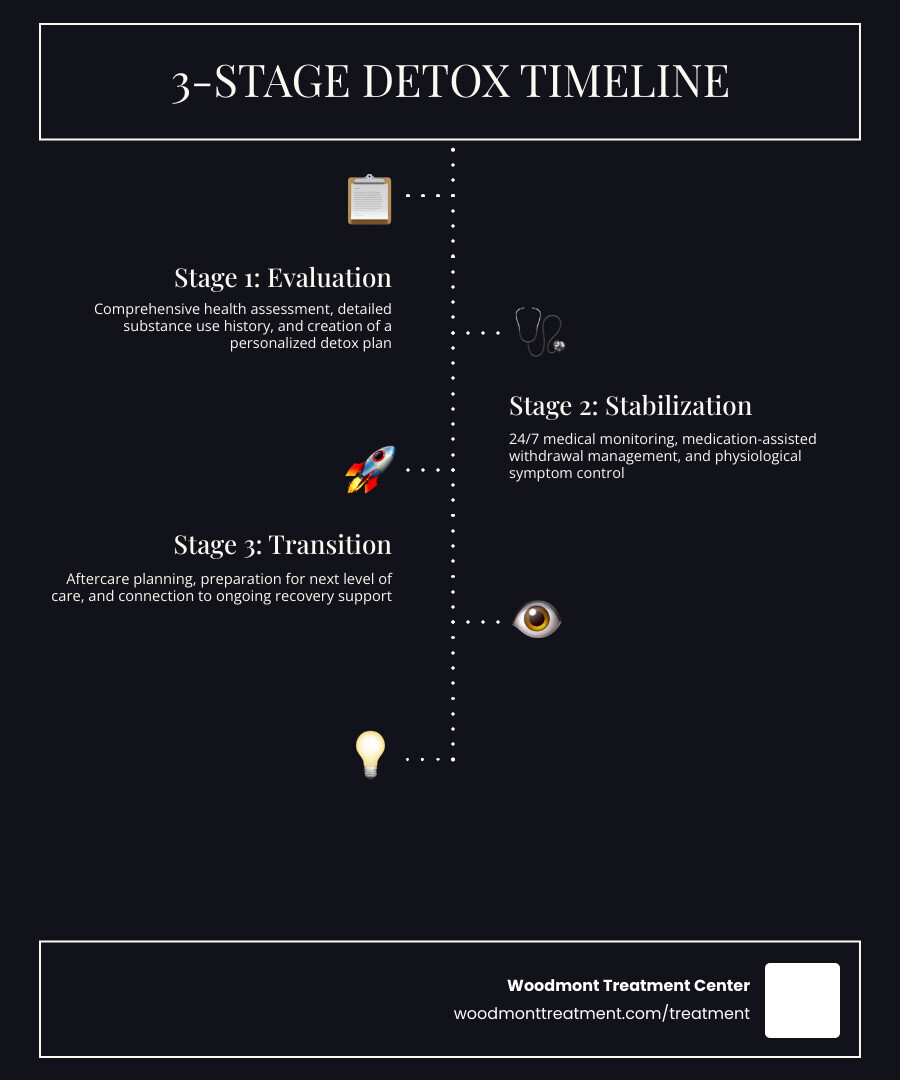
The 3-Stage Detox Timeline
- Evaluation: Upon arrival, our clinical team performs a comprehensive health assessment. This includes a review of substance history, co-occurring mental health concerns, and physical health markers to create a personalized roadmap.
- Stabilization: This is the core of the detox process. Through clinical and psychological support, we help the body clear substances while managing withdrawal symptoms with compassion and clinical precision in a home-like environment.
- Transition: As physical stability is achieved, we prepare you for the next phase of treatment, ensuring there is no gap in your care.
Understanding the Role of a New Jersey Detox Facility in Recovery
When we talk about a new jersey detox facility, we are talking about the essential first step in the journey toward sustainable sobriety. Detoxification is the physiological process of clearing substances from the body. While it sounds straightforward, it is a complex medical event that requires expert withdrawal management to ensure safety. According to the National Institute on Drug Abuse (NIDA), detoxification is a process that helps the body rid itself of drugs while managing the symptoms of withdrawal; however, it is often just the first step in a long-term treatment plan.
In New Jersey, where there are hundreds of rehab centers, the primary goal of a high-quality detox program is medical stabilization. This isn’t just about “getting clean”; it’s about managing the physical and psychological distress that occurs when the body tries to recalibrate without the presence of drugs or alcohol. By choosing to Explore Woodmont Treatment Center’s Comprehensive Approach, you are choosing a path that prioritizes your safety through 24/7 clinical supervision and advanced addiction medicine.
The Importance of a Specialized New Jersey Detox Facility
Why can’t you just do this at home? It’s a question we hear often. The reality is that “cold turkey” withdrawal can be more than just uncomfortable—it can be life-threatening. A specialized new jersey detox facility provides a therapeutic foundation that a home setting simply cannot offer.
Clinical expertise allows for a personalized care plan that addresses your specific history with substance use. Whether you are dealing with long-term dependency or a recent relapse, having a team of licensed professionals by your side ensures that every symptom is monitored and managed. You can find More info about treatment services that highlight how a clinical environment bridges the gap between active use and long-term recovery, providing the physiological stabilization necessary to engage in deeper therapeutic work.
Addressing Specific Substances
Different substances interact with the brain and body in unique ways, meaning the detox process must be tailored to the drug of choice.
- Alcohol Withdrawal: Alcohol is one of the most dangerous substances to detox from without medical help. Severe withdrawal can lead to seizures, hallucinations, and a condition known as delirium tremens (DTs).
- Opioid Dependence: While opioid withdrawal (from heroin or prescription painkillers) is rarely fatal on its own, the physical pain and intense cravings often lead to immediate relapse if not managed with medications like Buprenorphine or Suboxone.
- Benzodiazepine Tapering: Stopping “benzos” (like Xanax or Valium) abruptly can cause dangerous rebound anxiety and life-threatening seizures. A slow, medically supervised taper is the only safe way to proceed.
- Stimulant and Prescription Drug Misuse: While the physical risks of stimulant withdrawal (cocaine, meth) are different from alcohol, the psychological “crash”—including severe depression and suicidal ideation—requires intense psychiatric support and recovery management.
The Clinical Process: What to Expect During Medical Detox
Entering a new jersey detox facility can feel intimidating, but knowing the steps can help ease the anxiety. The process is designed to be as smooth and comfortable as possible, avoiding the sterile atmosphere of a traditional hospital. Upon arrival, we conduct a comprehensive intake evaluation, which includes a psychiatric assessment and a review of your medical history.
Once admitted, you enter the stabilization phase. This involves 24/7 clinical support in a boutique, residential setting. This constant care allows our team to provide compassionate interventions the moment discomfort arises. You can Discover Woodmont Treatment Center’s Detox Program to see how we blend clinical expertise with a warm, supportive atmosphere.
| Feature | Benefits of Residential Medical Detox |
|---|---|
| 24/7 Support | Immediate clinical care in a safe, residential environment. |
| Medication Management | Use of FDA-approved meds to curb cravings and reduce pain. |
| Nutritional Support | Chef-prepared meals to help restore physical health and electrolyte balance. |
| Psychiatric Care | Addressing the mental health triggers that often accompany withdrawal. |
| Seamless Transition | Direct path into residential rehab or outpatient programs post-detox. |
Managing Withdrawal Symptoms Safely
The “fear of the withdrawal” is the number one reason people delay treatment. Modern addiction medicine has come a long way in making this process manageable. We utilize Medication-Assisted Treatment (MAT) to mitigate the most severe symptoms.
For those struggling with opioids, medications like Suboxone help stabilize brain chemistry without producing a “high.” For alcohol and benzodiazepine withdrawal, we focus on seizure prevention and managing the nervous system to ensure safety. Comfort medications are also used to treat secondary symptoms like insomnia, nausea, and muscle aches, ensuring you can rest while your body heals.
The Typical Duration of Treatment
How long will you be there? While every person is different, most stays in a new jersey detox facility fall within a 3-7 day window. This timeline is adjusted based on the substance used, the duration of use, and your overall physical health.
The goal is to reach a point of clinical stabilization where you are no longer at risk for emergencies and your cravings have subsided enough to engage in therapy. Once you are stable, the focus shifts to the transition phase. You can Learn about the admissions process to understand how we determine the right length of stay for your unique journey.

Essential Features of an Effective New Jersey Detox Facility
Not all facilities are created equal. When searching for a new jersey detox facility, you should look for an environment that feels less like a hospital and more like a retreat for healing. In Sussex and Warren County, NJ, we pride ourselves on offering a boutique environment that emphasizes holistic healing and trauma-informed care.
A non-hospital setting is crucial because it reduces the “institutional” stress that can trigger a desire to leave. Instead, features like private residential suites, serene outdoor spaces, and nutritional support create a sense of dignity and calm. We believe that healing the body requires nourishing it with chef-prepared meals and providing a space where the mind can rest.
What Sets a Premier New Jersey Detox Facility Apart
A premier facility is defined by its commitment to quality and safety. This is often evidenced by:
- Joint Commission Accreditation: This is a “gold standard” in healthcare. As detailed by The Joint Commission, accreditation is a voluntary process that demonstrates a commitment to the highest level of patient safety and quality of care. It ensures that the facility meets rigorous performance and safety standards.
- Licensed Clinicians: Your care should be managed by doctors, nurses, and therapists who specialize specifically in addiction medicine and understand the nuances of withdrawal.
- Family Integration: Addiction is a family disease. The best programs involve loved ones early in the process through family therapy and education, helping to rebuild broken trust.
- Peer Support: Connecting with others who understand the struggle of withdrawal provides a unique level of emotional comfort and reduces the isolation of early recovery.
Dual Diagnosis and Mental Health Integration
It is estimated that over 50% of people with a substance use disorder also struggle with a co-occurring mental health condition, such as depression, anxiety, or PTSD. A high-quality new jersey detox facility must be equipped for dual diagnosis treatment.
If you only treat the addiction and ignore the underlying trauma or mood disorder, the risk of relapse is incredibly high. Integrated treatment plans address both issues simultaneously from day one, helping you develop emotional regulation skills even while you are still in the detox phase. This holistic approach ensures that you aren’t just stopping a substance, but starting a new way of living.
Navigating Insurance and Costs for Addiction Treatment in NJ
One of the biggest hurdles to getting help is the concern over cost. However, thanks to current healthcare laws, most private insurance providers are required to cover addiction treatment services.
At Woodmont Treatment Center, we work with a wide range of major providers, including Aetna, Blue Cross Blue Shield, Cigna, and United Healthcare. Our goal is to make recovery as accessible as possible. You can Verify your insurance coverage through our confidential online portal to get a clear picture of your benefits before you ever walk through the door.
Verifying Your Benefits
The verification process is simple and 100% confidential. When you contact a new jersey detox facility, an admissions counselor will take your insurance information and contact the provider on your behalf. They will determine:
- What levels of care are covered (Detox, Residential, PHP, IOP).
- Your out-of-pocket maximums.
- Any deductible requirements.
- Whether the facility is “in-network,” which typically lowers your costs.
Financial Assistance and Accessibility
If you do not have private insurance, don’t lose hope. There are several avenues for financial accessibility in New Jersey. Many facilities offer self-pay options with flexible payment plans. Additionally, there are state-funded resources and non-profit advocacy groups that provide scholarships for those who qualify. The most important thing is to reach out and ask; we are here to help you find a way to make treatment work for your budget.
Choosing the Right New Jersey Detox Facility for Your Journey
Location plays a significant role in the success of your recovery. For many residents of Northern New Jersey—including Sussex County and Warren County—staying local provides a sense of community connection. However, there is also a “travel benefit” to seeking treatment just far enough away from your home zip code to avoid the people, places, and things that trigger your use.
Our locations in Newton, Andover, and the surrounding Sussex/Warren areas offer a rural tranquility that is hard to find in more urban parts of the state. Being close to nature provides a peaceful backdrop for the difficult work of early recovery.
Geographic Considerations for Northern New Jersey
If you are in Newton, Andover, Blairstown, or Phillipsburg, you have access to some of the most beautiful landscapes in the Garden State. Choosing a new jersey detox facility in this region means you are choosing an environment that values privacy and quiet. The “hustle and bustle” of the city is replaced by the sounds of the highlands, allowing your nervous system to truly decompress.
Transitioning to the Next Level of Care
Detox is the beginning, not the end. Once you have successfully cleared the substances from your system, you need a plan for what comes next. A seamless continuum of care is vital for preventing relapse. This usually involves transitioning to:
- Residential Rehab: Living at the facility for 30-90 days to focus on intensive therapy.
- Partial Hospitalization (PHP): A high level of care where you attend treatment during the day but may return home or to a sober living environment at night.
- Intensive Outpatient (IOP): Flexible programming (typically 9-12 hours a week) that allows you to return to work or school.
- Alumni Programs: Ongoing support groups and events to keep you connected to the recovery community for years to come.
Frequently Asked Questions about New Jersey Detox
How long does the detox process usually take?
While it depends on the individual and the substance, the typical stay at a new jersey detox facility is between 3 and 7 days. Opioid or benzodiazepine detox may sometimes take slightly longer to ensure a safe, gradual taper.
Is medical detox safer than quitting “cold turkey”?
Yes, significantly. Medical detox provides 24/7 supervision and medications that prevent life-threatening complications like seizures and heart failure. It also drastically reduces the physical pain of withdrawal, making you much less likely to give up and return to use.
Will my insurance cover the full cost of a New Jersey detox facility?
In many cases, yes. Most major private insurance plans cover the majority, if not all, of the costs for medical detox. We recommend a free insurance verification to confirm the specifics of your plan’s out-of-pocket costs.
Conclusion
The road to recovery is rarely a straight line, but it always starts with the same first step: deciding that you’ve had enough. Finding the right new jersey detox facility isn’t just about finding a bed; it’s about finding a team that believes in your potential even when you might not.
Woodmont Treatment Center is the premier choice for residents in Sussex and Warren County seeking a private, non-hospital setting. We offer evidence-based hope in a boutique environment that honors your humanity. You don’t have to navigate the pain of withdrawal alone, and you certainly don’t have to do it in a cold, hospital-like environment.
Sobriety is sustainable, and your new life is waiting just past the detox phase. Let us help you bridge the gap between where you are and where you want to be.
Ready to take the first step? Start your recovery journey today by reaching out to our compassionate admissions team for a confidential assessment. We are here 24/7 to help you find the way home.