



Why Prescription Drug Rehab NJ Is a Critical First Step Toward Recovery
Prescription drug rehab NJ programs offer a sanctuary for those seeking to reclaim their lives from the heavy burden of dependency. At Woodmont Treatment Center, we provide a structured, retreat-style environment designed specifically for residents of Sussex and Warren County struggling with the misuse of opioids, benzodiazepines, stimulants, and other medications. If you are a local resident ready to break free, our doors are open for immediate, compassionate support.
If you live in New Jersey and feel as though you cannot navigate the complexities of your day without a specific prescription medication, it is important to understand that you are not alone. The weight of this struggle is shared by many, and the path to healing begins with the courage to seek professional guidance.
Around 14 million people in the U.S. reported misusing prescription drugs for mental or physical health in a single year. New Jersey has been particularly impacted by this crisis, consistently ranking among the states with the highest rates of substance use treatment admissions. In 2021, New Jersey was one of just 10 states accounting for more than 64% of all U.S. treatment admissions, highlighting the urgent need for high-quality, compassionate care within our borders.
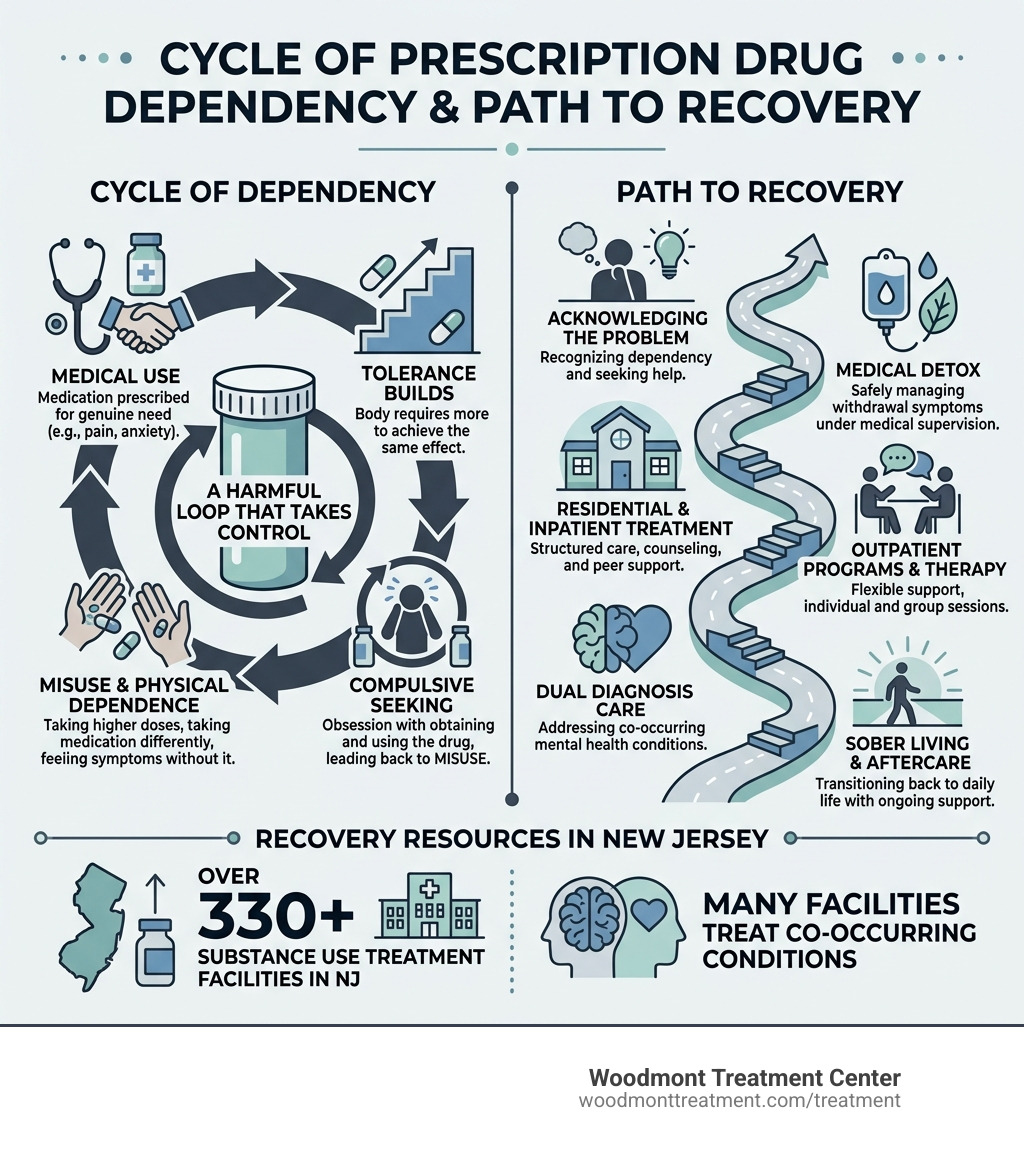
The difficult truth is that prescription drug addiction rarely begins with a conscious choice to misuse a substance. For many, the journey starts in a professional setting—a prescription for post-surgical pain, a medication to manage debilitating anxiety, or a necessary sleep aid. Over time, the brain’s chemistry adapts to the presence of these chemicals. What once provided relief begins to exert control, altering your moods, your physical health, and your relationships.
Professional treatment at a premier facility like Woodmont Treatment Center offers a way out of this cycle. New Jersey is home to 339 substance use treatment facilities, but not all are created equal. We believe that recovery should take place in an environment that fosters peace and dignity. With over 230 centers in the state also addressing co-occurring mental health conditions like depression and anxiety, it is clear that a holistic approach—one that treats the whole person rather than just the symptoms—is the gold standard for lasting sobriety.
Whether you are just beginning to recognize that your medication use has become problematic or you have been struggling for years, there is a path forward that leads to a vibrant, drug-free life.
Understanding the Landscape of Prescription Drug Misuse in New Jersey
As we navigate the landscape of addiction in 2026, the nature of substance use in New Jersey continues to evolve. While illicit substances often capture public attention, prescription drug misuse remains a “hidden crisis” that permeates every corner of our society. It is a unique challenge because it frequently begins within the perceived safety of a medicine cabinet rather than on the street.
In the Garden State, the path to dependency often follows a predictable and heartbreaking pattern. A patient is prescribed a medication for a legitimate medical reason. Over time, the body develops a physical tolerance, requiring higher doses to achieve the same therapeutic effect. This physiological shift leads to dependency, a state where the body and brain can no longer function normally without the substance. When an individual attempts to stop or reduce their intake, withdrawal symptoms—ranging from profound anxiety and insomnia to intense physical pain—make it nearly impossible to quit without professional intervention.
Common Substances of Abuse in NJ
The primary drivers of prescription drug rehab NJ admissions generally fall into several distinct categories, each requiring a specialized therapeutic approach:
- Opioids: This category includes powerful painkillers like OxyContin, Percocet, and Vicodin. Despite increased regulatory oversight, millions of Americans continue to struggle with these substances. Opioids work by binding to specific receptors in the brain, effectively blocking pain signals while simultaneously creating a sense of euphoria that the brain quickly begins to crave.
- Benzodiazepines: Frequently prescribed for anxiety, panic disorders, or insomnia, “benzos” such as Xanax, Klonopin, and Valium are highly habit-forming. Withdrawal from these medications can be physically dangerous and even life-threatening, necessitating the highest level of medical supervision during the detox process.
- Stimulants: Medications like Adderall and Ritalin, intended to treat ADHD, are often misused for performance enhancement, cognitive boosting, or weight loss. These substances can cause severe cardiovascular strain, neurological changes, and deep psychological dependency.
- Sleep Medications and Sedatives: Often overlooked, sedatives used to treat chronic sleep disorders can lead to long-term habit formation and significant cognitive impairment if not managed correctly.
The Scope of the Problem in 2026
The statistics regarding substance use in New Jersey are a call to action for healthcare providers. Our state remains a focal point for recovery in the Northeast. Of the thousands admitted to rehab centers annually, the largest demographic—over 23,000 individuals—falls into the 35-44 age bracket, a group often balancing career and family responsibilities. Furthermore, statistics show that roughly 69% of those seeking help are male, while 31% are female, highlighting the need for gender-responsive care.
To meet this growing demand, the Addiction Services Programs in Warren County, NJ and surrounding regions have worked to expand access to care. With 339 facilities statewide, including 295 outpatient centers and 51 residential care homes, the infrastructure for recovery is robust. However, the sheer volume of admissions underscores the necessity for premier, evidence-based facilities like Woodmont Treatment Center that prioritize the individual’s comfort and long-term success over simple stabilization.
Recognizing the Signs and Seeking Prescription Drug Rehab NJ
Identifying an addiction to a prescribed medication is often a complex process fraught with denial. Because the substance was originally “doctor-approved,” many individuals and their families may overlook the warning signs for far longer than they would with illicit drugs. However, certain behavioral, physical, and emotional red flags are universal indicators that professional help is needed.

Warning Signs of Dependency
If you are concerned about your own relationship with medication or that of a loved one, consider these common indicators of a developing substance use disorder:
- Doctor Shopping: The practice of visiting multiple physicians or pharmacies to obtain several prescriptions for the same or similar medications.
- Increased Tolerance and Escalation: Taking higher doses than prescribed or taking the medication more frequently because the original amount no longer provides relief.
- Physical Withdrawal Symptoms: Experiencing nausea, tremors, excessive sweating, or extreme irritability when a dose is missed or delayed.
- Behavioral and Social Changes: Withdrawing from family activities, social isolation, sudden mood swings, or becoming uncharacteristically secretive about “pill counting” or pharmacy visits.
- Method Alteration: Changing the way the medication is consumed—such as crushing, snorting, or injecting pills—to achieve a faster or more intense effect.
If these signs are present, it is a clear signal that the medication is no longer serving its intended purpose and has instead become a source of harm. This is the moment to explore professional treatment services that can provide a safe way back to health.
Choosing the Right Prescription Drug Rehab NJ Center
Selecting a recovery center is one of the most important decisions you will ever make. For those new to the process, the options can feel overwhelming. We recommend seeking out facilities that offer a “continuum of care,” ensuring that you are supported from the initial moments of detox through the final stages of aftercare.
When evaluating a prescription drug rehab NJ facility, look for these hallmarks of excellence:
- Professional and Therapeutic Expertise: Ensure the staff includes board-certified medical professionals and licensed therapists who specialize in addiction medicine.
- A Luxurious, Non-Hospital Environment: Healing is most effective when you feel safe and comfortable. Avoid facilities that feel like cold, sterile hospitals; instead, look for a boutique, retreat-like setting that promotes tranquility.
- Holistic and Integrative Options: True recovery involves the mind, body, and spirit. Look for programs that integrate yoga, nutritional counseling, and meditation alongside traditional evidence-based therapies.
- Accreditation and Safety: Verify that the center holds Joint Commission accreditation, which is the gold standard for safety and quality in healthcare.
Therapeutic Pathways: From Medical Detox to Holistic Healing
The journey to sobriety is a deeply personal experience, but it follows a proven therapeutic path designed to ensure safety and maximize the chances of long-term success. It begins with the essential step of clearing the body of toxins in a controlled, supportive environment.
The Detoxification Process
For many prescription medications—particularly benzodiazepines and high-dose opioids—attempting to quit “cold turkey” is not only painful but can be medically dangerous. A premier prescription drug rehab NJ program provides 24-hour professional supervision during this critical first week to manage the physical and psychological symptoms of withdrawal.
At Woodmont Treatment Center, our medical detox process involves:
- Comprehensive Wellness Evaluation: A thorough assessment of your medical history, the specific substances involved, and any co-occurring mental health conditions.
- Withdrawal Management: The use of FDA-approved medications to ease cravings, reduce physical discomfort, and prevent dangerous complications.
- Stabilization and Tapering: A carefully managed schedule to slowly reduce the presence of the drug in your system, allowing your brain chemistry to stabilize safely.
Specialized Care Models
Once the physical dependency is addressed, the focus shifts to healing the underlying causes of addiction. We utilize a variety of evidence-based modalities to help our clients understand the “why” behind their substance use.
- Trauma-Informed Care: Many individuals turn to prescription drugs to numb the pain of past trauma. Our therapists are trained to address these deep-seated issues in a way that promotes healing without re-traumatization.
- Medication-Assisted Treatment (MAT): For those recovering from opioid use, MAT can be a life-saving tool, using medications like buprenorphine to stabilize brain function and prevent relapse while the individual engages in therapy.
- CBT and DBT: Cognitive Behavioral Therapy and Dialectical Behavior Therapy are the cornerstones of our clinical program, helping clients identify negative thought patterns and develop healthy, sustainable coping mechanisms.
Immediate Access to Prescription Drug Rehab NJ
Addiction is a progressive disease that does not wait for a convenient time. When an individual reaches the point of readiness to accept help, that window of opportunity must be seized immediately. This is why top-tier NJ facilities offer same-day admission and 24/7 intake services. If you are a resident of Sussex or Warren County, your journey toward a new life can begin the moment you reach out for support.
Navigating Insurance, Medicare, and the Costs of Recovery
One of the biggest hurdles to seeking help is the fear of the “price tag.” However, addiction treatment is more accessible than most people realize. Because of the Affordable Care Act (ACA), substance use disorder treatment is considered an “essential health benefit.”
Understanding Care Levels and Costs
| Level of Care | Description | Typical Duration |
|---|---|---|
| Medical Detox | 24/7 professional supervision for withdrawal | 5–7 Days |
| Residential Inpatient | Living at the retreat with full-time support | 30–90 Days |
| Partial Hospitalization (PHP) | Intensive day treatment in a comfortable setting (20+ hours/week) | 4–6 Weeks |
| Intensive Outpatient (IOP) | Flexible sessions (9+ hours/week) while living at home | 8–12 Weeks |
Medicare and State-Funded Options
Many NJ residents rely on Medicare. It’s important to know that Medicare Part A typically covers residential stays, while Part B covers outpatient services and screenings. New Jersey also has a robust network of state-funded facilities. In 2021, 230 NJ rehabs accepted Medicaid, and 143 accepted Medicare.
For those with private insurance, the first step is to verify your insurance coverage to see which levels of care are fully or partially covered. Most major providers like Aetna, Blue Cross Blue Shield, and United Healthcare are widely accepted in New Jersey.
5 Pillars of Premier Prescription Drug Rehab NJ at Woodmont Treatment Center
When choosing a facility for your recovery, the environment and the philosophy of care are just as important as the clinical treatments provided. For residents in Northern New Jersey, including Sussex, Warren, and Bergen Counties, Woodmont Treatment Center stands as the premier choice for those seeking a sophisticated and effective path to sobriety.
1. A Luxurious, Home-Like Sanctuary

We believe that physical comfort is a vital catalyst for emotional and psychological healing. Our facility is designed to feel like a serene retreat, far removed from the atmosphere of a clinical institution. Located amidst the calming landscapes of Sussex and Warren County, our environment allows clients to step away from the stressors of daily life and focus entirely on their personal growth. From private accommodations to gourmet nutritional support, every detail is curated to promote a sense of well-being.
2. Evidence-Based Clinical Excellence
While our environment is luxurious, our therapeutic approach is rigorous and grounded in the latest addiction science. We provide a full continuum of care, including professionally supervised detox, residential treatment, and intensive outpatient programs. Our team of experts specializes in treating the complex nature of prescription drug dependency, ensuring that every client receives a personalized plan tailored to their specific needs and history.
3. Comprehensive Dual Diagnosis Support
Addiction rarely exists in a vacuum. Many of our clients struggle with co-occurring disorders such as clinical depression, generalized anxiety, or PTSD. Our integrated treatment model addresses both the substance use disorder and the underlying mental health conditions simultaneously. By treating the whole person, we significantly reduce the risk of relapse and empower our clients to build a more stable future.
4. Family-Centered Healing and Integration
We recognize that addiction is a disease that affects the entire family unit. Our program places a strong emphasis on family therapy and education, helping loved ones understand the nature of dependency and how to provide healthy support. Through our family programs and alumni networks, we help rebuild the bridges that may have been damaged during the height of the addiction, creating a strong foundation for long-term success.
5. Specialized Trauma-Informed Pathways
For many, prescription drug misuse is a form of self-medication for unresolved trauma. Our specialized trauma-informed care ensures that these sensitive issues are addressed with the utmost compassion and clinical skill. We provide a safe space for clients to process their experiences and develop new, healthy ways to manage emotional pain without the need for mind-altering substances.
For those ready to take the first step, you can view our admissions process details to understand how we make the transition into care as seamless and stress-free as possible. Our commitment to your recovery begins the moment you call, and it continues long after you leave our doors through our dedicated aftercare and alumni support systems.
Frequently Asked Questions
Does Medicare cover prescription drug rehab in New Jersey?
Yes, Medicare provides significant coverage for substance use disorder treatment. Medicare Part A typically covers residential-based inpatient services and stays that meet specific clinical criteria. Medicare Part B covers outpatient services, including initial screenings, individual and group therapy sessions, and certain medications used in treatment. Many premier NJ facilities, including Woodmont Treatment Center, are experienced in navigating Medicare and private insurance to ensure you receive the maximum benefits available under your plan.
What is the difference between inpatient and outpatient prescription drug rehab?
Inpatient or residential rehab requires the individual to live at the facility 24/7. This provides a highly structured, trigger-free environment with around-the-clock professional and emotional support, which is often necessary during the early stages of recovery. Outpatient rehab, including Intensive Outpatient Programs (IOP), allows the individual to live at home while attending therapy sessions several times a week. This is often a step-down level of care for those who have completed inpatient treatment or for those with less severe dependencies who must maintain work or family commitments.
How can I get immediate help for a prescription drug overdose or crisis in NJ?
If you suspect a life-threatening overdose, you must call 911 immediately. For an urgent mental health or addiction crisis that requires immediate intervention, you can call or text 988, the national Suicide & Crisis Lifeline. For those who are ready to enter a professional treatment program immediately, Woodmont Treatment Center offers a 24/7 intake line where you can speak with a compassionate professional who can guide you through the same-day admission process.
Conclusion
The path to overcoming prescription drug addiction is a profound therapeutic journey that requires immense courage, expert professional support, and a safe, nurturing environment. Whether your struggle involves opioids, benzodiazepines, or stimulants, it is vital to remember that your current situation is a chapter in your life, not the final conclusion.
In New Jersey, we are fortunate to have access to world-class recovery resources. From the quiet, rural beauty of Sussex and Warren Counties to the sophisticated therapeutic networks of Bergen County, the support you need is within reach. By choosing a prescription drug rehab NJ program like Woodmont Treatment Center—one that prioritizes holistic care, medical excellence, and a luxurious, supportive atmosphere—you are giving yourself the greatest possible gift: the chance at a long-term, vibrant, and meaningful recovery.
For those in Sussex and Warren County, Woodmont Treatment Center is your local partner in recovery. You do not have to walk this path alone. Our professional counseling group and the entire Woodmont community are here to support you every step of the way, from your first day of detox to your many years of successful sobriety. Your new life is waiting.