




Finding Help Is Closer Than You Think: Addiction Treatment Hunterdon County NJ

Addiction Treatment Hunterdon County NJ offers a full range of options — from medical detox and residential inpatient care to flexible outpatient programs and community support groups.
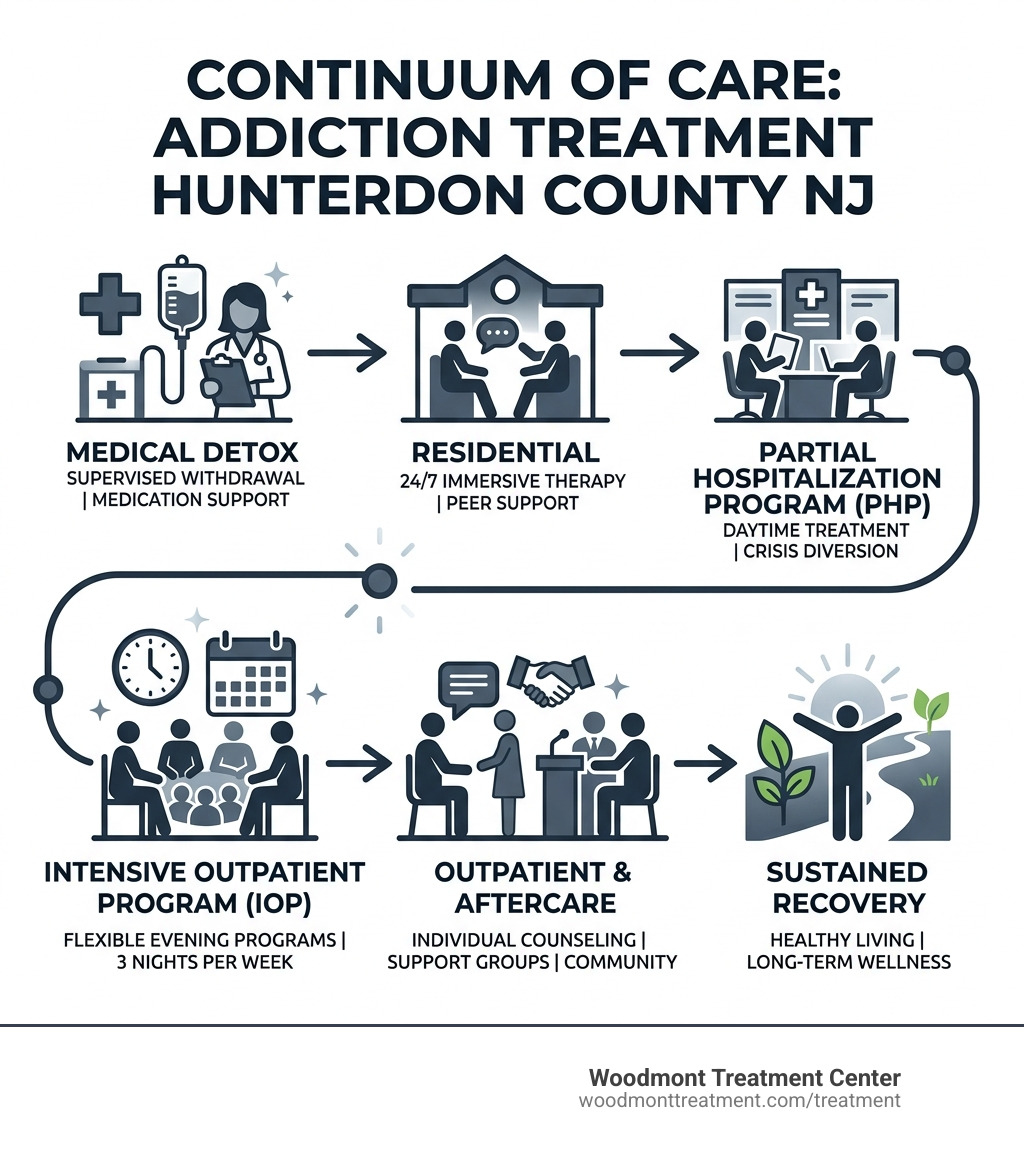
Here are the top treatment options available to residents:
- Medical Detoxification — supervised withdrawal management with medication support
- Residential Inpatient Care — 24/7 immersive therapy and peer support
- Acute Behavioral Health and Partial Hospitalization — intensive day programs for stabilization
- Intensive Outpatient Programs (IOP) — flexible evening programs, 3 nights per week
- Adolescent Intensive Outpatient Support — specialized recovery tracks for ages 12-18
- Operation Helping Hand — community outreach and overdose response
- Dual Diagnosis Programs — integrated mental health and addiction treatment
- Specialized Opioid and Heroin Treatment — MAT, Suboxone, Narcan training
- Family Counseling and Support — Al-Anon, C.A.R.E. program, psychoeducation
- Woodmont Treatment Center — premier regional care in Sussex and Warren County
Hunterdon County is a place of real community and small-town warmth. But beneath that quiet charm, thousands of residents are quietly struggling.
More than 700 Hunterdon County residents seek treatment for substance use every year. Alcohol and opioids are the most common concerns — and many people are dealing with both addiction and a co-occurring mental health condition like anxiety or depression at the same time.
If you or someone you love is facing cravings, withdrawal, or a sense that things are spiraling out of control, know this: you are not alone, and effective help is available right here.
This guide walks through the 10 best addiction treatment options in and around Hunterdon County — so you can find the right level of care, understand what to expect, and take that first step with confidence.
Easy Addiction Treatment Hunterdon County NJ glossary:
- Alcohol Rehab in Hunterdon County NJ
- Addiction Treatment in Bergen County NJ
- Drug and Alcohol Rehab in Morris County NJ
Understanding the Landscape of Addiction Treatment Hunterdon County NJ

When we look at the data for April 2026, we see a community that is both resilient and in need of support. Hunterdon County may be known for its high quality of life, but substance use disorders do not discriminate based on zip code or income. According to recent Substance Abuse data, approximately 716 residents are admitted to treatment programs annually for a primary drug issue.
The “landscape” of recovery here is shifting. While we have seen a steady need for alcohol-related services, the impact of heroin and synthetic opiates remains a significant concern for local families. In fact, heroin has been identified as a primary driver for many admissions in the region. However, the good news is that the county has responded with robust initiatives like Operation Helping Hand and specialized Addiction Treatment resources that bridge the gap between crisis and long-term wellness.
Common Substance Abuse Issues in the Community
The statistics tell a story of diverse needs. Out of the hundreds of annual admissions:
- Alcohol: Roughly 255 admissions are for primary alcohol use, making it one of the most prevalent issues in the county.
- Heroin and Opiates: Heroin accounts for about 36 admissions, while other opiates and synthetics account for 92.
- Cocaine and Marijuana: These substances represent about 48 and 37 admissions respectively.
- Other Drugs: Approximately 55 admissions involve various other substances, highlighting the need for poly-substance abuse expertise.
These numbers aren’t just data points; they represent our neighbors, friends, and family members. Understanding these trends helps us tailor Addiction Treatment Hunterdon County NJ to the specific needs of our community.
Emergency and Crisis Services Available 24/7
In a crisis, every minute counts. Hunterdon County residents have access to immediate, 24/7 support through the Crisis Hotline at 908-788-6400. This service is part of the Psychiatric Emergency Screening Center, providing mobile outreach and family crisis intervention. Whether it is an overdose situation or a mental health breakdown, these services offer immediate stabilization and a path toward professional recovery resources.
Top 10 Addiction Treatment Options and Local Resources
Choosing the right level of care is the most important decision in the recovery journey. We often utilize a multidisciplinary approach that combines evidence-based practices (like therapy) with holistic healing (like mindfulness and nutrition).
| Level of Care | Best For | Time Commitment |
|---|---|---|
| Medical Detox | Safe withdrawal from alcohol/opioids | 3–7 Days |
| Residential Care | Severe addiction, unstable home life | 30–90 Days |
| PHP / Acute Services | High support while living at home | 5 Days/Week |
| IOP | Transitioning back to work/life | 3 Evenings/Week |
| Outpatient | Ongoing maintenance and support | 1–2 Hours/Week |
1. Medical Detoxification and Withdrawal Management
The first step for many is a “chemical cleanse.” Attempting to quit “cold turkey” at home can be uncomfortable and, in some cases, life-threatening. Medical detoxification provides a safe, clinical environment where withdrawal symptoms are managed with FDA-approved medications.
In Hunterdon, three-day inpatient detox programs are common, focusing on stabilization and medication monitoring. This process ensures that the physical cravings are addressed so that the individual can move into the psychological phase of healing without the distraction of physical pain.
2. Residential Inpatient Care for Intensive Healing
For those who need to step away from their daily environment to focus entirely on recovery, residential care is the gold standard. This level of care provides 24/7 support in a therapeutic environment. Residents participate in a structured schedule of individual therapy, group sessions, and skill-building workshops.
The Admissions Process for residential care typically involves a clinical assessment to ensure the program meets the individual’s specific needs. It is about more than just staying sober for 30 days; it is about rebuilding a life from the ground up with the help of peers and professionals.
3. Acute Behavioral Health and Partial Hospitalization
Regional behavioral health systems offer specialized “Acute Services” designed to prevent hospitalization or provide a step-down for those leaving an inpatient stay. Two primary programs stand out:
- Acute Partial Hospital (PHP): A full-day program (9:00 am – 3:30 pm) that offers intensive therapy while allowing the client to return home at night.
- Acute Addiction Intervention Program (AAIP): This program meets five days a week for three hours a day, providing a middle ground for those who need more than standard outpatient care but have responsibilities at home.
4. Intensive Outpatient Programs (IOP) for Flexibility
IOP is often the “sweet spot” for many in Addiction Treatment Hunterdon County NJ. It allows you to maintain your job, school, or family commitments while receiving high-level care. Most IOPs meet three evenings per week for about three hours per session.
During these sessions, we focus on trigger management, coping skills, and relapse prevention. It is a practical way to apply what you learn in therapy to “real world” situations in real-time. You can explore more about these Treatment Services to see how they fit into a busy lifestyle.
5. Adolescent Intensive Outpatient Support
Adolescents face unique pressures, and their treatment should reflect that. Specialized adolescent programs are specifically designed for youth ages 12–18 who are struggling with substance use and emotional disturbances.
The program operates on an after-school schedule to minimize academic disruption. It emphasizes family involvement, helping parents and teens communicate better while addressing the underlying issues that lead to substance use.
6. Operation Helping Hand and Community Outreach
This is a unique partnership between the Hunterdon County Prosecutor’s Office and local healthcare providers. Operation Helping Hand uses peer recovery specialists to reach out to individuals who have recently experienced an overdose.
Instead of a purely law enforcement response, this initiative focuses on resource linkage. It provides an immediate bridge to Substance Abuse services, meeting people exactly where they are—often in the emergency room or shortly after a crisis.
7. Dual Diagnosis Support for Co-occurring Disorders
It is very common for addiction to walk hand-in-hand with mental health issues like major depression, PTSD, or anxiety. In fact, nearly 6% of adults in our region qualify for a major depression diagnosis.
Dual diagnosis programs treat both conditions simultaneously. If you only treat the addiction but ignore the underlying depression, the risk of relapse is much higher. We use integrated treatment plans that include Cognitive Behavioral Therapy (CBT) and Dialectical Behavior Therapy (DBT) to heal the whole person.
8. Specialized Opioid and Heroin Treatment Programs
With the rise of synthetic opiates, specialized care is more important than ever. These programs often include Medication-Assisted Treatment (MAT) using Suboxone or Vivitrol to curb cravings and prevent overdose.
Community resources also focus on “recovery capital”—building the internal and external resources needed to stay sober long-term. This includes Narcan training for family members and coordination with Addiction Services Programs Warren County to ensure a wide safety net.
9. Family Counseling and Support Services
Addiction is often called a “family disease” because it affects everyone in the household. Programs like Al-Anon and the C.A.R.E. program provide a space for caregivers and loved ones to find their own healing.
Psychoeducation helps families understand that addiction is a medical condition, not a moral failing. By healing the family system, we create a much more supportive environment for the individual in recovery.
10. Woodmont Treatment Center: Premier Regional Care
While there are many local options, Woodmont Treatment Center stands as the premier regional facility serving the Sussex and Warren County areas. As a professional counseling team, we believe healing happens best in a setting that feels safe, supportive, and genuinely restorative.
Our facility is designed to feel warm, welcoming, and therapeutic rather than institutional. We provide a full continuum of carefrom detox and residential treatment to outpatient support. What sets us apart is our highly personalized, holistic approach that addresses the mind, body, and spirit while honoring each clients unique story. If you are ready to take the next step, you can Verify Insurance through our secure portal to get started.
Navigating the Cost and Logistics of Addiction Treatment Hunterdon County NJ
The “how much does it cost?” question is often the biggest hurdle to starting treatment. It is important to remember that the cost of not getting treatment—lost jobs, medical bills, and legal issues—is almost always higher.
On average, a medical detox program in the region may cost around $1,500, while intensive residential care can range significantly based on the length of stay and amenities. Outpatient programs are generally more affordable, often averaging around $5,000 per month for intensive services.
Insurance Verification and Payment Options
The good news is that under current laws, most insurance plans are required to cover addiction treatment just as they would any other medical condition. Many local facilities accept:
- Private Insurance: (Aetna, BlueCross BlueShield, Cigna, UnitedHealthcare, etc.)
- Public Options: Medicaid and Medicare are accepted by many county-affiliated programs.
- Financial Aid: Some centers offer sliding scale fees based on income or payment plans to make care accessible.
Preparing for the Intake and Assessment Process
Intake shouldn’t be scary. It usually begins with a confidential phone call where a professional will ask about your substance use history and any mental health concerns. From there, you’ll have a clinical evaluation to determine which level of care is safest and most effective. You can often take a tour of the facility to ensure you feel comfortable in the environment before you commit.
Sustaining Sobriety: Aftercare and Community Support
Recovery doesn’t end when you leave a program; that is actually where the “real work” begins. Aftercare is the plan you put in place to stay sober in your daily life. This might include living in a sober house, attending alumni events, or continuing with individual therapy.
Local AA and NA Meeting Resources
Hunterdon County has a vibrant “12-Step” community. Meetings for Alcoholics Anonymous (AA) and Narcotics Anonymous (NA) are held daily in towns like Flemington, Clinton, and Lambertville. For those looking for alternatives to the 12-step model, SMART Recovery and Dual Recovery Anonymous (DRA) meetings are also available, providing peer accountability and connection.
Building Recovery Capital in Hunterdon County
One of the best ways to stay sober is to find joy in “sober activities.” We are lucky to live in a beautiful area that supports a healthy lifestyle.
- Round Valley Reservoir: Perfect for hiking, fishing, and finding peace in nature.
- Hunterdon County Arboretum: A serene spot for reflection and walking.
- Spruce Run Recreation Area: Offers plenty of space for outdoor gatherings with sober friends.
Frequently Asked Questions about Addiction Treatment Hunterdon County NJ
What is the first step to access addiction treatment services in the region?
The easiest way to start is by calling a dedicated intake line or a professional treatment coordinator. You do not always need a referral from a family physician, though having one can sometimes help with the insurance process. An initial assessment will be scheduled to help you find the right program.
Are there specific programs for adolescents in Hunterdon County?
Yes, adolescent-specific intensive outpatient programs are the primary resource for youth recovery. Additionally, many schools in the county have school-based counselors who work in tandem with local treatment centers to provide a “safety net” for students.
Does insurance typically cover the full cost of rehab?
While many plans cover a significant portion, “full” coverage depends on your specific policy and the “medical necessity” of the treatment. We always recommend that you Verify Insurance early in the process so there are no surprises.
Conclusion
Taking the first step toward Addiction Treatment Hunterdon County NJ is an act of immense courage. Whether you are looking for a three-day detox to get through the initial withdrawal or a luxurious residential experience at Woodmont Treatment Center, help is within your reach.
Hunterdon County is a community that cares. From the peer specialists at Operation Helping Hand to the dedicated clinicians at local outpatient centers, there is a whole network of people waiting to support your journey. You don’t have to do this alone. Reclaiming your life, your health, and your future starts with a single phone call. Let today be the day you choose a different path.