




Understanding Alcohol Addiction in the Monmouth County Community
At Woodmont Treatment Center, we approach the journey of recovery not as a clinical process, but as a profound personal transformation. For those seeking Alcohol Rehab Monmouth County NJ, the path to healing begins with a deep understanding of how alcohol use disorder (AUD) weaves itself into the fabric of daily life. Monmouth County, with its unique blend of bustling suburban centers and serene coastal landscapes, presents a specific set of challenges and opportunities for those in recovery. Whether you are navigating the high-pressure professional environments of Red Bank or the quiet residential streets of Freehold, the weight of addiction can feel equally isolating.
Alcohol Rehab Monmouth County NJ is accessible through a network of compassionate care providers, offering a full spectrum of therapeutic interventions designed to address the root causes of dependency. Our philosophy centers on the belief that every individual possesses the innate capacity for change when provided with the right environment and clinical support.
Comprehensive alcohol rehab options available to Monmouth County residents include:
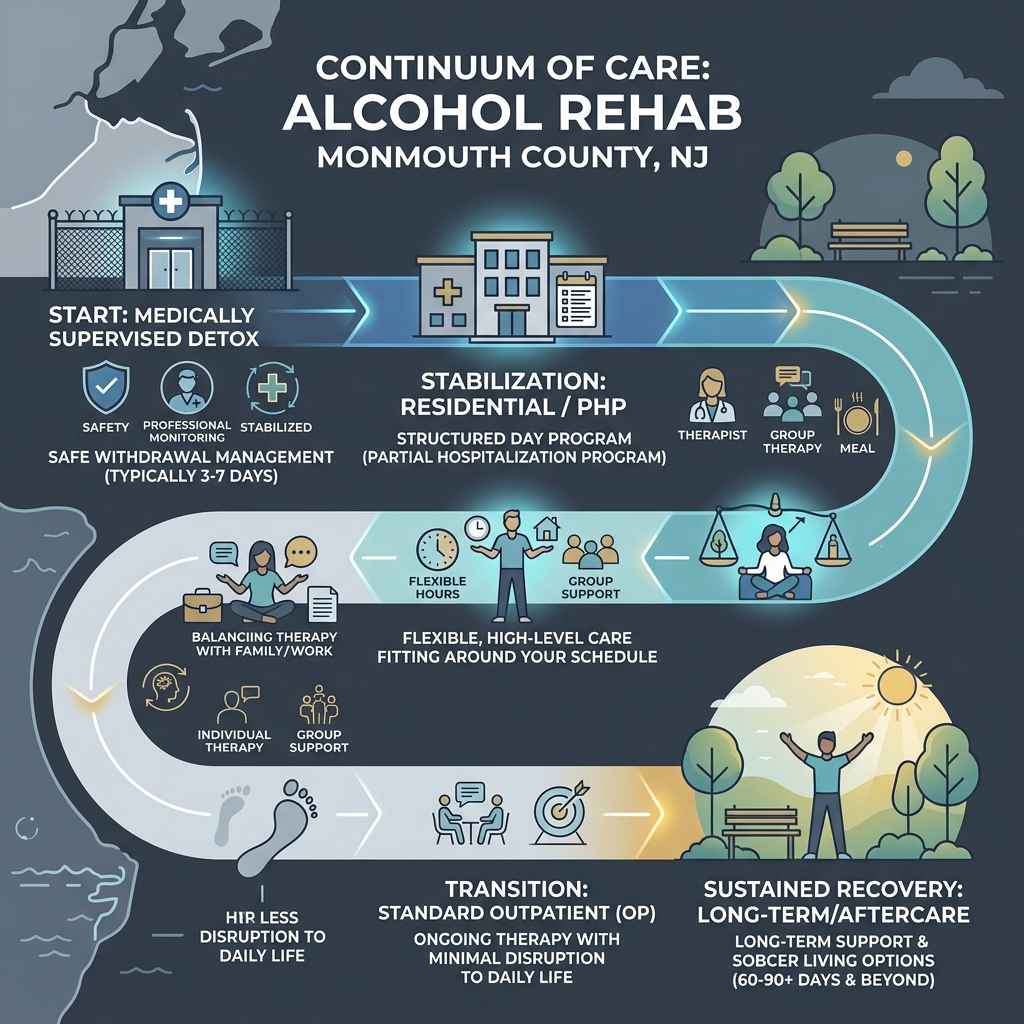
- Medically Supervised Detoxification — A gentle, clinically managed transition that prioritizes safety and comfort during the initial withdrawal phase (typically 3–7 days).
- Partial Hospitalization Program (PHP) — An intensive, full-day therapeutic immersion that provides structure and deep clinical work while allowing for a transition back to a supportive living environment.
- Intensive Outpatient Program (IOP) — A flexible yet rigorous level of care designed to integrate recovery skills into real-world settings, ideal for those maintaining professional or family commitments.
- Standard Outpatient (OP) — Sustained therapeutic engagement that focuses on long-term relapse prevention and emotional regulation.
- Long-Term/Extended Care — Extended therapeutic journeys (60–90+ days) that allow for the deep processing of trauma and the solidification of new, healthy habits.
- Dual Diagnosis Treatment — A specialized, integrated approach that simultaneously addresses substance use and co-occurring mental health conditions like anxiety, depression, or PTSD.
Alcohol addiction is rarely a standalone issue. It is often a symptom of deeper emotional pain, unresolved trauma, or a biological predisposition that has been exacerbated by environmental stressors. In Monmouth County, the statistics reflect a community in need of empathetic intervention. Nearly 2,000 residents enter treatment with alcohol as their primary concern annually. These are our neighbors, our colleagues, and our family members. They represent a cross-section of the Garden State, proving that addiction does not discriminate based on socioeconomic status or background.
The promise of recovery: While the statistics highlight the scope of the problem, the true story lies in the thousands of individuals who have successfully reclaimed their lives. Recovery is a vibrant, active reality in Monmouth County, and it begins with the courage to reach out for professional guidance.
The Landscape of Recovery in New Jersey
Understanding the broader context of care in our state can help you make an informed decision about your journey. We invite you to explore these resources as you consider your options:
- Addiction Treatment in Bergen County NJ
- Drug Rehab in Sussex County New Jersey
- Kratom Rehab Center in New Jersey
When we analyze the data surrounding Alcohol Rehab Monmouth County NJ, we see a narrative of resilience. In 2017, official records indicated that over 6,000 residents sought help for various substance use disorders, with nearly a third specifically targeting alcohol. This high demand has fostered a sophisticated network of care, yet many find that the best results come from stepping slightly outside their immediate environment to gain a fresh perspective.
The demographics of those seeking care in our region are telling. Approximately 60% of individuals entering treatment have completed college, and many hold advanced degrees. This underscores the reality of the “high-functioning” alcoholic—the individual who maintains a professional exterior while struggling with a private, escalating dependency. At Woodmont Treatment Center, we specialize in working with professionals and families who require a high level of clinical sophistication and absolute discretion.
Furthermore, the scientific research on the connection between substance use and mental illness is a cornerstone of our clinical approach. We understand that alcohol is often used as a form of self-medication. By treating the underlying psychological distress, we empower our clients to move beyond the need for chemical coping mechanisms.
Recognizing the Subtle Shift: Signs and Symptoms
For many in Monmouth County, the transition from social drinking to a clinical disorder is not a sudden fall, but a gradual erosion of boundaries. We encourage families to look for these subtle indicators that professional intervention may be necessary:
- The Need for Control: Finding that you can no longer predict how much you will drink once you start, or feeling a sense of panic if alcohol is not available at a social gathering.
- Emotional Volatility: Experiencing heightened irritability, anxiety, or depressive episodes that seem to lift only after the first drink of the day.
- The “Hidden” Life: Engaging in secretive behaviors, such as hiding bottles or drinking before arriving at a social event to mask the total amount consumed.
- Cognitive Dissonance: Knowing that alcohol is affecting your health or relationships, yet finding yourself rationalizing its continued use.
- Physical Cues: Noticing a persistent tremor in the hands, disrupted sleep patterns, or a general decline in physical vitality and self-care.
The Family System: Healing Together
At Woodmont, we view addiction as a family disease. The ripple effects of alcohol use disorder touch every member of the household, often creating patterns of codependency or secondary trauma. This is particularly evident in the close-knit communities of Monmouth County, where family reputation and social standing can sometimes act as barriers to seeking help.
We work closely with local organizations like the Prevention Coalition of Monmouth County resources to promote education and reduce the stigma associated with seeking help. Our therapeutic model integrates family counseling sessions designed to repair trust, establish healthy boundaries, and provide loved ones with the tools they need for their own healing journey. We believe that when the family heals, the individual’s chance for long-term sobriety increases exponentially.
Essential Levels of Care for Alcohol Rehab Monmouth County NJ
Selecting the appropriate level of care is a clinical decision that requires a balance of medical necessity and personal circumstance. At Woodmont Treatment Center, we provide a therapeutic sanctuary in Sussex and Warren County that serves as a premier destination for those seeking to distance themselves from the triggers of their home environment. Our setting is designed to feel like a home, not a hospital, fostering a sense of peace and dignity that is essential for deep psychological work.

The Foundation: Medically Supervised Detoxification
The journey of Alcohol Rehab Monmouth County NJ often begins with the critical phase of detoxification. For an individual with a long-term dependency, the cessation of alcohol use can trigger a complex physiological response. Our medical team provides 24/7 supervision, utilizing evidence-based protocols to mitigate the risks of withdrawal, including seizures and cardiovascular distress.
Unlike the sterile, cold atmosphere of a traditional hospital, our detox environment is warm and supportive. We believe that the first days of sobriety should be characterized by compassion and comfort. By managing physical symptoms effectively, we allow the individual to begin the mental transition toward active therapy. You can explore more info about our comprehensive treatment services to understand how we create a seamless bridge from physical stabilization to emotional exploration.
Criteria for Excellence in Treatment
When evaluating options for Alcohol Rehab Monmouth County NJ, it is vital to look beyond the amenities and focus on the clinical integrity of the program. We recommend prioritizing the following hallmarks of quality care:
- Gold Seal Accreditation: Recognition by the Joint Commission indicates that a facility meets the most rigorous national standards for safety and quality of care.
- Multidisciplinary Clinical Teams: Your care should be overseen by a team that includes board-certified physicians, licensed psychologists, and master’s-level clinicians.
- Individualized Treatment Planning: No two journeys are the same. A premier center will conduct a thorough biopsychosocial assessment to tailor the therapy to your specific history and needs.
- A Non-Institutional Atmosphere: Healing is most effective in an environment that promotes relaxation and self-reflection. Avoid facilities that feel overly clinical or punitive.
The Continuum of Care: PHP and IOP Models
As an individual progresses, the level of support shifts to match their growing autonomy. Our Partial Hospitalization Program (PHP) offers a structured, immersive experience for those who require intensive clinical intervention but are ready to begin practicing their skills in a supportive living environment. This is often followed by our Intensive Outpatient Program (IOP), which provides a vital safety net as clients reintegrate into their professional and family lives in Monmouth County.
These transitions are handled with great care, ensuring that the client never feels “dropped” from support. Our admissions process and next steps are designed to be transparent and welcoming, removing the anxiety often associated with entering a treatment program.
The 5 Pillars of Premier Alcohol Treatment Centers
At Woodmont Treatment Center, our clinical philosophy is built upon five essential pillars. These pillars ensure that we are not just treating the symptoms of alcoholism, but are nurturing the whole person back to a state of wellness and purpose.
| Feature | Inpatient/Residential | Outpatient (PHP/IOP) |
|---|---|---|
| Environment | 24/7 therapeutic sanctuary | Home-based with clinic visits |
| Intensity | High; immersive healing | Moderate; flexible schedule |
| Best For | Severe addiction & dual diagnosis | Mild-to-moderate; step-down care |
| Focus | Stabilization & deep trauma work | Real-world application & relapse prevention |
Pillar 1: Evidence-Based Therapeutic Modalities
We utilize a sophisticated array of therapeutic tools that are grounded in psychological science. Our clinicians are experts in helping clients rewire the neural pathways that have been hijacked by alcohol use.
- Cognitive Behavioral Therapy (CBT): This is the cornerstone of modern addiction treatment. We help clients identify the “automatic thoughts” and cognitive distortions that lead to the urge to drink. By challenging these thoughts, clients develop a more resilient and realistic worldview.
- Dialectical Behavior Therapy (DBT): Originally developed for complex emotional disorders, DBT is incredibly effective for addiction. It teaches four key skill sets: mindfulness, distress tolerance, emotional regulation, and interpersonal effectiveness.
- EMDR (Eye Movement Desensitization and Reprocessing): Many of our clients struggle with underlying trauma. EMDR is a revolutionary technique that allows the brain to process traumatic memories so they no longer trigger the need for self-medication.
- Motivational Interviewing (MI): This client-centered approach helps individuals resolve ambivalence about their recovery, tapping into their own values and goals to fuel the change process.
Pillar 2: Integrated Dual Diagnosis Care
We recognize that mental health and substance use are inextricably linked. Our integrated approach ensures that if a client is struggling with an underlying mood disorder or anxiety, it is treated with the same intensity as their addiction. This dual-track focus is essential for preventing relapse, as untreated mental health symptoms are the primary driver of a return to use. We stay current with research on co-occurring substance use and physical comorbidities to provide the most advanced care possible.
Pillar 3: The Therapeutic Sanctuary
Our facilities in Sussex and Warren County are designed to be a refuge from the noise of the world. We believe that the physical environment plays a crucial role in the healing process. By providing a space that is aesthetically pleasing, comfortable, and surrounded by nature, we help lower the client’s cortisol levels and create a state of receptivity for therapy. This is a far cry from the hospital-like settings of many traditional rehabs; it is a place of dignity and respect.
Pillar 4: Holistic Restoration
True recovery requires the restoration of the body and spirit. Our holistic pillar includes:
- Nutritional Counseling: Alcohol causes significant biochemical imbalances. We help clients restore their physical health through nutrient-dense diets that support brain function and mood stability.
- Mindfulness and Yoga: These practices help clients reconnect with their bodies and develop the ability to stay present, even when facing uncomfortable emotions.
- Art and Expressive Therapies: For many, the roots of addiction are difficult to put into words. Creative expression provides an alternative pathway for processing complex feelings.
Pillar 5: Relapse Prevention and Aftercare
Recovery does not end when a program is completed; it is a lifelong journey. We provide every client with a robust aftercare plan that includes connections to local Monmouth County resources, alumni support groups, and ongoing individual therapy. We empower our clients with a “relapse prevention toolkit” that they can rely on when they return to the challenges of daily life.
Navigating Insurance and Local Support Resources
The logistical aspects of entering Alcohol Rehab Monmouth County NJ should never be a barrier to receiving life-saving care. Our admissions team is dedicated to advocating for our clients, ensuring they receive the maximum benefits allowed by their insurance providers.
Insurance Advocacy and Verification
We work with a wide range of national and regional insurance providers, including Aetna, BlueCross BlueShield, Cigna, and UnitedHealthcare. The landscape of insurance can be confusing, but the Mental Health Parity and Addiction Equity Act ensures that addiction treatment is covered with the same weight as other medical conditions. We provide a streamlined process where you can verify your insurance coverage online or over the phone, often receiving an answer within the hour. For those without traditional insurance, we offer various self-pay options and can help guide you toward community resources.
The Monmouth County Commitment to Recovery
Monmouth County is a pioneer in the Stigma-Free Monmouth initiative. This movement aims to create a culture of understanding and support, encouraging residents to seek help without fear of judgment. The county’s Board of Commissioners has been instrumental in integrating mental health and addiction services, creating a more cohesive safety net for those in need.
Furthermore, the Monmouth County Comprehensive Alcohol and Drug Abuse Plan serves as a roadmap for community-based support. This plan ensures that funding is directed toward evidence-based prevention and treatment programs, making Monmouth County one of the most proactive regions in New Jersey for recovery support.
Building a Support Network in Monmouth County
While professional treatment provides the foundation, a strong community network is the key to long-term success. We encourage our clients to engage with the vibrant recovery community in Monmouth County:
- Alcoholics Anonymous (AA): With hundreds of meetings weekly across the county, AA provides a peer-led support system that is available 24/7.
- SMART Recovery: For those seeking a secular, science-based alternative to 12-step programs, SMART Recovery offers tools for self-empowerment and cognitive change.
- Family Support Groups: Organizations like Al-Anon and Nar-Anon provide a vital space for family members to process their own experiences and learn healthy ways to support their loved ones in recovery.
Frequently Asked Questions about Alcohol Rehab Monmouth County NJ
How do I know if I need residential treatment or outpatient care?
This determination is made during a comprehensive clinical assessment. Generally, residential treatment is recommended for those with a long history of use, multiple relapses, or an unstable home environment. Outpatient care (PHP/IOP) is often suitable for those with strong support systems who are motivated to integrate their recovery into their daily lives. At Woodmont, we offer a continuum of care that allows you to transition between these levels as your needs change.
Is my privacy protected during the rehab process?
Absolutely. We adhere to the strictest HIPAA regulations and federal confidentiality laws (42 CFR Part 2). Your participation in treatment is a private matter, and no information is shared with employers, family members, or third parties without your explicit, written consent. We provide a discreet environment where you can focus entirely on your healing.
Why should I consider traveling to Sussex or Warren County for treatment?
While there are many options for Alcohol Rehab Monmouth County NJ, many individuals find that staying too close to home makes it difficult to break old patterns. Traveling to our premier facilities in Sussex or Warren County provides a “healthy distance” from the people, places, and stressors associated with your alcohol use. This change of scenery acts as a powerful psychological reset, allowing you to build a new foundation before returning to your home community.
Can I continue to work while in treatment?
Our Intensive Outpatient Program (IOP) is specifically designed for professionals who need to maintain their career responsibilities while receiving high-level clinical care. We offer evening sessions and flexible scheduling to accommodate your work life. For those in our PHP or residential programs, we can assist with FMLA documentation to ensure your job is protected while you take the necessary time to heal.
How do I take the first step?
The first step is simply a conversation. You can verify your insurance for immediate answers or call our admissions line to speak with a compassionate counselor. We are here to listen, not to judge, and to help you navigate the path toward a healthier future.
Conclusion: A New Chapter Awaits
Recovery is not merely the absence of alcohol; it is the presence of a meaningful, connected, and vibrant life. At Woodmont Treatment Center, we are honored to serve as a beacon of hope for the residents of Monmouth County. By choosing our premier facilities in Sussex and Warren County, you are choosing a therapeutic sanctuary where your dignity is respected, your story is heard, and your potential is recognized.
We invite you to step away from the cycle of addiction and into a space of evidence-based healing and holistic restoration. Our team of dedicated professionals is ready to walk beside you every step of the way, from the first day of detox to the celebration of your first year of sobriety.
The life you were meant to live is still waiting for you. Start your journey to recovery today and discover the strength, clarity, and peace that come with true healing. Your new chapter begins now.