





NJ Opioid Detox Centers: What You Need to Know Before Getting Help
NJ opioid detox centers offer medically supervised programs to help you safely manage withdrawal and begin lasting recovery. Here’s a quick overview of what to expect:
Top things to know about NJ opioid detox centers:
- Medical detox typically lasts 5-10 days, with 24/7 monitoring
- Medications like Suboxone, methadone, and naltrexone are used to ease withdrawal
- Levels of care range from inpatient detox to outpatient, PHP, and IOP
- Dual diagnosis treatment addresses co-occurring mental health conditions
- Most major insurance plans are accepted, with self-pay options available
- Detox is just the first step – centers provide a full continuum of care after stabilization
New Jersey is facing one of the most serious opioid crises in the country. Over 3,000 people died from drug overdoses in the state in 2022 alone, according to the New Jersey Department of Health, with fentanyl involved in the vast majority of those deaths. Heroin-related fatalities increased more than eightfold between 2010 and 2016. And from 2016 to 2017, New Jersey recorded the highest increase in opioid overdose deaths of any state in the nation.
These aren’t just statistics. Behind every number is a person – someone’s parent, sibling, or friend – who needed help.
If you or someone you love is struggling with opioid addiction right now, you’re not alone. And the good news is that effective, compassionate help is available across New Jersey.
This guide walks you through everything you need to know – from recognizing the signs of addiction to understanding your treatment options, finding the right facility, and taking the first step toward recovery.
Understanding the Opioid Crisis in New Jersey
To understand why nj opioid detox centers are so vital, we have to look at the landscape of the state. New Jersey has been hit particularly hard by the shifting tides of the drug epidemic. While the crisis originally began with high prescription rates—in 2015, there were an average of 55 opioid prescriptions written for every 100 state residents—it has evolved into a much more dangerous era of synthetic substances.
The data is sobering. Between 2010 and 2016, overdose deaths caused by synthetic opioids like fentanyl jumped from 35 to 689. By 2022, fentanyl was involved in the vast majority of the 3,000+ overdose deaths in the state. Furthermore, opioid overdose deaths increased by nearly 30 percent in a single year (2016 to 2017), highlighting a public health urgency that hasn’t slowed down.
While the entire state feels the impact, certain areas see higher concentrations of struggle. Opioid addiction rates and overdose incidents are frequently highest in Atlantic, Sussex, and Gloucester counties. In places like Sussex County and nearby Newton, the need for accessible, high-quality care has never been more pressing. Roughly 50 percent of all admissions to drug rehab centers in New Jersey are specifically for opioid addiction, more than any other substance.
Recognizing the Need for NJ Opioid Detox Centers

How do you know when it’s time to seek professional help? Addiction often sneaks up on people. What might have started as a legitimate prescription for back pain or an injury can slowly turn into a physical dependence that feels impossible to break.
We often look for the “rock bottom” moment, but the truth is that any time a substance begins to dictate your daily choices, it’s time to consider intervention. Physical dependence occurs when the brain and body become so used to the presence of opioids that they cannot function “normally” without them. This leads to tolerance—needing more of the drug to get the same effect—and failed quit attempts, where the person wants to stop but find the withdrawal symptoms too overwhelming to handle alone.
Signs and Symptoms of Opioid Use Disorder
If you are worried about a loved one, or evaluating your own habits, look for these common clinical signs:
- Pinpoint pupils: Pupils that remain very small even in dim light.
- Drowsiness: Often referred to as “nodding out” during conversations or activities.
- Respiratory depression: Noticeably slow or shallow breathing.
- Behavioral changes: Increased secretive behavior, neglecting responsibilities at work or home, and social isolation from long-time friends and family.
- Financial strain: Unexplained loss of money or constantly asking for loans to cover “emergencies.”
When to Seek Professional NJ Opioid Detox Centers
Seeking help from nj opioid detox centers is critical when the “loss of control” phase begins. If you find yourself escalating your dosage without a doctor’s approval or experiencing the onset of withdrawal symptoms within hours of your last dose, professional care is the safest route.
For those with a history of chronic pain, the transition from medication to addiction is particularly complex. When the drug is no longer used to treat pain but simply to avoid feeling “sick” or “low,” the cycle of addiction has taken hold. Because the risk of overdose is so high—especially with the prevalence of fentanyl in New Jersey’s illicit supply—professional intervention can quite literally be a lifesaver.
The Science of Withdrawal and Medically Supervised Detox
Withdrawal isn’t just “the flu times ten.” It is a profound physiological rebellion as the brain tries to recalibrate its neurochemistry. Attempting to go “cold turkey” at home is not only agonizing; it is the primary reason people relapse. When the pain becomes too much, the brain screams for the one thing that will stop it: more opioids.
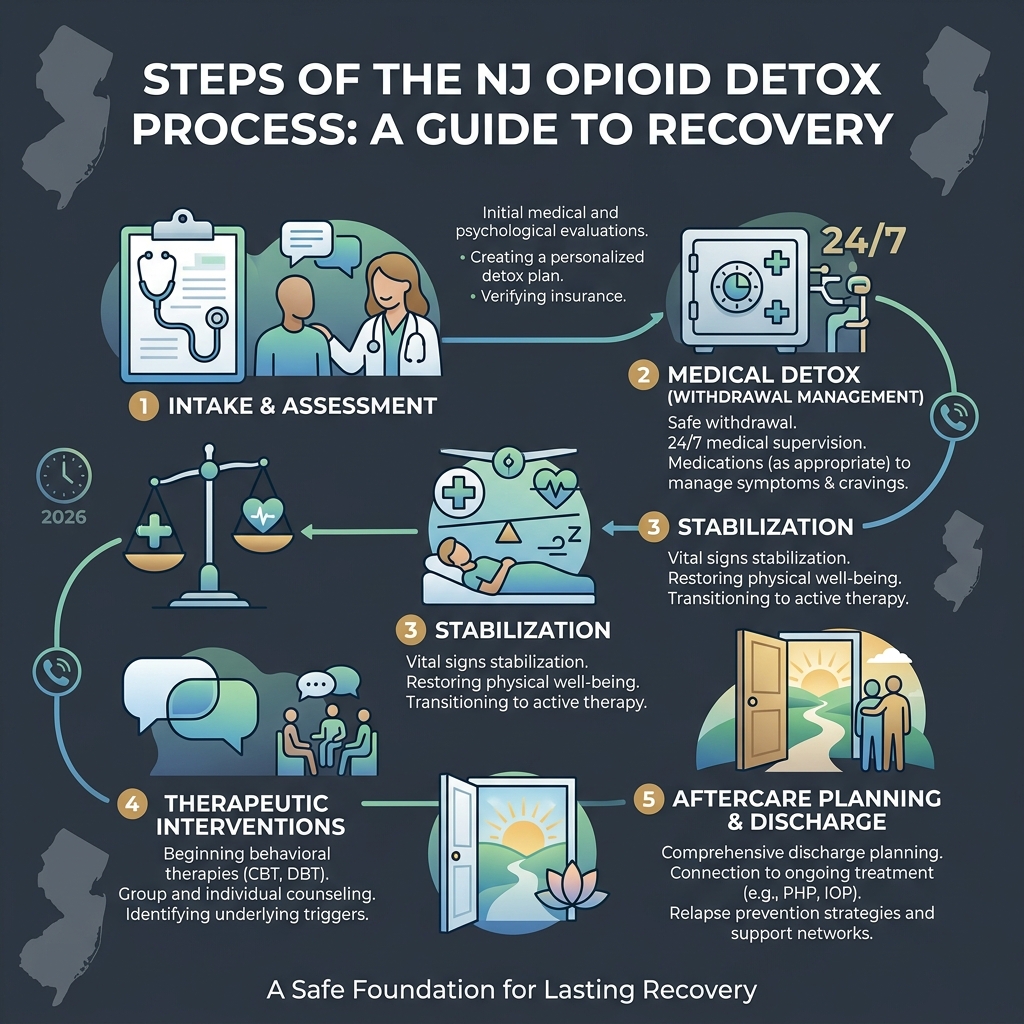
In a medically supervised environment, we prioritize safety and comfort. Our medical teams monitor vital signs 24/7 to ensure that complications – like dehydration or cardiac stress – are managed immediately.
| Phase | Duration | Symptoms |
|---|---|---|
| Acute Withdrawal | 1 – 7 Days | Nausea, sweating, muscle aches, intense cravings, insomnia. |
| Post-Acute (PAWS) | Weeks – Months | Anxiety, irritability, sleep disturbances, depression, “brain fog.” |
Common Opioid Withdrawal Symptoms and Timeline
The timeline for withdrawal depends on whether the substance was short-acting (like heroin or oxycodone) or long-acting (like methadone).
- 6-12 Hours: Early symptoms begin. You might feel like a cold is coming on – watery eyes, runny nose, and excessive yawning, accompanied by growing anxiety.
- 24-72 Hours: This is the “peak.” Symptoms intensify to include heavy sweating, chills, severe muscle and bone aches, nausea, vomiting, and diarrhea.
- Day 4-7: Physical symptoms begin to stabilize, though psychological symptoms like depression and intense cravings remain high.
Medication-Assisted Treatment (MAT) Protocols
One of the greatest tools we have in nj opioid detox centers is Medication-Assisted Treatment (MAT). MAT is the use of FDA-approved medications, in combination with counseling and behavioral therapies, to provide a “whole-patient” approach.
- Buprenorphine (Suboxone): A partial opioid agonist that satisfies cravings and prevents withdrawal symptoms without producing the “high” associated with misuse.
- Naltrexone (Vivitrol): An opioid antagonist that blocks the receptors in the brain. If you take an opioid while on Naltrexone, you won’t feel any effect, which helps break the psychological cycle of use.
- Methadone: A long-acting full agonist used in highly structured settings to stabilize patients.
These medications aren’t “trading one addiction for another.” They are evidence-based medical tools that allow the brain to heal while the person focuses on therapy and rebuilding their life.
Comprehensive Care at NJ Opioid Detox Centers
Detox is the foundation, but it isn’t the whole house. Once a person is medically stable, they need a structured environment to learn how to live without substances. NJ opioid detox centers like ours offer a full continuum of care.
- Inpatient/Residential Detox: 24/7 medical supervision in a comfortable, clinical setting.
- Partial Hospitalization Program (PHP): High-level care during the day (often 5-6 hours) while returning to a supportive living environment at night.
- Intensive Outpatient (IOP): A step-down level of care that allows for work or school while attending several hours of therapy per week.
- Dual Diagnosis: Many people struggling with opioids also deal with depression, anxiety, or PTSD. We treat both simultaneously because you cannot truly heal one without addressing the other.
Therapeutic Approaches at NJ Opioid Detox Centers
We use “tried, tested, and true” evidence-based therapies to help our clients understand the “why” behind their use.
- Cognitive Behavioral Therapy (CBT): Helps identify and change the thought patterns that lead to drug use.
- Dialectical Behavior Therapy (DBT): Focuses on emotional regulation and distress tolerance—essential skills for someone learning to handle life’s stresses without a pill or a needle.
- Family Workshops: Addiction is a family disease. We help rebuild the trust and communication that often get shattered during the years of active use.
Holistic and Wellness Amenities
Recovery should involve the whole person—body, mind, and spirit. In our luxury New Jersey facilities, we complement medical care with holistic treatments that help clients reconnect with themselves.
From yoga and mindfulness sessions that calm the nervous system to creative arts therapy and nutritional support, these amenities aren’t just “extras.” They are vital components of a personalized plan. For example, equine therapy or outdoor activities in the beautiful Sussex County landscape can provide breakthroughs that traditional talk therapy might not reach.
Choosing the Right Path to Recovery
Selecting from the many nj opioid detox centers can feel overwhelming. We recommend looking for a few key indicators of quality:
- Accreditation: Look for the Joint Commission Gold Seal of Approval. This ensures the facility meets the highest national standards for safety and quality of care.
- Clinical Expertise: Ensure the staff includes dually licensed clinicians and medical doctors specialized in addiction medicine.
- Aftercare Planning: A good center starts planning for your life after rehab on day one. This includes connections to alumni networks and support groups.
Navigating Insurance for NJ Opioid Detox Centers
The cost of treatment shouldn’t be the barrier that keeps you from saving your life. Most private insurance plans – including Aetna, Cigna, Blue Cross Blue Shield, and UnitedHealthcare – offer coverage for detox and residential treatment.
If you aren’t sure what your plan covers, you can Verify your insurance coverage through our confidential portal. We also offer self-pay options and work with families to find the most affordable path to high-quality care.
Frequently Asked Questions about NJ Opioid Detox Centers
Is it safe to detox from opioids at home?
In short: No. While opioid withdrawal is rarely fatal on its own (unlike alcohol or benzo withdrawal), the medical risks are real. Severe vomiting and diarrhea can lead to dangerous dehydration and electrolyte imbalances. Furthermore, the psychological intensity of the cravings at home—where drugs are often just a phone call away—makes the probability of relapse nearly 100% for many. In a professional center, you have access to comfort medications that make the process bearable.
How long does the typical opioid detox program last?
Every journey is different, but the average stay in a medical detox program is 5 to 7 days. If you are transitioning from long-acting opioids or have a heavy, long-term habit, it may take closer to 10 days to achieve full medical stabilization. After this acute phase, we strongly recommend transitioning into residential care to begin the heavy lifting of therapy.
What happens after the detox process is complete?
Detox gets the drugs out of your system, but it doesn’t “cure” addiction. After stabilization, most patients move into a residential program or a Partial Hospitalization Program (PHP). This is where you learn relapse prevention strategies, participate in group therapy, and build a long-term recovery strategy. We support this transition every step of the way to ensure there are no gaps in your care.
Conclusion
At Woodmont Treatment Center, we believe that recovery is a journey that requires a personalized, holistic touch. Our evidence-based programs are designed to meet you exactly where you are, whether you’re looking for detox, residential care, or outpatient support in the Newton and Sussex County areas.
Our luxurious New Jersey facilities provide a serene environment where you can focus entirely on your healing. With a team of dedicated experts and a commitment to treating the whole person, we’re here to help you reclaim the life you deserve.
Don’t wait for things to get worse. Start your admissions process today and take that first, most important step toward freedom.