




Why Bergen County Residents Are Seeking Inpatient Treatment in 2026
As a professional counseling team serving individuals and families across New Jersey, we understand how deeply substance use and mental health challenges can affect every part of a person’s life. In 2026, the conversation around bergen county inpatient treatment continues to evolve, with more Bergen County residents seeking care that is not only clinically sound, but also compassionate, private, and restorative. For many people, healing begins with the recognition that recovery often requires stepping away from the environments, routines, and stressors that helped sustain the struggle in the first place.
Addiction and co-occurring mental health conditions are complex clinical issues that affect the mind, body, relationships, and sense of self. In Bergen County, where many individuals feel pressure to keep functioning and maintain appearances despite mounting distress, it is common for treatment to be delayed until symptoms become severe. We are seeing a meaningful shift away from silence and shame and toward earlier intervention, family involvement, and a more intentional search for quality care. That shift has made bergen county inpatient treatment an increasingly important topic for individuals, spouses, parents, and adult children who want a safe next step.
When exploring bergen county inpatient treatment options, it is helpful to understand the different levels of care available. Each level serves a distinct purpose, and the right fit depends on factors such as withdrawal risk, psychiatric needs, relapse history, home environment, and readiness for change. The following table outlines the general modalities of care available to residents:
Inpatient Care Modalities at a Glance:
| Type of Care | Primary Focus | Typical Duration | Clinical Intensity |
|---|---|---|---|
| Medical Detoxification | Physical stabilization and withdrawal management | 5-10 days | High (Medical) |
| Short-Term Residential | Behavioral stabilization and coping skill development | 14-28 days | Moderate to High |
| Dual Diagnosis Care | Simultaneous treatment of addiction and mental health | Varies | High (Psychiatric) |
| Long-Term Residential | Deep-seated trauma work and lifestyle restructuring | 30-90+ days | Moderate |
| Therapeutic Sanctuary | Holistic healing in a non-clinical, serene environment | Varies | High (Therapeutic) |
Bergen County is home to a large and diverse population, and the need for substance use treatment remains significant. Admissions related to alcohol, opioids, prescription medications, and polysubstance use continue to affect families throughout communities such as Paramus, Hackensack, Fort Lee, Ridgewood, and Teaneck. These are not abstract trends. They reflect real people trying to preserve jobs, marriages, parenting roles, academic goals, and physical health while privately battling a condition that often worsens in isolation.
As counselors, we often speak with families who have tried outpatient therapy, peer support meetings, or short-term crisis intervention, only to find that their loved one still needs a more immersive level of care. In these cases, a well-structured residential setting can provide the containment, consistency, and therapeutic depth that outpatient treatment alone may not be able to offer. The goal is not simply to stop substance use for a few days. The goal is to help a person stabilize, build insight, regulate emotions, process underlying pain, and begin creating a recovery plan that is realistic and sustainable.
This is one reason many Bergen County families broaden their search beyond their immediate area and look toward the tranquil landscapes of Sussex and Warren County. Creating what we often call a “healing barrier”—a healthy physical distance from familiar triggers, interpersonal stress, and environmental cues—can be a powerful part of early recovery. At Woodmont Treatment Center, we offer that sanctuary. Our setting is intentionally warm, private, and nature-focused, giving residents the opportunity to slow down, feel safe, and reconnect with themselves in a meaningful way. We believe the treatment environment matters. It can either increase defensiveness and stress, or it can support openness, reflection, and hope.
For Bergen County residents who want care that feels deeply human and clinically sophisticated, Woodmont Treatment Center stands out as the premier facility in Sussex and Warren County. Our approach centers dignity, individualized treatment planning, and whole-person healing. Rather than focusing only on symptom control, we help residents understand the emotional, behavioral, relational, and psychological patterns that contribute to substance use. According to SAMHSA, a supportive and stable environment is one of the four major dimensions that support a life in recovery, and that principle is foundational to how we care for each resident.
Simple bergen county inpatient treatment word guide:
Understanding Bergen County Inpatient Treatment Options

When we discuss bergen county inpatient treatment, we are referring to a spectrum of structured, immersive services designed for individuals who need more support than outpatient care can provide. As clinicians, we view Substance Use Disorder (SUD) as a chronic, treatable health condition rather than a personal failure. The most effective treatment begins with a careful assessment of the person’s medical needs, psychiatric presentation, trauma history, family system, substance use pattern, relapse risk, and recovery goals. For many individuals and families, this process leads to inpatient rehab services, where the individual lives on-site and receives consistent therapeutic and clinical support throughout the day.
Residential treatment can be especially important when someone is struggling with repeated relapse, escalating use, impaired functioning, unsafe withdrawal symptoms, or a home environment that does not support stabilization. In these circumstances, stepping into a protected therapeutic setting offers more than supervision. It provides emotional safety, daily structure, accountability, and time to focus fully on recovery without the constant pressure of work demands, social obligations, family conflict, or access to substances.
The recovery process often begins with withdrawal management, or detoxification. This stage is focused on helping the body clear substances safely while reducing discomfort and monitoring for complications. Many individuals who enter care after prolonged alcohol, benzodiazepine, opioid, or polysubstance use require close attention during this early period. Once physical stabilization has begun, treatment must quickly expand beyond symptom management and into deeper therapeutic work. The National Institute on Drug Abuse (NIDA) continues to emphasize that treatment should be accessible, individualized, and responsive to changing needs over time.
To support this level of precision, leading programs use the ASAM (American Society of Addiction Medicine) criteria to determine the most appropriate level of care. This multidimensional framework considers medical stability, emotional and behavioral conditions, readiness for change, relapse potential, and recovery environment. In our experience, Bergen County families benefit most when treatment settings balance clinical excellence with privacy, comfort, and relational depth. Healing tends to unfold more effectively when residents feel respected, emotionally safe, and genuinely known by their treatment team.
For this reason, many families searching for bergen county inpatient treatment ultimately choose care outside the county itself. Woodmont Treatment Center has become the premier option in Sussex and Warren County for residents who want a more restorative and personalized recovery experience. Our environment is intentionally serene and non-clinical, allowing residents to settle their nervous systems and engage more fully in treatment. We do not believe people heal best in impersonal settings. We believe they heal where trust, dignity, therapeutic connection, and calm are built into the structure of care.
Short-Term Residential Structure and Duration
Short-term residential treatment in our region generally ranges from 10 to 21 days, though some residents benefit from a longer stay depending on their history, response to treatment, and discharge needs. This initial phase is often essential for interrupting the cycle of substance use and separating the individual from immediate triggers, unhealthy routines, enabling dynamics, and emotional overload. For many, this first period of recovery is less about “fixing everything” and more about becoming stable enough to begin honest, focused clinical work.
A well-designed residential schedule includes individual therapy, process groups, psychoeducation, recovery planning, case management, family communication, and wellness-oriented practices that support regulation and resilience. Residents begin identifying patterns related to craving, avoidance, shame, grief, trauma, and interpersonal conflict. They also start learning practical recovery skills such as relapse prevention planning, emotional regulation, boundary setting, and help-seeking. For those at the beginning of care, detox services may serve as the first step before moving into a residential rhythm that offers both stability and therapeutic momentum.
At Woodmont Treatment Center, we view short-term residential care as the foundation of a larger healing process. Residents are not rushed through a generic schedule. Instead, we work collaboratively to understand the person beneath the symptoms and to create a treatment experience that reflects their clinical needs, strengths, and long-term goals. This individualized, relationship-centered model is one of the reasons many Bergen County residents choose Woodmont when seeking premier inpatient support in Sussex and Warren County.
Specialized Inpatient Treatment for Dual Diagnosis
It is increasingly clear that substance use rarely occurs in isolation. Many individuals entering bergen county inpatient treatment also experience anxiety disorders, depression, unresolved trauma, mood instability, panic symptoms, grief, ADHD-related difficulties, or other mental health concerns. When substance use and mental health conditions occur together, we refer to this as a dual diagnosis or co-occurring disorder. In these cases, integrated treatment is essential.
Dual diagnosis care should not treat addiction and mental health as separate tracks. Effective care addresses both conditions at the same time, through one coordinated treatment plan. If anxiety, trauma, depression, or emotional dysregulation are left unaddressed, the risk of relapse remains high because substances often serve as a form of self-medication. Likewise, psychiatric treatment alone is often insufficient when substance use continues to interfere with mood stability, sleep, motivation, concentration, and relationships.
That is why high-quality inpatient treatment includes evidence-based modalities such as Cognitive Behavioral Therapy (CBT), Dialectical Behavior Therapy (DBT), trauma-informed therapy, motivational interviewing, relapse prevention work, and psychiatric support when appropriate. These approaches help residents understand the function substance use has served, identify the thoughts and behaviors that maintain it, and develop healthier ways to tolerate distress, navigate triggers, and communicate needs.
At Woodmont Treatment Center, our therapeutic philosophy is grounded in the belief that recovery deepens when people feel understood rather than judged. We help residents explore the roots of their suffering while also building concrete tools for daily life. For Bergen County families seeking bergen county inpatient treatment, this kind of integrated, compassionate, clinically sophisticated care is often what transforms treatment from a temporary interruption into the beginning of lasting change.
What to Look for in Premier Inpatient Care: Top 10 Review Criteria
Choosing a recovery center is a life-altering decision. For Bergen County families, the sheer number of options can be overwhelming. To assist in this process, we have identified the key features that distinguish a premier recovery experience from a standard clinical program. A premier facility should feel like a sanctuary, offering a blend of high-level medical oversight and luxurious, compassionate care.
| Feature | Standard Clinical Setting | Premier Residential (e.g., Woodmont) |
|---|---|---|
| Environment | Hospital-like, sterile, shared rooms | Warm, luxurious, nature-focused, private |
| Staff Ratio | High patient-to-staff ratio | Low patient-to-staff ratio for personalized care |
| Therapy Style | Standardized, large group focus | Personalized, holistic, multi-modal |
| Assessment | Periodic medical checks | 24/7 medical and emotional support |
| Privacy | Limited, communal living | High degree of confidentiality and personal space |
| Aftercare | Basic discharge paperwork | Comprehensive, long-term alumni support |
When reviewing facilities, pay close attention to bed counts and staff-to-patient ratios. A facility that is overcrowded cannot provide the nuanced, individual attention required for deep healing. Furthermore, while hospital-based programs are vital for the first few days of acute medical detox, the serene environments found in Sussex and Warren County offer a significant advantage. The natural beauty and quietude of these areas help to lower cortisol levels and reduce the anxiety that often leads to an early exit from treatment.

Specialized Care for Women, Youth, and Opioid Recovery
Addiction is a deeply personal experience, and treatment must reflect that. Women, for instance, often face unique societal pressures and trauma-related barriers to recovery. They benefit immensely from gender-specific programming that provides a safe space to explore these issues among peers with shared experiences. Similarly, young adults (ages 18-25) require a different developmental approach than older adults, focusing on life skills, identity formation, and peer pressure management.
The opioid crisis, driven by the prevalence of heroin and fentanyl, continues to impact Bergen County families at an alarming rate. Addressing this specific challenge requires specialized tracks that incorporate Medication-Assisted Treatment (MAT). MAT is a scientifically proven approach that uses FDA-approved medications to manage cravings and stabilize brain chemistry, which significantly increases the likelihood of long-term success. You can explore our various treatment services to find the specific track that aligns with your family’s needs.
Navigating the Admission Process for Bergen County Residents
The path to recovery begins with a single, courageous conversation. Most premier facilities offer 24/7 access centers where you can receive a free, confidential assessment. During this initial intake, a professional will help determine the appropriate level of care and begin the process of insurance verification.
In 2026, the financial landscape of recovery has become more inclusive. Many premier facilities accept a wide range of private insurance plans, and there are increasing options for those utilizing Medicaid or Medicare. For families concerned about the cost of care, many centers offer sliding scale fees or can assist in finding state-funded programs. The priority is always to ensure that the barrier to entry is as low as possible, allowing the individual to receive the life-saving care they deserve without delay.
Therapeutic Modalities and Evidence-Based Practices
At the core of any effective bergen county inpatient treatment program are evidence-based interventions. These are therapeutic methods that have been rigorously tested and proven to be effective in treating substance use disorders. We do not rely on guesswork; we rely on science and compassion.
Group therapy remains a cornerstone of the residential experience. There is a profound healing power in the realization that you are not alone in your struggle. Sharing experiences with others who truly understand the weight of addiction helps to break the isolation and shame that so often keep people trapped. Beyond the residential phase, many individuals benefit from partial hospitalization, which offers a high level of structure and clinical support while allowing the individual to begin the process of reintegrating into daily life.
When evaluating a treatment center, it is essential to look for Joint Commission accreditation and LegitScript certification. These designations are the “gold standards” of the industry, signifying that the facility adheres to the highest national standards for safety, ethics, and clinical excellence. This ensures that you or your loved one is receiving care that is not only compassionate but also medically and operationally sound.
The Role of Medication-Assisted Treatment (MAT)
Medication-Assisted Treatment (MAT) is a vital component of modern addiction medicine. Medications such as Vivitrol and Suboxone are utilized to manage the physical symptoms of withdrawal and, perhaps more importantly, to quiet the intense cravings that often lead to relapse in the early stages of recovery. It is important to dispel the myth that MAT is simply “replacing one drug with another.” In reality, it is a clinically supervised medical intervention that stabilizes the brain’s chemistry, allowing the individual to fully engage in the therapeutic process.
Our clinical teams provide rigorous oversight to ensure that MAT is used safely and effectively as part of a comprehensive conditions treated plan. By removing the constant distraction of physical cravings, residents can focus their energy on the deep emotional work required for lasting change.
Incorporating Holistic and Group Therapies
True recovery involves more than just the cessation of substance use; it requires the cultivation of a life that is fulfilling and meaningful. This is why holistic therapies are so essential. Practices such as yoga, mindfulness meditation, art therapy, and physical fitness are integrated into our programs to treat the “whole person.” These activities help residents reconnect with their bodies and discover new, healthy ways to manage stress and express emotion.
We also value the importance of diverse recovery frameworks. While the 12-step model has helped millions, we also incorporate alternative pathways like SMART Recovery to ensure every resident finds a philosophy that resonates with them. Psychoeducation is another key component, helping residents understand the neurobiology of addiction. Furthermore, family healing sessions are a priority. Because addiction is a family disease, rebuilding trust and improving communication are essential steps in creating a supportive home environment for the future.
Aftercare Planning and Long-Term Recovery Support
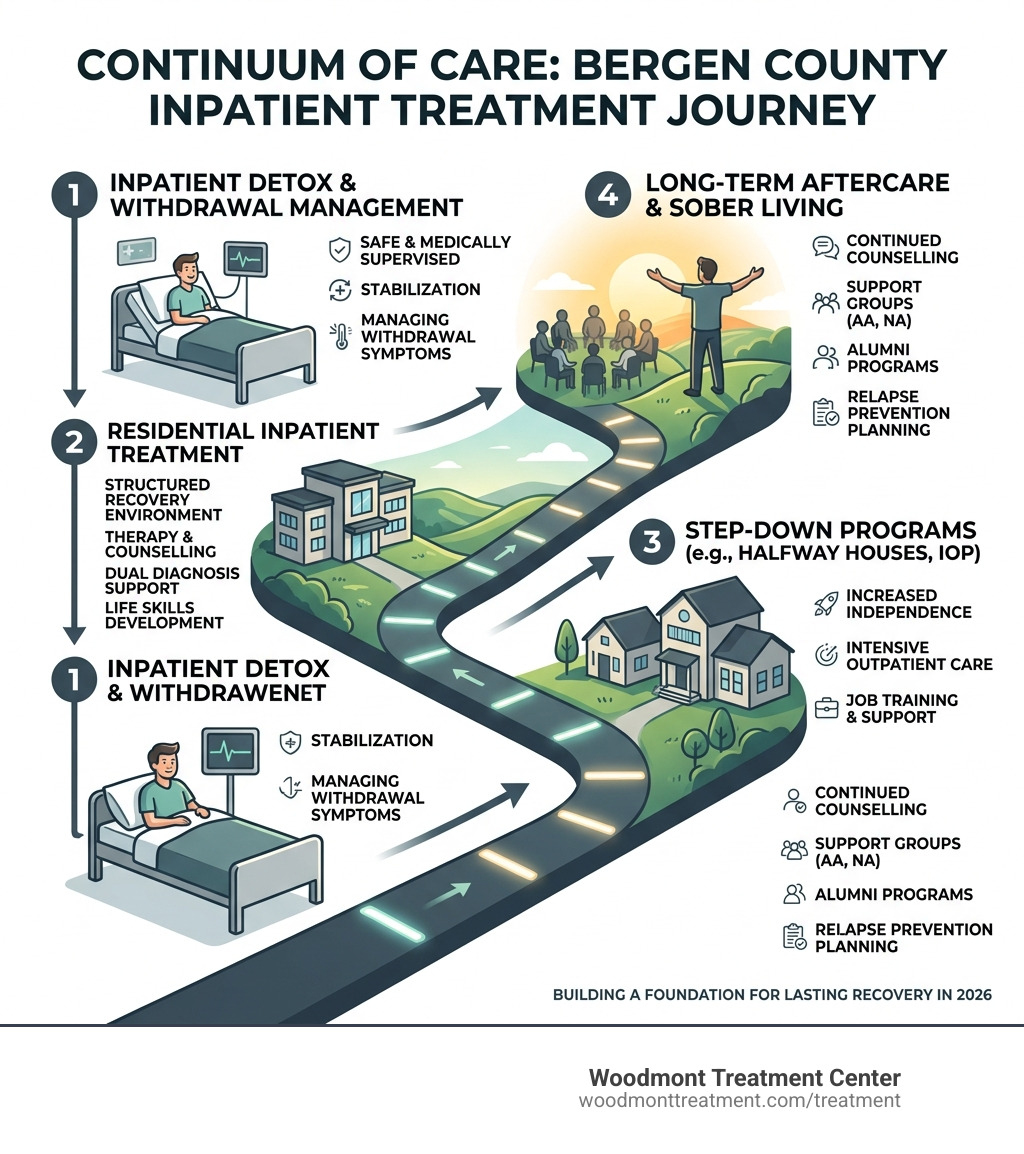
The transition from an inpatient setting back into the community is a delicate phase of the recovery journey. This is why comprehensive discharge planning begins the very day a resident is admitted. We do not simply provide a place to stay; we provide a roadmap for a new life. This roadmap often includes a strategic “step-down” process, transitioning from residential care to intensive outpatient services or traditional outpatient care.
Bergen County residents are fortunate to live in an area with a wealth of community resources. From local support groups to specialized recovery coaches, the infrastructure for long-term sobriety is robust. In 2026, data continues to show that individuals who remain engaged in some form of professional aftercare for at least one year have significantly higher rates of sustained recovery. Sobriety is a marathon, not a sprint, and having a team of professionals and peers by your side makes all the difference.
Transitioning to Intensive Outpatient (IOP) and PHP
The “step-down” model is designed to prevent the “cliff effect”—the sudden shock of moving from a highly structured 24/7 support system to total independence. A Partial Hospitalization Program (PHP) typically involves five days of clinical treatment per week, providing a high level of support while the individual lives at home or in a sober living environment. Following PHP, an Intensive Outpatient Program (IOP) usually meets three times a week. This allows for a gradual reintegration into work, school, and family responsibilities while still receiving professional treatment for various conditions.
Regional Support and Mental Health Advocacy
Bergen County has been a leader in the “Stigma-Free Zone” movement, which encourages open, honest conversations about mental health and addiction. This cultural shift has made it easier for residents to seek help without fear of judgment. However, there is still a unique benefit to seeking treatment slightly outside of one’s immediate neighborhood. By traveling to the peaceful hills of Sussex or Warren County, residents gain a “healing barrier.” This physical distance helps to break the immediate association with local triggers while remaining close enough for family members to participate in the healing process through weekend workshops and family therapy sessions.
Frequently Asked Questions about Inpatient Rehab
What is the difference between community-based programs and private inpatient care?
Community-based programs are often vital resources for immediate local support and are frequently accessible to a broad range of residents. However, private inpatient care typically offers a higher level of clinical intensity and more personalized, one-on-one treatment plans. Private facilities, like Woodmont, also tend to offer more amenities and a secluded, nature-focused environment. Many individuals find this peaceful setting more conducive to the deep, introspective work of recovery than the busy, often loud environment of a community hospital or urban center.
How can residents access premier care without local private insurance?
Accessing high-quality care is possible even without traditional private insurance. Many premier facilities offer financial counseling to help families navigate out-of-network benefits or establish sliding scale fees based on household income. Additionally, New Jersey’s 211 resource line is an excellent tool for finding state-funded assistance and grants. Under the Affordable Care Act, substance use treatment is considered an essential health benefit, and an increasing number of residential centers are now able to work with Medicaid and Medicare to ensure that life-saving treatment is available to all who need it.
What are the typical costs for inpatient treatment in 2026?
The cost of bergen county inpatient treatment can vary widely based on the level of clinical care required and the duration of the stay. Medical detoxification services generally range from $250 to $900 per day, while comprehensive residential programs can range from $5,000 to $75,000 for a full course of treatment. It is important to remember that most insurance providers cover a significant portion of these costs. We encourage families to view treatment not as an expense, but as a vital investment in a loved one’s future health, career, and family stability—an investment that yields immeasurable returns over a lifetime of sobriety.
Conclusion
When it comes to selecting bergen county inpatient treatment, the choices you make today will define the trajectory of your future. While Bergen County offers various hospital-based services, Woodmont Treatment Center stands as the premier choice for those seeking a true sanctuary. Located in the tranquil, rolling landscapes of Sussex and Warren County, we offer a luxurious, non-clinical environment where you are treated as a whole person, not just a diagnosis.
Our holistic approach is designed to heal the mind, body, and spirit, combining the latest in medical science with time-honored therapeutic practices. We are deeply committed to helping Bergen County residents find their way back to a life of purpose and joy. If you or someone you love is ready to take that first, most important step toward lasting sobriety, we invite you to learn more about the conditions we treat. Your journey toward a new life begins here, in a place of peace, dignity, and hope. We are ready to walk this path with you.