




Medically Reviewed by: Steve, Physician – expert in helping people with serious mental illnesses, including but limited to Major depression, bipolar disorder, schizophrenia, anxiety, and ADHD.
Quick Answer
Art therapy helps addiction recovery by giving individuals a safe and creative way to express emotions, process difficult experiences, manage stress, and develop healthier coping skills. While it is not a replacement for professional addiction treatment, art therapy can be a valuable part of a comprehensive recovery plan that includes counseling, behavioral therapies, and personalized support.
Key Takeaways
- Art therapy uses creative activities to support emotional healing and personal growth.
- Individuals do not need artistic skills or experience to benefit from art therapy.
- Common activities include painting, drawing, sculpting, journaling, and collage work.
- Art therapy can help improve emotional expression, self-awareness, and stress management.
- It is most effective when combined with evidence-based addiction treatment and professional care.
- Individuals seeking treatment in New Jersey may benefit from programs that incorporate holistic therapies alongside traditional approaches.
Art Therapy for Addiction Recovery at a Glance
| Topic | Details |
| What is it? | A therapeutic approach that uses creative expression to support emotional healing |
| Common activities | Painting, drawing, sculpture, collage, creative journaling |
| Does it require artistic ability? | No, the process matters more than the final artwork |
| How does it help? | Supports emotional expression, reduces stress, and builds coping skills |
| Is it a standalone treatment? | No, it works best as part of a complete addiction treatment program |
| Who may benefit? | Individuals recovering from alcohol, drug, or co-occurring mental health challenges |
Understanding the Role of Art Therapy in Addiction Recovery
Addiction affects much more than physical health. Many individuals living with substance use disorders struggle with emotional pain, unresolved trauma, shame, anxiety, depression, or difficulty communicating their thoughts and feelings.
Traditional therapies such as individual counseling and group therapy provide essential tools for understanding addiction and changing unhealthy behaviors. However, some emotions are difficult to communicate verbally.
Art therapy provides another pathway for expression. Through creative activities, individuals can explore their inner experiences in a supportive environment, helping them gain insight into emotions that may contribute to substance use.
Art therapy does not focus on creating a beautiful piece of artwork. The value comes from the process of creativity, reflection, and discussion with a trained professional.
What Is Art Therapy in Addiction Treatment?
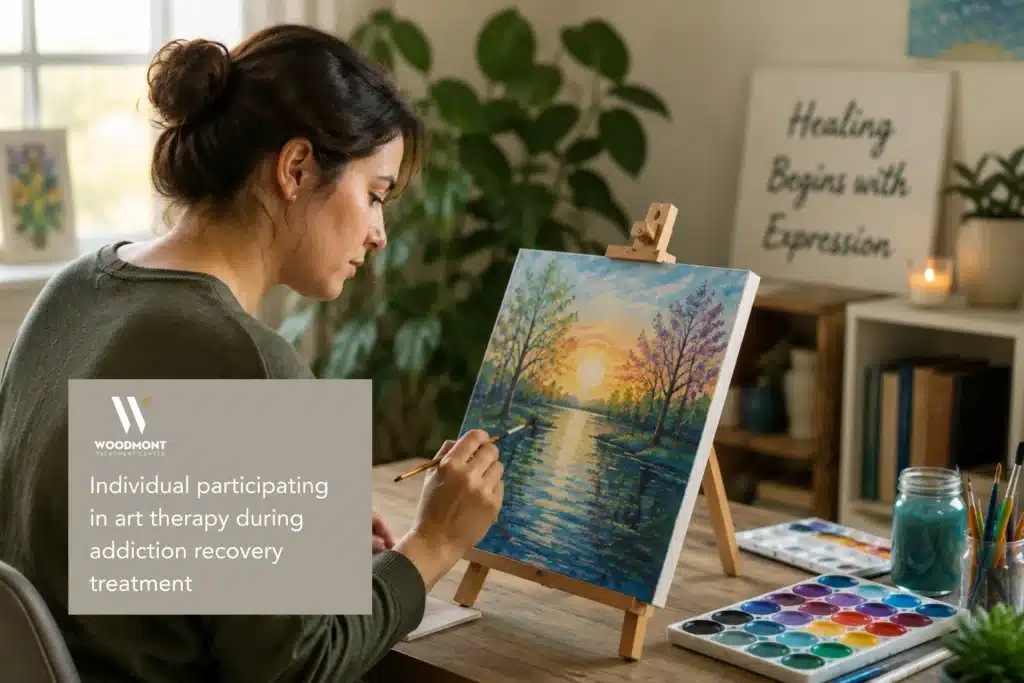
Art therapy is a mental health and therapeutic approach that combines creative expression with psychological support. It allows individuals to communicate thoughts and emotions through artistic activities while receiving guidance from a trained professional.
Activities used during art therapy may include:
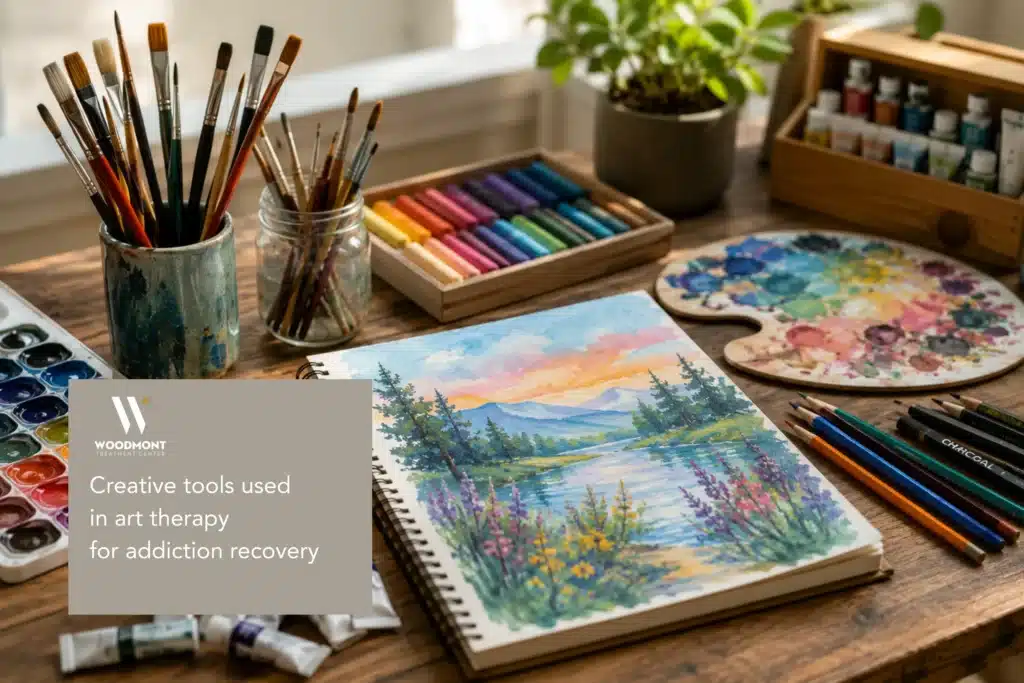
- Painting with watercolors or acrylics
- Drawing and sketching
- Creating collages
- Clay modeling and sculpting
- Making vision boards
- Combining writing with artwork through creative journaling
These activities can help individuals explore emotions, identify patterns in their behavior, and develop a greater understanding of themselves during the recovery process.
Art therapy is often included alongside other therapeutic approaches, such as individual counseling, group therapy, and holistic recovery practices.
How Does Art Therapy Help People Recover From Addiction?
Recovery is a journey of healing the mind, body, and emotions. Art therapy can support this journey in several meaningful ways.
1. Provides a Healthy Way to Express Emotions
Many people experiencing addiction carry emotions such as guilt, anger, grief, loneliness, or fear. Some may find it difficult to talk openly about these experiences.
Creating artwork can provide a non-verbal outlet for expressing complex emotions and starting conversations that support healing.
2. Supports Trauma Recovery
Trauma and addiction often occur together. Art therapy can provide a safe way for individuals to explore difficult emotions and experiences when incorporated into a trauma-informed treatment plan.
By transforming feelings into creative expression, individuals may develop greater emotional awareness and healthier ways to cope with distress.
3. Reduces Stress and Encourages Mindfulness
Early recovery can involve emotional ups and downs. Activities such as painting or drawing encourage individuals to focus on the present moment, promoting relaxation and reducing everyday stress.
4. Builds Self-Esteem and Personal Identity
Addiction can affect a person’s confidence and sense of self. Completing creative projects can help individuals recognize their strengths, celebrate progress, and rediscover interests that support a healthier lifestyle.
5. Develops Positive Coping Skills
A successful recovery plan involves replacing harmful behaviors with healthy alternatives.
Creative expression can become a positive coping strategy for managing difficult emotions, boredom, triggers, and life challenges.

What Happens During an Art Therapy Session?
Every art therapy session is unique because every individual’s recovery journey is different.
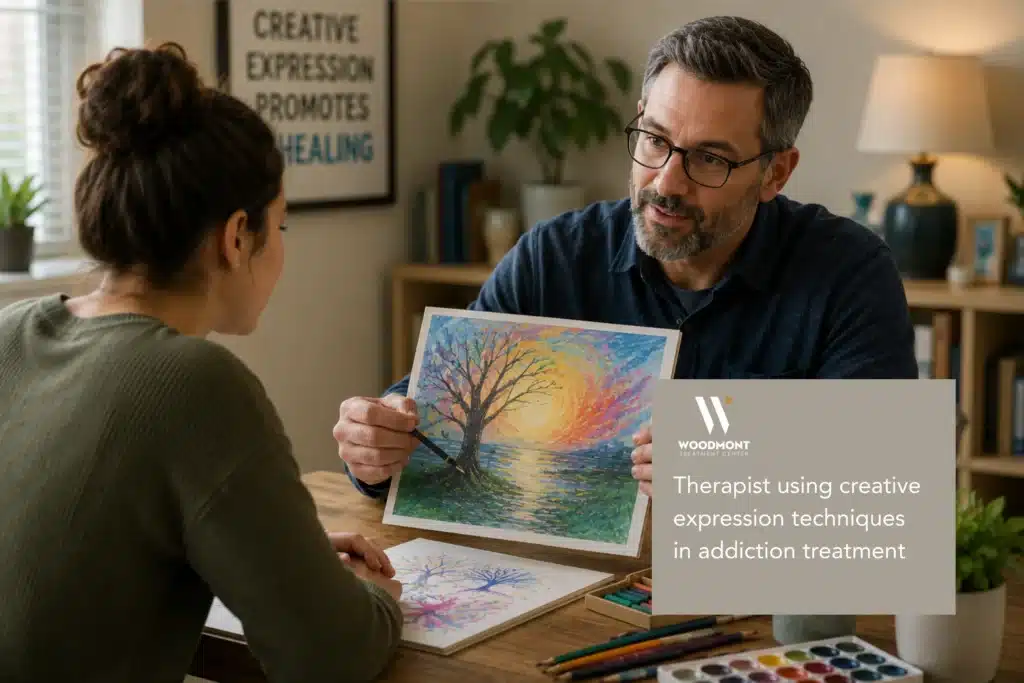
A therapist may guide participants through a specific creative exercise or allow open artistic expression based on treatment goals.
A typical session may involve:
- Choosing an art activity
- Creating artwork in a comfortable environment
- Discussing emotions, thoughts, and memories connected to the artwork
- Identifying personal insights and healthy coping strategies
There is no expectation to be a talented artist. The purpose is emotional exploration and healing.
Art Therapy vs. Traditional Talk Therapy
Both art therapy and traditional talk therapy can play important roles in addiction recovery.
Traditional therapy focuses primarily on verbal communication, helping individuals understand thought patterns, behaviors, and the causes of addiction.
Art therapy provides another form of communication through creativity, making it especially valuable for people who struggle to describe difficult emotions.
Together, these approaches can create a more comprehensive healing experience.
Who Can Benefit From Art Therapy During Recovery?
Art therapy may support individuals experiencing:
- Alcohol use disorder
- Drug addiction
- Prescription medication misuse
- Trauma-related challenges
- Anxiety and stress
- Co-occurring mental health concerns
Because recovery is personal, treatment should be tailored to each individual’s physical, emotional, and psychological needs.
What Does Research Say About Art Therapy for Recovery?
Research suggests that creative therapies can support emotional regulation, reduce stress, encourage self-expression, and improve overall psychological well-being.
However, art therapy is not considered a replacement for evidence-based addiction treatment. The most effective treatment plans combine complementary therapies with professional medical and psychological care.
A comprehensive recovery program may include individual therapy, group counseling, behavioral therapies, medication management when appropriate, family support, and holistic approaches such as art therapy.
Finding Art Therapy for Addiction Recovery in New Jersey
Individuals searching for art therapy for addiction recovery in New Jersey should look for treatment centers that provide personalized care and integrate holistic approaches with clinically supported therapies.
Woodmont Treatment offers a compassionate environment where individuals can receive individualized support throughout their recovery journey.
Learn more about the Woodmont Treatment Art Therapy Program
Art Therapy as Part of a Complete Recovery Plan
True healing involves addressing the underlying emotional, mental, and behavioral factors connected to addiction.
Art therapy can complement traditional treatment by helping individuals process emotions, improve self-awareness, and discover healthier ways to cope with life’s challenges.
For many people, combining evidence-based therapies with creative approaches provides a more well-rounded path toward lasting recovery.
Begin Your Recovery Journey With Woodmont Treatment
If you or someone you love is struggling with addiction, seeking professional help can be the first step toward a healthier future.
The admissions team at Woodmont Treatment is available to answer your questions, explain available programs, and guide you through the treatment process.
Call (866) 348-6434 for a confidential conversation.
Verify your insurance coverage here.
Visit us:
293 Route 206
Newton, New Jersey
Email:
admissions@woodmontnj.com
Contact our team:
https://woodmonttreatment.com/contact/
Frequently Asked Questions About Art Therapy for Addiction Recovery
Does art therapy really help addiction recovery?
Yes. Art therapy can support addiction recovery by helping individuals express emotions, process difficult experiences, reduce stress, and develop healthier coping strategies. It is most effective when combined with professional addiction treatment.
Do I need to be good at art to participate in art therapy?
No. Art therapy does not require artistic skill or previous experience. The focus is on the creative process, emotional exploration, and personal growth.
How long does an art therapy session last?
The length of an art therapy session varies based on the treatment setting and an individual’s personalized recovery plan. A treatment provider can explain what to expect during care.
Can I verify my insurance before starting addiction treatment?
Yes. Woodmont Treatment allows prospective patients and families to verify their insurance benefits online before beginning treatment.
Verify your insurance:
https://woodmonttreatment.com/verify-insurance/
How do I get started with addiction treatment at Woodmont Treatment?
Getting started is simple. Contact the admissions team to discuss your situation, ask questions about available programs, and receive guidance on the next steps.
Call (866) 348-6434, email admissions@woodmontnj.com, or contact the team here:
Is art therapy a replacement for traditional addiction treatment?
No. Art therapy is considered a complementary therapy and works best when combined with professional addiction treatment, counseling, behavioral therapy, and individualized recovery planning.